South Korea is currently walking a tightrope. As one of the world’s most energy-dependent economies, its industrial engine—responsible for everything from semiconductors to supertankers—requires a constant, uninterrupted flow of crude oil. The recent commitment from the United Arab Emirates to guarantee oil supplies to Seoul is not merely a diplomatic gesture or a routine trade update. It is a calculated move to insulate the Korean economy from a volatile global market where supply lines are increasingly threatened by geopolitical friction in the Middle East and Eastern Europe.
For years, Seoul has sought to diversify its energy portfolio, but the reality remains stubborn. Approximately 93% of South Korea’s energy needs are met by imports. When the UAE pledges a stable supply, it provides a buffer against the price shocks that have historically crippled Korean manufacturing. This agreement serves as a lifeline for an economy that cannot afford even a week of energy rationing without seeing its GDP growth stall.
The Mechanics of the Strategic Buffer
The agreement between the UAE and South Korea goes beyond simple purchase orders. At its core is a framework for joint storage and emergency prioritization. Under these terms, Korean refineries gain a preferential right to purchase specific volumes of crude, even if global demand spikes or regional conflicts tighten the supply.
This isn't just about moving barrels from point A to point B. It involves a sophisticated logistics network where the UAE utilizes Korean storage facilities. This arrangement creates a "tanker-ready" reserve on Korean soil. In a crisis, the physical proximity of this oil reduces the lead time for delivery from weeks to hours. By hosting UAE oil, Korea ensures that the first drop of that reserve belongs to its own refineries if the global taps suddenly run dry.
Why the UAE Chose Seoul
The UAE’s motivation is equally pragmatic. They aren't doing this out of pure benevolence. Abu Dhabi is looking for long-term, high-volume buyers who can provide a stable return as the world flirts with an energy transition. South Korea is the perfect partner. It is a high-tech hub that will require massive amounts of liquid energy for decades to come, regardless of how fast it builds wind farms or nuclear plants.
Furthermore, the relationship is reciprocal. The UAE has invested heavily in Korean nuclear technology, notably the Barakah nuclear power plant. By securing Korea’s oil supply, the UAE protects its own investment in Korean engineering. If Korea’s economy collapses due to an energy crisis, its ability to maintain and expand the UAE’s nuclear infrastructure vanishes. This is a closed-loop of mutual survival.
The Hidden Risks of Over-Reliance
Dependency is a double-edged sword. While the UAE is a stable partner compared to other regional players, locking into long-term supply agreements limits Korea’s flexibility. If global oil prices drop significantly due to a surge in American shale or a slowdown in Chinese manufacturing, Korea might find itself paying a premium for its "guaranteed" supply.
There is also the matter of the Strait of Hormuz. Almost all UAE oil destined for Korea must pass through this narrow chasm. Even with a firm promise from Abu Dhabi, a naval blockade or a regional flare-up could physically prevent the oil from reaching the Sea of Japan. The UAE promise is a guarantee of intent, not a guarantee of physics. If the ships cannot move, the contract is just a piece of paper.
The Refined Product Factor
Korea isn't just a consumer; it is a massive refiner. Companies like SK Innovation and GS Caltex take Middle Eastern crude and turn it into high-value chemicals and fuels for the rest of Asia. The UAE deal ensures these refineries stay at peak capacity.
Operating a refinery is a game of margins. If the input cost of crude fluctuates wildly, the refinery’s profitability disappears. A stable supply price allows Korean firms to sign their own long-term export contracts with confidence. They know exactly what their raw material costs will be, allowing them to underbid competitors who are buying on the spot market.
The Geopolitical Chessboard
This deal must be viewed through the lens of the U.S.-China rivalry. South Korea is a key U.S. ally, but it is also economically tied to Chinese markets. By strengthening ties with the UAE—a nation that has increasingly shown independence from traditional Western spheres of influence—Seoul is diversifying its political risk.
The UAE is also pivoting. They are no longer content being just a gas station for the world. They want to be a global investment powerhouse. By securing Korea’s energy future, they are buying a seat at the table of one of the world’s most advanced technological economies. We are seeing a shift from "buyer and seller" to "integrated economic partners."
Infrastructure as a Defense Mechanism
The technical side of this agreement involves significant upgrades to Korea’s national oil reserves. These are massive underground caverns designed to hold millions of barrels. The UAE is essentially "renting" space in these caverns.
- Emergency Drawdown Rights: Korea can seize the oil in a national emergency.
- Storage Fees: The UAE pays to keep its oil in Korea, offsetting the cost of maintaining the facilities.
- Market Proximity: The UAE can sell that stored oil to Japan or China quickly, using Korea as a regional hub.
This infrastructure makes the deal lucrative for both sides. It turns a liability—the cost of maintaining reserves—into a revenue-generating asset for the Korean government.
The Nuclear Connection
We cannot talk about UAE-Korea oil without talking about the Barakah Nuclear Power Plant. This was a landmark project where Korean technology was exported to the heart of the Middle East. It proved that Korea could deliver complex projects on time and on budget—a rarity in the nuclear industry.
The oil guarantee is, in many ways, the "interest" being paid on that successful collaboration. The UAE trusts Korean engineering; Korea trusts UAE reliability. This trust is the invisible currency that makes the $30 billion investment move smoothly.
The Volatility Factor
The global energy market is currently in a state of permanent instability. The transition to renewables is taking longer than expected, and the traditional oil giants are not investing in new production at the rates they once did. This creates a "supply gap" that will likely lead to massive price spikes in the 2030s.
Korea’s move to secure UAE oil now is a defensive play against that future gap. It is a recognition that "green energy" will not be enough to power a heavy-industrial nation for at least another forty years. Pragmatism has won over idealism in Seoul’s Blue House.
The Reality of Energy Diplomacy
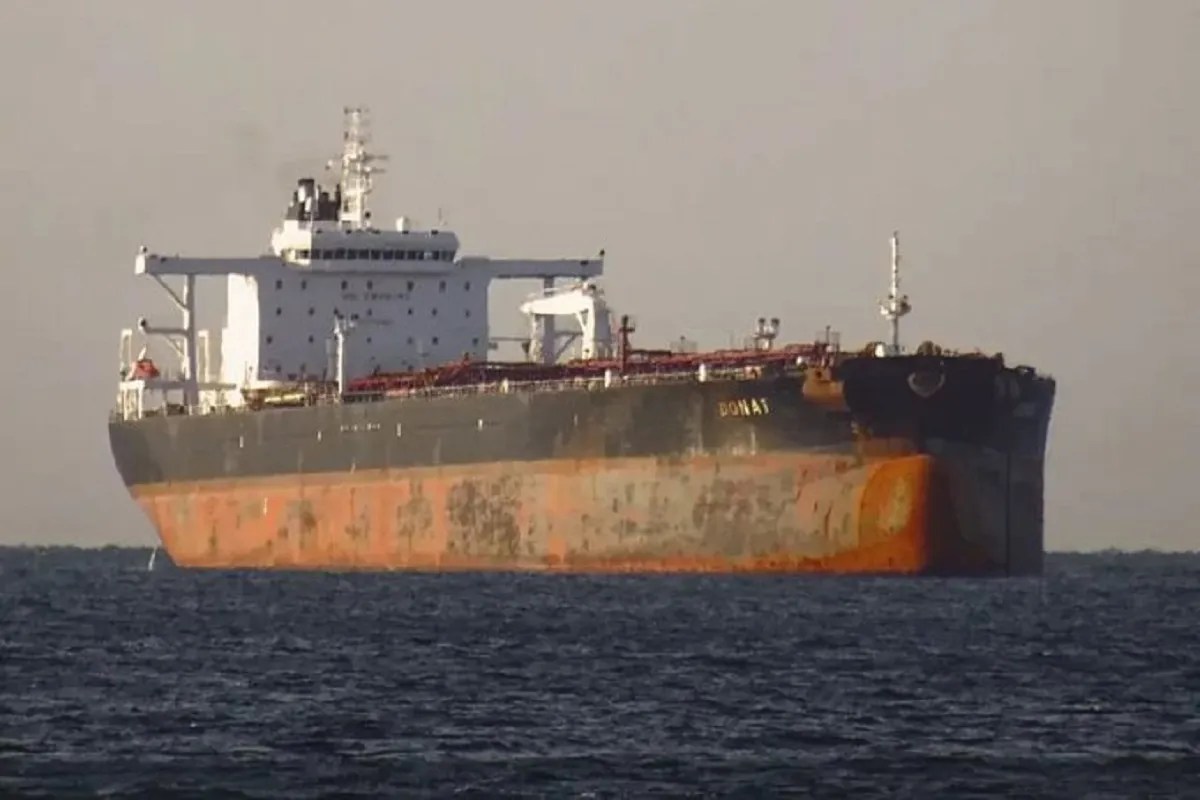
Many critics argue that Korea should be moving faster toward energy independence through offshore wind and domestic solar. However, the energy density of crude oil remains unmatched for heavy industry and shipping. You cannot power a VLCC (Very Large Crude Carrier) or a massive steel mill with current battery technology.
The UAE deal buys Korea time. It provides the breathing room necessary to develop next-generation energy solutions without the constant fear of a blackout or an economic depression caused by $150-a-barrel oil.
Economic Impact on the Won
The stability of the Korean Won is also tied to energy prices. Since Korea buys its oil in U.S. dollars, a spike in oil prices leads to a massive outflow of capital, weakening the currency and driving up domestic inflation. By stabilizing the supply and potentially the pricing structures through the UAE agreement, the Bank of Korea has one less variable to worry about when managing the national currency.
This agreement acts as a macro-economic stabilizer. It gives the central bank a clearer picture of the nation's trade balance. When you know your energy costs, you can manage your inflation targets with much higher precision.
Beyond the Barrel
The partnership is expanding into hydrogen and ammonia. The UAE has the sun and the space for massive solar arrays to produce "green" hydrogen, while Korea has the fuel cell technology to use it. The oil pact is the foundation, but the future of this relationship is in the transport of carbon-neutral molecules.
This is a long-term hedge. If oil becomes obsolete, the trade routes and storage facilities being built now will simply be repurposed for hydrogen. The UAE and Korea are building a bridge that will survive the end of the fossil fuel era.
The Immediate Action for Industry
For Korean business leaders, this deal is a signal to maintain high-output manufacturing. The fear of "energy poverty" has been sidelined. Companies can now plan for three to five years of expansion with a level of certainty that didn't exist two years ago.
The UAE’s promise of crude is not a static agreement; it is a dynamic strategic partnership that reshapes the energy map of Northeast Asia. It places Korea in a privileged position, effectively making it the UAE's primary outpost in the Pacific.
Review your long-term logistics and energy procurement contracts now. The shift from spot-market reliance to strategic bilateralism is the new standard for industrial survival. If your supply chain doesn't have a sovereign-backed guarantee like this, you are exposed to a market that no longer follows the rules of supply and demand.