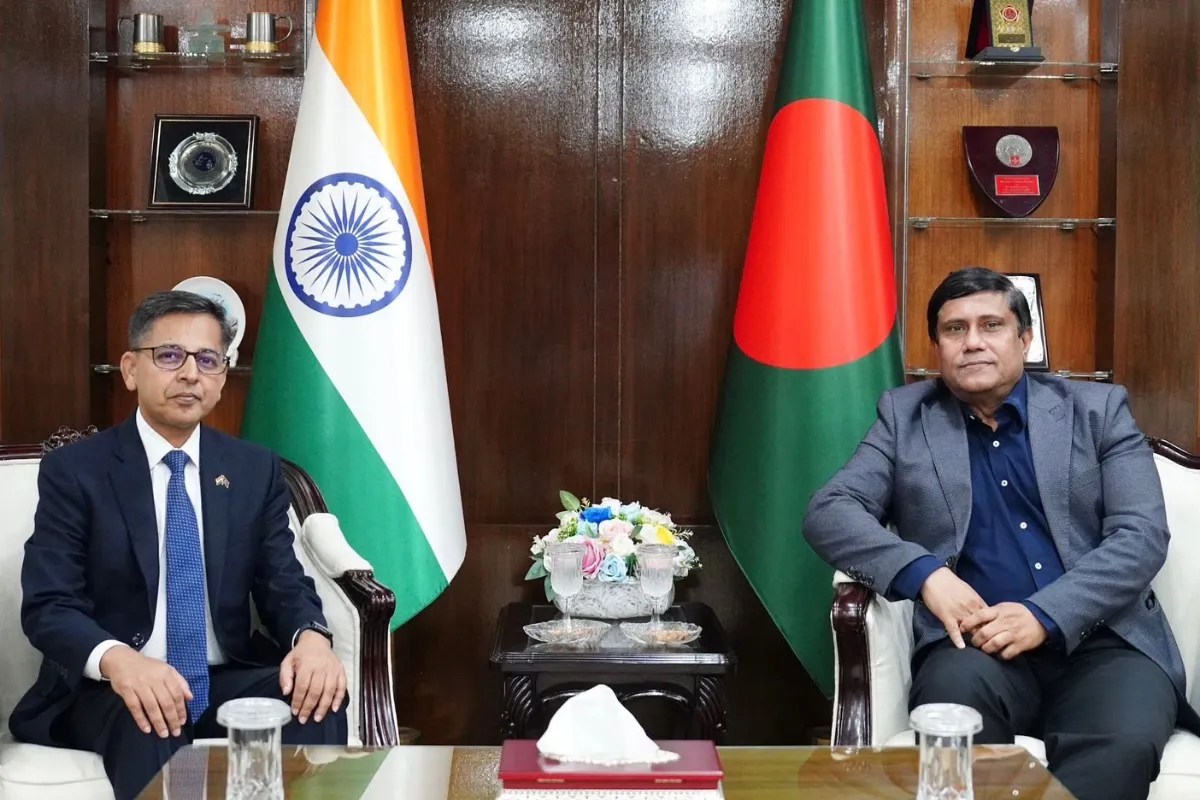
The assumption of power by Tarique Rahman in Bangladesh marks a pivot from ideological alignment to a transactional, interest-based security architecture. While surface-level reporting focuses on the "intent" to improve ties, a rigorous analysis reveals a fundamental shift in the bilateral defense equilibrium. The survival of this relationship depends on navigating three critical stressors: internal political legitimacy, regional "China-hedging," and the resolution of legacy procurement bottlenecks.
The Triad of Bilateral Security Interests
The preliminary discussions between Indian and Bangladeshi officials signify more than a diplomatic reset. They represent a recalibration of the security value chain. To understand the trajectory of this partnership, we must analyze it through three distinct pillars.
1. Border Management and Kinetic De-escalation
The primary friction point remains the 4,096-kilometer border. For the Rahman administration, reducing civilian casualties at the border is a prerequisite for domestic political stability. India, conversely, views the border through the lens of "Integrated Check Posts" and the prevention of insurgent infiltration.
The logic of the current discussions suggests a shift toward Coordinated Border Management Plans (CBMP). This is not a gesture of goodwill but a resource-optimization strategy. By digitizing surveillance and increasing real-time intelligence sharing, both nations aim to reduce the "man-to-mile" ratio, lowering the operational cost of border security while maintaining a high denial capability against non-state actors.
2. Counter-Terrorism and Intelligence Reciprocity
Tarique Rahman’s political history necessitates a transparent break from past allegations of harboring anti-India elements. The new administration’s immediate engagement with Indian security officials serves as a "credibility signal."
The mechanism here is intelligence reciprocity. Bangladesh requires technical assistance in monitoring extremist digital footprints, a domain where India has invested heavily. In exchange, India seeks the continued denial of safe havens for insurgent groups in the Northeast. This is a classic "security-for-security" swap. If the Rahman administration can demonstrate a measurable crackdown on these groups, it gains the breathing room needed to pursue its broader economic agenda without Indian interference.
3. Maritime Domain Awareness and the Bay of Bengal
The strategic importance of the Bay of Bengal has escalated due to the rising presence of extra-regional players. Bangladesh’s "Forces Goal 2030" requires a modernized navy, and India is positioning itself as the primary provider of Maritime Domain Awareness (MDA).
This involves the installation of Coastal Surveillance Radar Systems (CSRS). By integrating Bangladesh into India’s regional radar network, Dhaka gains a high-definition view of its Exclusive Economic Zone (EEZ) without the prohibitive cost of independent satellite constellations. For New Delhi, this integration provides a "forward-listening post" that monitors Chinese naval movements in the deep-sea ports of Chittagong and Mongla.
The Economics of Defense Procurement
A significant bottleneck in the India-Bangladesh defense relationship is the underutilization of the $500 million Line of Credit (LoC) offered by India. The Rahman administration faces a complex "Cost-Benefit-Compatibility" matrix.
- Platform Compatibility: Much of Bangladesh’s existing hardware is of Chinese origin. Transitioning to Indian (or Indo-Western) systems creates a technical debt. Spare parts, maintenance protocols, and training manuals must be overhauled.
- The Sovereign Risk Premium: Relying on a single neighbor for defense hardware carries a perceived sovereign risk. Rahman is likely to pursue a "Distributed Procurement Strategy," where India provides small arms, offshore patrol vessels, and telecommunications, while high-end kinetic platforms (like fighter jets) are sourced elsewhere.
- Lifecycle Costs: Indian defense firms are competing on the total cost of ownership. The proximity of maintenance, repair, and overhaul (MRO) facilities in Kolkata or Visakhapatnam reduces the downtime of Bangladeshi assets, a value proposition that China, despite lower initial sticker prices, cannot easily match.
Regional Balancing and the China Variable
The most significant constraint on Tarique Rahman’s pro-India overtures is the "China Debt Trap" vs. "India Security Trap" dichotomy. Bangladesh is a key signatory to the Belt and Road Initiative (BRI). China is not merely a supplier; it is an infrastructure partner.
Rahman’s strategy involves Functional Decoupling. He seeks to decouple economic dependence on China from security dependence on India. This is a high-wire act. If Bangladesh leans too heavily toward Indian defense protocols, it risks a slowdown in Chinese infrastructure funding. If it leans toward China, it invites Indian "security hardening" along its borders.
The current discussions are an attempt to find a "Median Point of Minimum Friction." This involves:
- Transparency Protocols: Briefing New Delhi on Chinese commercial port investments to alleviate "dual-use" concerns.
- Standardization of Non-Lethal Equipment: Focusing initial India-sourced procurement on logistics, medical units, and disaster relief to avoid triggering Chinese sensitivities.
Operational Hurdles and the Trust Deficit
Despite the optimistic tone of recent meetings, structural impediments remain. The "Trust Deficit" is not merely emotional; it is institutional.
- Bureaucratic Inertia: Both nations suffer from fragmented decision-making. In India, the Ministry of External Affairs and the Ministry of Defence often operate on different timelines. In Bangladesh, the transition of power requires a thorough vetting of the military leadership to ensure loyalty to the new civilian government.
- The Teesta River Variable: In South Asian geopolitics, water and security are inextricably linked. The Rahman administration cannot sustain a deep defense partnership if the domestic perception is that it has "conceded" on water-sharing rights. India’s inability to deliver a Teesta treaty creates a "political ceiling" on how far defense cooperation can go.
The Logic of Joint Exercises and Human Interoperability
Beyond hardware, the most durable aspect of this renewed engagement is "Human Interoperability." This is achieved through joint exercises like SAMPRITI.
These exercises serve two functions. First, they establish a "hotline" between mid-level commanders. In the event of a border skirmish, these personal relationships act as a circuit breaker, preventing local incidents from escalating into national crises. Second, they allow the Indian military to assess the operational readiness and doctrine of the Bangladesh Army under the new administration. This is a form of "passive verification" of Rahman’s stated policy goals.
Strategic Forecast: The Path of Transactionalism
The India-Bangladesh defense relationship under Tarique Rahman will likely evolve into a series of "Micro-Agreements" rather than a single, sweeping security pact. This modular approach allows both parties to claim victories without committing to a restrictive alliance.
The immediate priority for New Delhi is to secure the transit and transshipment rights that connect its mainland to the Northeast. For Dhaka, the priority is securing the border and modernizing its forces without alienating Beijing.
The Rahman administration will utilize the Indian defense LoC for specific, high-visibility projects—such as bridge building or transport aircraft—to signal cooperation, while keeping the core of its naval and air force modernization open to international bidding. This maintains competition and prevents over-dependence on a single neighbor.
The "Action" initiated by Tarique Rahman is not a sentimental return to 1971-era camaraderie. It is a pragmatic, data-driven realization that Bangladesh’s economic ambitions are physically tethered to Indian stability. The success of this pivot will be measured not by the warmth of the handshakes, but by the volume of hardware orders and the reduction in kinetic incidents along the Radcliff Line.
The strategic play here is for India to move beyond "Big Brother" rhetoric and transition into a "System Integrator" for Bangladesh’s security needs. If India can provide the backbone for Bangladesh’s digital and maritime surveillance, it secures its eastern flank more effectively than any border fence ever could.