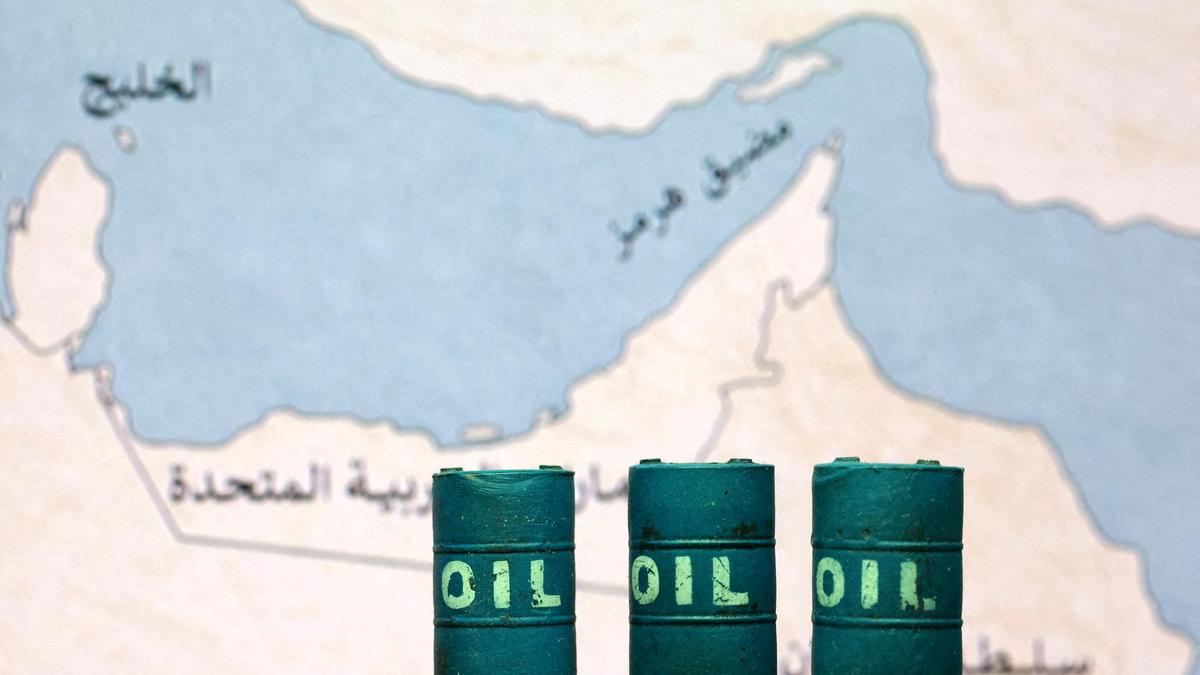
Brussels has officially drawn a line in the shifting sands of the Persian Gulf. By rejecting the recent proposal to impose tolls on vessels passing through the Strait of Hormuz, the European Union is attempting to prevent a localized maritime tax from ballooning into a global inflationary nightmare. This isn't just about the cost of a transit fee. It is a desperate defense of the 1982 United Nations Convention on the Law of the Sea (UNCLOS), which guarantees "transit passage" through international straits. If one nation successfully monetizes a chokepoint, the entire architecture of global trade begins to crumble.
The Strait of Hormuz is the world's most sensitive carotid artery. Roughly 20% of the world's total consumption of liquid petroleum flows through this narrow strip of water daily. When regional powers float the idea of a "security fee" or a "transit toll," they aren't just looking for revenue. They are testing the resolve of the West to keep the lanes open. The EU’s rejection was swift because the alternative—acquiescence—would set a precedent that every other maritime chokepoint, from the Malacca Strait to the Bab el-Mandeb, could soon follow.
The Financial Mechanics of a Maritime Shakedown
The proposal for a toll often masquerades as a legitimate environmental or security levy. Proponents argue that the cost of policing the waters and cleaning up potential spills should be borne by the shipping companies rather than the coastal states. On paper, it sounds like a standard user fee. In practice, it is a geopolitical weapon.
Shipping companies operate on razor-thin margins. A significant toll in Hormuz would immediately trigger a cascade of surcharges. Insurance premiums for tankers are already volatile; adding a mandatory state-level tax would force many operators to reconsider their routes or pass the costs directly to the consumer. For the EU, which is already battling persistent energy price fluctuations, this is an unacceptable variable.
Consider the logistics. A standard Very Large Crude Carrier (VLCC) carries roughly two million barrels of oil. Even a modest toll of a few cents per barrel generates hundreds of thousands of dollars per transit. Multiply that by the thousands of tankers passing through every year, and you have a multibillion-dollar slush fund that bypasses traditional international trade oversight. The EU understands that this money would likely fund the very military capabilities used to harass the shipping lanes in the first place.
The Legal Fiction of Territorial Sovereignty
The core of the dispute lies in how different nations interpret the UNCLOS. While most of the world views the Strait of Hormuz as an international waterway, certain regional actors view it as territorial waters where they have the right to regulate and tax passage. This is a dangerous legal fiction.
UNCLOS explicitly states that ships enjoy the right of transit passage, which cannot be suspended or hampered. By proposing a toll, a state effectively declares that the right to pass is no longer inherent but conditional. The EU’s stance is that "freedom of navigation" is a non-negotiable pillar of the global economy. Once you put a price tag on a right, it becomes a privilege that can be revoked at will.
Why Diplomacy is Running Out of Room
The European Union's maritime security strategy has historically leaned on "soft power" and multilateral cooperation. However, the tone is shifting. The recent "slam" of the toll idea indicates that Brussels recognizes the limits of polite disagreement. The deployment of European naval assets in the region under missions like Emasoh (European-led Maritime Awareness in the Strait of Hormuz) shows that the EU is willing to put skin in the game.
But naval presence is a bandage, not a cure. The real pressure is economic. European diplomats are currently working to ensure that any attempt to collect tolls results in immediate retaliatory measures. This includes potential port bans for vessels that comply with illegal tolls or secondary sanctions on the financial institutions processing those payments. It is a high-stakes game of chicken where the prize is the stability of the global supply chain.
The Hidden Cost to Global Energy Security
If a toll were implemented, the immediate impact would be felt at the gas pump in Berlin, Paris, and Rome. But the long-term damage would be to the reliability of the Middle East as an energy partner. European nations have been aggressively diversifying their energy sources since 2022. A Hormuz toll would only accelerate the pivot away from Gulf oil and gas.
Investors loathe uncertainty. If the legal status of the Strait remains in flux, the "security premium" baked into oil prices will never dissipate. This affects everything from plastics manufacturing to long-haul logistics. The EU is effectively telling the region that they can have the toll or they can have the European market, but they cannot have both.
The Fragile Consensus of the International Community
The EU is not acting in a vacuum. Washington, Tokyo, and Seoul are watching closely. If the EU flinches, the consensus on free navigation collapses. The United States has long maintained that it will use military force to keep the Strait open, but the EU’s role is arguably more critical in the legal and economic arena.
The US can sink ships, but the EU can de-legitimize a state's entire economic framework. This "good cop, bad cop" dynamic only works if the EU remains firm on the illegality of the toll. Any compromise—such as a "voluntary contribution" to a maritime safety fund—would be viewed as a surrender.
A Hypothetical Scenario of Escalation
Imagine a scenario where a coastal state begins stopping tankers that refuse to pay the new toll. A Greek-owned tanker, carrying Saudi crude destined for a refinery in Italy, is boarded. Under the guise of a "customs inspection" related to the unpaid toll, the ship is detained.
In this moment, the EU's rhetoric is tested. Does it respond with a diplomatic note, or does it trigger a coordinated seizure of the offending state's assets in European banks? This isn't a far-fetched possibility; it is the exact situation the EU is trying to prevent by preemptively "slimming" the toll idea. They are setting the "tripwire" before the first invoice is ever sent.
The Technological Countermeasures
While the diplomats argue, the shipping industry is looking for tech-based workarounds. Some companies are exploring increased use of pipelines that bypass the Strait, such as the East-West Pipeline in Saudi Arabia or the Habshan-Fujairah pipeline in the UAE. However, these lack the capacity to replace the sheer volume of the tanker fleet.
Others are looking at "dark fleet" tactics—masking ship identities and using offshore transfers—to avoid regional oversight. This is a nightmare for the EU. It increases the risk of accidents, environmental disasters, and the total breakdown of maritime law. By rejecting the toll, the EU is also trying to keep shipping in the light, where it can be regulated and protected.
The End of the Era of Free Passage?
We are witnessing the slow erosion of the post-WWII maritime order. For decades, it was assumed that the oceans were a global common. That assumption is being challenged by a new era of "maritime mercantilism" where every mile of water is seen as a revenue opportunity.
The EU's aggressive stance against the Hormuz toll is a signal that it will not go quietly into this new era. But words alone won't stop a determined regional power from trying to squeeze the world's most vital waterway. The real test will come when the first "bill" for transit is issued.
The European Union has made its move. It has signaled to its partners and its adversaries that the Strait of Hormuz is not a private driveway. It is a public highway. Any attempt to put up a toll booth will be treated as an act of economic aggression. The world's economy depends on this being more than just a bluff.
The stakes are far higher than a few dollars per transit. If the freedom of the seas can be sold in the Persian Gulf, it can be sold anywhere. Brussels knows this. The question is whether they have the stomach for the prolonged economic and potentially physical confrontation required to keep the water free.
The era of taking the oceans for granted is over.


