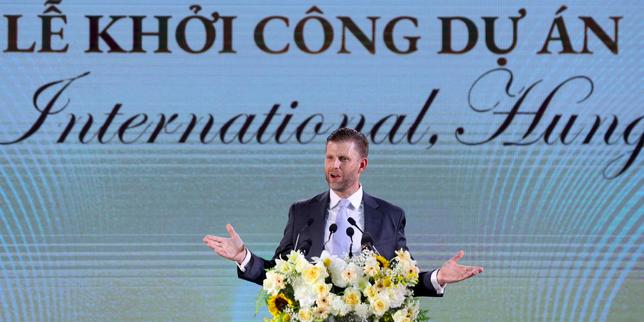
You'd think a $1.5 billion investment would be a cause for celebration in a developing province like Hung Yen. But for the people living in the shadow of the Red River, the high-gloss renderings of the new Trump International golf resort look less like progress and more like a eviction notice. While the Trump Organization and its local partner, Kinh Bac City Development (KBC), talk about "world-class luxury," the farmers currently working that land are counting every cent of a compensation package that basically amounts to a single year's income.
It's a classic clash between high-stakes geopolitics and the reality of rural survival. On one side, you've got a Vietnamese government eager to smooth over trade tensions and avoid massive US tariffs. On the other, you've got thousands of villagers who don't care about "strategic partnerships" when they're losing the only livelihood they've ever known.
The Cost of a Fairway
The numbers on this deal are eye-watering, but not for the reasons you'd hope. The project spans roughly 900 hectares—an area roughly the size of Newark Liberty International Airport. To clear that much space, authorities are reclaiming land that has been used for generations to grow bananas, oranges, and longan.
Local officials have set compensation at approximately 320,000 dong per square meter. That’s about $12.50. For many of these families, that one-time payment is supposed to replace a lifetime of agricultural revenue. Honestly, it’s a tough sell. When I look at the math, it’s clear why the residents are dug in. In Vietnam, you don't own the land; the state does. You just have "use rights." When the state decides that land is better suited for a luxury bunker for the global elite, those rights can vanish overnight.
The tension is thick. You’ve got people like Do Thi Vuong, who’s been farming here for 30 years, wondering how a freshly planted lily can sometimes be valued higher than a fruit tree that’s been producing for two decades. It feels arbitrary, and in a system where transparency isn't always the default setting, it feels like corruption.
Why This Project Moved at Warp Speed
Usually, getting a project of this scale approved in Vietnam takes years of bureaucratic slogging. This one? It was signed in September 2024 and had its groundbreaking by May 2025. That kind of speed is unheard of.
The reason isn't a secret. Vietnam is a massive exporter to the US, and they’ve been staring down the barrel of potential 46% tariffs. By greenlighting a massive project branded with the name of the sitting US President, the Vietnamese leadership is playing a very specific kind of game. They’re buying goodwill. It’s a "Trump-branded" insurance policy against trade wars.
Prime Minister Pham Minh Chinh hasn't been shy about it either. He’s pledged full government backing to get the first phase ready by the 2027 APEC summit. When the top of the food chain says "make it happen," local officials tend to stop worrying about the fine print of farmer grievances and start focusing on meeting deadlines.
The Middleman and the Risk
The Trump Organization isn't actually building the thing. They're licensing the name for a reported $5 million fee and likely taking a management cut later. The heavy lifting—and the messy business of land clearance—falls on Kinh Bac City (KBC).
KBC is led by tycoon Dang Thanh Tam. He’s a big player in industrial parks, but his track record with luxury hotels is a bit spotty. There's a history of "ghost projects" that never quite get off the ground. Adding to the drama, the project is being pushed through during a massive administrative overhaul in Vietnam that’s cut out layers of local government. This has led to delays and confusion, with land clearing work starting and stopping like a stalled engine.
It’s a high-risk bet for everyone involved:
- For the Trump family: It’s another high-profile asset that brings ethical scrutiny regarding the blurring of private business and public office.
- For KBC: It’s a massive capital outlay in a market where luxury real estate can be volatile.
- For the Vietnamese Government: It’s a diplomatic gamble that depends entirely on staying in the good graces of the Trump administration.
What Happens to the Farmers
This is the part that gets lost in the financial disclosures. Hundreds of farmers have petitioned for the compensation rates to be doubled. They aren't necessarily against the golf course; they just want to be able to afford a life after it's built.
Some villagers are trying to adapt. You hear stories of locals planning to turn their small eateries into upscale restaurants to serve the wealthy golfers. But for the 60-year-old grandmother who only knows how to harvest bananas, there is no "pivot." There’s just the loss of the land and a small pile of cash that won't last a decade.
If you’re watching this from the outside, don't expect a quick resolution. While the government wants the land cleared by the end of the year, the legal discussion periods and the sheer level of local resentment mean this project is likely to face more "snags" before the first ball is ever teed up.
If you're looking to understand where the real pressure points are, keep an eye on the compensation deadlines in Chau Ninh commune. That’s where the rhetoric of international trade meets the reality of the soil. The government can mandate 95% clearance all they want, but if the people who live there feel like they're being robbed to pay for a billionaire's playground, things are going to get a lot messier before they get better.