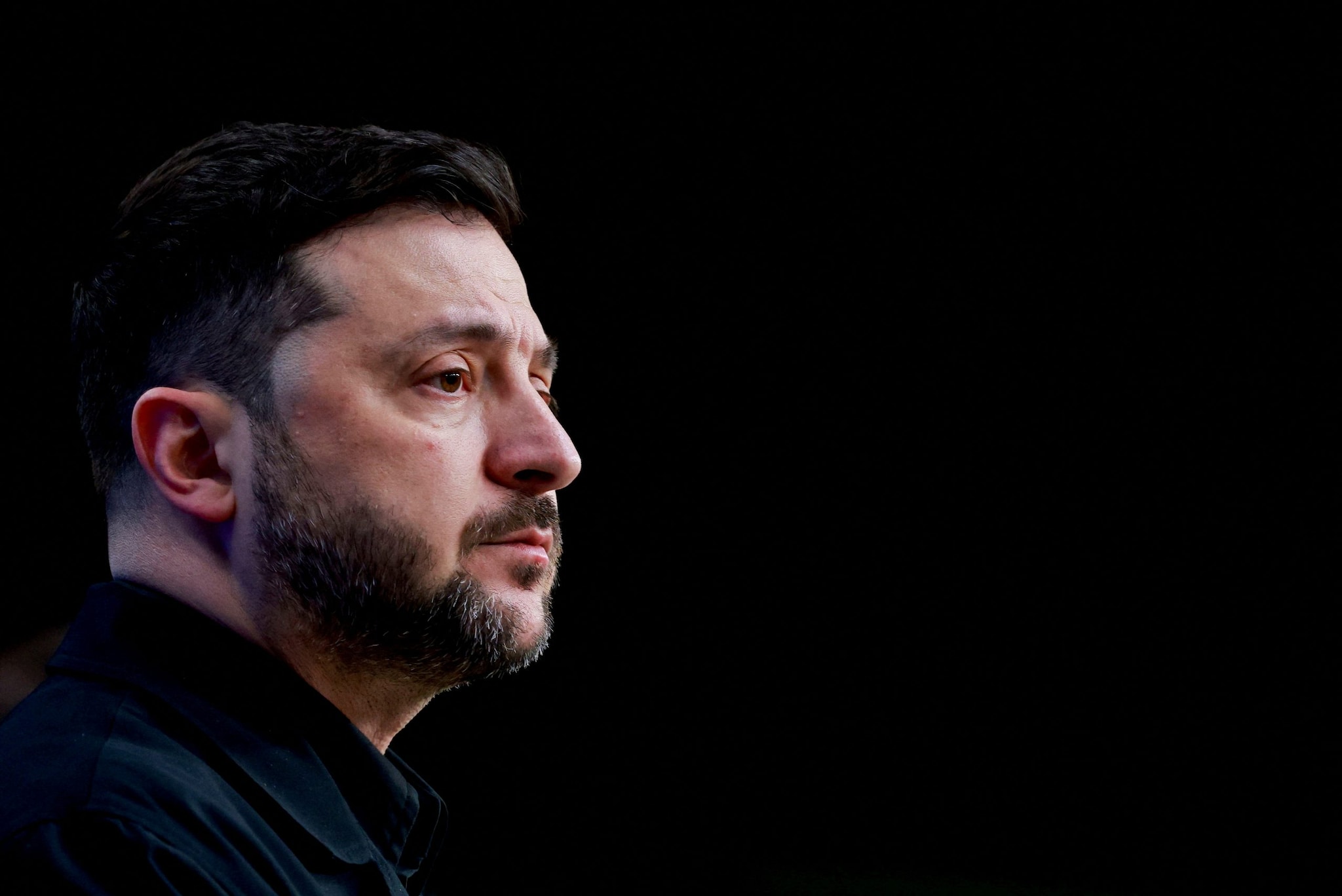
The mainstream media is treats President Volodymyr Zelenskiy’s recent demands for money and technology in exchange for "West Asia drone help" as a standard diplomatic negotiation. They call it a "partnership." They call it "mutual security."
They are wrong.
This isn't a trade. It is a sophisticated, high-stakes shakeup of the global military-industrial complex. Ukraine isn't asking for a seat at the table; they are building a new table and charging the West a premium to sit at it. If you think this is just about stopping Iranian-made Shaheds in the Middle East, you’ve missed the biggest shift in warfare since the invention of the rifled barrel.
The Myth of the "Helpful Ally"
The conventional narrative suggests Ukraine is offering the West "lessons learned" from the battlefield in exchange for cash. This implies the West still holds the upper hand in innovation.
I have spent years watching defense contractors burn billions on "exquisite" systems that fail the moment they hit a muddy trench. I’ve seen $2 million missiles used to down $20,000 drones. The math doesn't work. Ukraine knows this. They aren't offering tips; they are offering a lifeline to a Western defense sector that is currently bloated, slow, and dangerously obsolete.
When Zelenskiy asks for technology transfers, he isn’t looking for your grandfather’s blueprints. He is looking to cannibalize Western capital to scale a decentralized, software-first defense industry that can out-produce anything coming out of a traditional factory in Arlington or Bristol.
Ukraine is the New R&D Lab (And You’re Paying for It)
Western defense giants like Lockheed Martin or BAE Systems operate on five-year development cycles. Ukraine operates on five-day cycles.
By demanding "technology in return for help," Ukraine is effectively forcing a reverse-merger. They are taking the high-end components the West spent decades developing—sensors, optics, encrypted comms—and stripping away the bureaucratic fat. They are proving that a $500 FPV (First Person View) drone with a 3D-printed trigger mechanism is more valuable than a fleet of grounded stealth jets in a high-intensity conflict.
The "West Asia drone help" mentioned in the headlines refers to Ukraine’s unique data on Iranian loitering munitions. But don't be fooled. Ukraine isn't just handing over a USB drive of telemetry data. They are demanding the infrastructure to build the counters themselves. This creates a terrifying reality for Western politicians: they are funding the birth of a competitor that will eventually put their own domestic arms manufacturers out of business.
The Middle East Hook
The genius of the Zelenskiy gambit is the geographic leverage. By tying Ukrainian drone expertise to "West Asia" (the Middle East), Kyiv is speaking the only language Washington and London truly understand: oil and regional stability.
The logic is simple: "You want to stop Iranian drones from hitting your interests in the Gulf? We are the only ones who have killed thousands of them. Give us the factories, and we’ll solve your Middle East headache."
But there is a catch. Once Ukraine has the localized production capacity for advanced electronic warfare and autonomous strike craft, they no longer need to beg for the next tranche of aid. They become an exporter. They become the primary supplier for the very regions the West is trying to stabilize.
Why the "Money for Tech" Deal is a Trap
Most analysts focus on the dollar amount. They ask, "Can we afford another $10 billion?"
Wrong question. The real question is: "Can we afford to lose the monopoly on military IP?"
When you give Ukraine the "technology" they are asking for, you aren't just sending hardware. You are sending the keys to the castle. Ukraine’s battlefield is a giant, real-time A/B test for AI-driven targeting. Every time a Ukrainian drone operator tweaks code to bypass a Russian jammer, that software becomes the most valuable intellectual property on earth.
If the West agrees to this trade, they are effectively outsourcing their future defense sovereignty to a nation that is currently a furnace of innovation born of necessity. In five years, the US Army might find itself buying Ukrainian drone swarms because Raytheon simply can't compete with a battle-hardened, low-cost ecosystem.
The Cost of the "Lazy Consensus"
The "lazy consensus" among pundits is that this deal strengthens the NATO alliance. In reality, it exposes the massive gap in readiness between those who talk about war and those who win it.
- The Bureaucracy Gap: Western procurement takes months to approve a single chip change. Ukraine does it in a basement in Kharkiv while under fire.
- The Cost-Curve Gap: We are still building "silver bullets." Ukraine is building "lead bees."
- The Data Gap: We have simulations. They have raw, unvarnished truth.
Ukraine’s demand for money isn’t for "relief." It’s venture capital. They are a startup nation using a war of attrition to pivot the entire global arms market.
The Downside Nobody Admits
Let’s be brutally honest: this contrarian path has a dark side. By empowering Ukraine to become a global drone hub in exchange for Middle East intel, we are accelerating a world where autonomous killing machines are cheap, ubiquitous, and impossible to regulate.
If we give Ukraine the tech they want, we lose the ability to put the genie back in the bottle. We are trading short-term tactical help in West Asia for a long-term strategic nightmare where the barrier to entry for high-end warfare drops to near zero.
Stop Asking if We Should Help
The question "Should we give them the money?" is a relic of 2022.
The question is: "How do we prevent our own defense industries from becoming irrelevant museums once Ukraine becomes the world's primary arms dealer?"
Zelenskiy isn't a beggar. He’s the CEO of the world’s most effective defense incubator. He’s not asking for a favor; he’s offering the West a chance to buy into a future they are currently too slow to build themselves.
If you think this is about "West Asia drone help," you’ve already lost the war of information. This is about who owns the next century of kinetic conflict. And right now, it isn't the guys in suits in Washington. It’s the guys in multicam in Kyiv.
The West isn't "helping" Ukraine. They are paying for a front-row seat to their own obsolescence.
Stop looking at the aid packages. Start looking at the patent filings. The disruption isn't coming; it's already here, and it's being delivered by a $500 quadcopter.
Get used to it. Or get out of the way.
Would you like me to analyze the specific patent trends coming out of the Ukrainian "Brave1" defense tech cluster to show you exactly which Western sectors are most at risk?