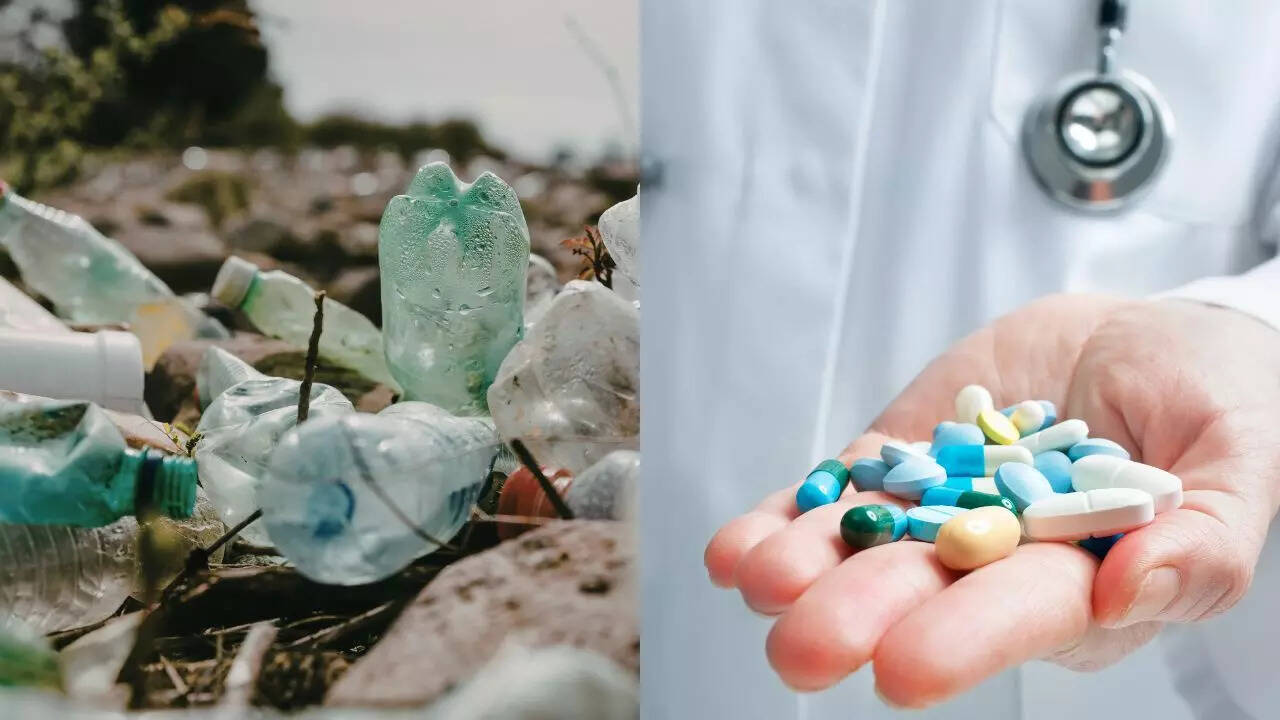
The headlines are intoxicating. "Bottles to Brain Medicine." It sounds like alchemy for the ESG era. Researchers at the University of Edinburgh recently demonstrated that Escherichia coli can be engineered to convert terephthalic acid—the primary component of PET plastic—into vanillin, which is then used to synthesize L-DOPA, the gold standard for treating Parkinson’s disease.
The media swallowed the bait whole. They framed it as a "circular economy" miracle that solves two crises at once: the mountain of plastic choking our oceans and the rising cost of neurological care.
They are wrong.
This isn't a solution. It is a distraction. I’ve watched enough biotech startups burn through Series A funding on "feel-good" science to know when we are being sold a narrative instead of a product. If you think the path to curing neurodegeneration involves a Diet Coke bottle and a petri dish of E. coli, you’re ignoring the brutal reality of industrial chemistry, metabolic load, and the basic laws of thermodynamics.
The Myth of the Free Lunch
The "lazy consensus" here is that because the feedstock (plastic waste) is "free" or "cheap," the resulting medicine will be too. This ignores the massive energy tax required to break down polymers into monomers.
PET doesn't just "become" medicine. You have to shred it, wash it, and subject it to chemical or enzymatic hydrolysis. Only then do you get terephthalic acid. Then, you feed that acid to genetically modified bacteria.
Here is the problem: E. coli doesn’t like eating plastic byproducts. It’s a metabolic uphill battle. To get a yield high enough for pharmaceutical production, you have to pump in significant amounts of energy and auxiliary nutrients. By the time you’ve refined that L-DOPA to the 99.9% purity required by the FDA or EMA, the "green" version is five times more carbon-intensive and three times more expensive than the traditional synthetic route using vanillin sourced from wood pulp or petroleum.
We are spending a dollar’s worth of energy to save a dime’s worth of plastic waste. That isn't innovation; it’s performance art.
The Purity Trap
In the pharmaceutical world, "recycled" is a terrifying word.
When you source your precursors from the waste stream, you aren't just getting PET. You are getting every additive, dye, UV stabilizer, and contaminant that was in that bottle. Bisphenol A (BPA), phthalates, and heavy metals from industrial labels don’t just vanish.
- Chemical Carryover: Traditional L-DOPA synthesis happens in controlled, closed-loop systems with ultra-pure reagents.
- The Bio-Accumulation Risk: Using a biological "factory" like E. coli adds a layer of endotoxin risk.
- Regulatory Suicide: No sane pharmaceutical executive is going to bet a billion-dollar clinical trial on a feedstock as variable as "recycled ocean plastic."
The regulatory hurdles for "plastic-derived drugs" are so high they are effectively a brick wall. The validation costs alone would bankrupt a mid-sized biotech firm before they even reached Phase I trials.
The Scalability Lie
Let’s talk numbers. The world produces about 50 million tons of PET annually. The global demand for L-DOPA is roughly 15,000 to 20,000 tons.
Even if this technology worked perfectly, it would consume less than 0.04% of the world’s plastic waste.
Calling this a "solution to the plastic crisis" is like saying you’re solving the housing crisis by building one birdhouse. It creates a false sense of progress that allows Coca-Cola and PepsiCo to keep churning out single-use containers under the guise that they might one day become "medicine."
It is a PR shield for polluters.
The Metabolic Burden
Let’s get technical. When you force a microbe to divert its energy from living and growing to churning out a foreign chemical like vanillin or L-DOPA, you hit a wall called metabolic burden.
The bacteria eventually stop cooperating. They mutate. They find ways to shut down the expensive genetic pathways we inserted. Keeping these "designer microbes" stable at an industrial scale requires a level of environmental control that negates any supposed "green" benefit.
I’ve stood in facilities where "miracle microbes" were supposed to change the world. More often than not, they are outperformed by simple, 19th-century organic chemistry. Why? Because the laws of chemistry don't need to be fed sugar and kept at a precise 37°C to work.
What We Should Be Doing Instead
If we actually want to lower the cost of Parkinson’s drugs and reduce plastic waste, we need to stop trying to force them into a single, clunky pipeline.
- Decouple the Problems: Solve plastic waste with high-heat pyrolysis or better mechanical recycling loops. Solve drug costs by attacking the patent thickets and middle-man pharmacy benefit managers (PBMs) that actually drive prices up.
- Focus on Biosynthesis from Glucose: If you want to use E. coli to make L-DOPA, feed them simple sugars or agricultural waste. It’s cleaner, more efficient, and actually scalable.
- Stop Valorizing Waste: The goal should be to eliminate PET, not to make it so "valuable" as a drug precursor that we have an excuse to keep producing it.
The Harsh Truth about Bio-Hype
We are currently in a "bio-everything" bubble. Every week, a new paper claims we can turn cigarette butts into antidepressants or old tires into insulin.
It makes for a great TED Talk. It makes for a terrible business model.
The "bottles to medicine" narrative relies on the public's lack of understanding of the Gibbs Free Energy equation. It assumes that "waste" is a magic ingredient that reduces the cost of entry. In reality, waste is the most expensive feedstock on earth because of the entropy you have to fight to make it useful again.
$$\Delta G = \Delta H - T\Delta S$$
When you try to turn a disordered, contaminated plastic bottle (high entropy) into a highly ordered, ultra-pure pharmaceutical (low entropy), you have to pay the price in energy ($\Delta G$). There are no shortcuts. There is no magic.
Stop falling for "surprising methods" that ignore the fundamental constraints of the physical world. If you want to help Parkinson’s patients, donate to legitimate clinical research into alpha-synuclein aggregation. If you want to fix the plastic problem, support a ban on single-use polymers.
Don't pretend you can do both by putting a lab coat on a recycling bin.
Stop looking for miracles in the trash.