Twelve billion dollars sounds like a massive number until you realize it’s just the down payment. While official reports focus on the immediate price tag of military deployments and missile intercepts in the Middle East, they’re missing the bigger, uglier picture. We’re not just talking about the cost of fuel for carrier strike groups or the price of a few dozen SM-3 interceptors. We’re looking at a systemic drain on the American economy that most politicians are too scared to touch.
The reality of the current standoff with Iran is that the US is playing an expensive game of whack-a-mole. Every time a proxy group fires a drone that costs less than a used car, the Pentagon responds with technology that costs millions. It’s a math problem that doesn't add up for Washington. If you think the current $12 billion estimate is the end of the story, you're looking at the wrong ledger.
Where the Money Actually Goes
Most people see the headlines and think the money is just "gone." It's more complicated. A huge chunk of that $12 billion is tied up in "Overseas Operations" accounts that are notoriously difficult to track. We’re seeing massive expenditures in three specific buckets: expanded naval presence in the Red Sea, increased intelligence sorties, and the literal ammunition consumed in active defense.
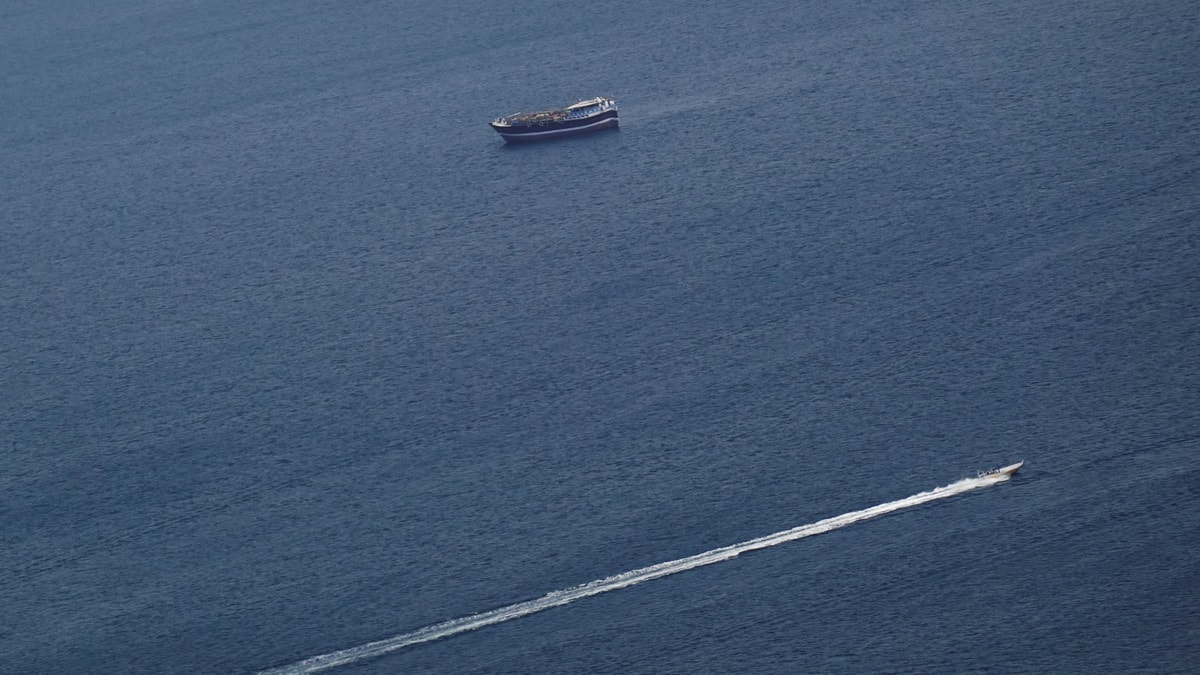
Take the Red Sea operations against Houthi rebels, for example. The US Navy isn't just sitting there. They're firing interceptors like the RIM-161 Standard Missile 3. These things cost between $10 million and $30 million a pop. When you use a $20 million missile to take out a $20,000 "suicide drone," you’re losing the economic war even if you win the tactical one. This is the asymmetric reality of 2026.
The Pentagon’s accounting often hides the "readiness" costs too. When we surge two carrier strike groups to the region, we’re pulling them from other critical areas like the Indo-Pacific. That creates a maintenance backlog that costs billions to fix later. It’s like redlining your car engine for a month—you might get where you’re going, but the repair bill is going to be a nightmare.
The Invisible Inflation Tax
The conflict isn't just hitting the taxpayer through the defense budget. It’s hitting you at the pump and the grocery store. Whenever tensions spike in the Strait of Hormuz, insurance premiums for oil tankers skyrocket. Those costs don’t just vanish. Shipping companies pass them down the line.
- Risk Premiums: Global shipping routes are being rerouted around the Cape of Good Hope.
- Fuel Surcharges: Longer routes mean more fuel consumption, which tightens global supply.
- Supply Chain Lag: Parts for everything from iPhones to F-15s get stuck in transit.
I’ve seen analysts at places like the Center for Strategic and International Studies (CSIS) point out that even a 10% disruption in the Strait of Hormuz can send global oil prices up by 20% or more. We’re seeing a version of that play out right now. It's a "shadow tax" on every American consumer, and it’s never included in the official $12 billion price tag.
Military Industrial Complex or National Security
There's an argument that this spending "supports American jobs" because the money goes to defense contractors. That’s a half-truth. While Lockheed Martin and Raytheon are certainly seeing their order books fill up, this is what economists call "the broken window fallacy."
Spending $12 billion on missiles that explode in the desert provides far less economic value than spending that same money on infrastructure or technology that actually produces something. When we build a bridge, it helps move goods for decades. When we fire a missile, it’s gone in thirty seconds. The opportunity cost is staggering. We are effectively mortgaging our future for a stalemate in the Middle East.
The Human Capital Drain
We also need to talk about the people. The "cost" of war isn't just dollars; it's the wear and tear on the 2.1 million people in the US military. Frequent deployments to high-stress environments lead to lower retention rates. Training a single fighter pilot costs the Air Force millions of dollars. When those pilots burn out and leave for the private sector because they’re tired of constant Middle East rotations, that’s a massive loss of "sunk cost" investment.
Why the Estimates are Always Wrong
History tells us that initial war estimates are a joke. Remember the Iraq War? The Bush administration originally suggested it might cost $50 billion to $60 billion. A decade later, the true cost, including long-term veteran care and interest on the debt, was closer to $2 trillion.
The current $12 billion figure for the Iran conflict is likely off by a factor of ten if we look at a three-to-five-year horizon. We aren't accounting for the interest. Since the US is running a massive deficit, every dollar spent on this conflict is borrowed. By the time we pay back that $12 billion with interest, it could easily be $25 billion.
The Regional Arms Race
Iran isn't standing still either. They’re forcing the US to spend more by developing cheaper, more numerous systems. This is the definition of a "cost-imposing strategy." They don't have to sink a US carrier to win. They just have to make it so expensive for the US to stay in the region that the American public eventually demands a withdrawal.
Regional partners like Saudi Arabia and the UAE are also looking at this price tag and getting nervous. They’re starting to diversify their own security, sometimes looking toward China or Russia. This shifts the geopolitical balance in ways that will cost the US much more than just money in the long run. Loss of influence is a cost that doesn't show up on a spreadsheet until it's too late.
Looking at the Long Game
If you want to understand where this is going, stop looking at the Pentagon’s press releases. Start looking at the supplemental funding requests sent to Congress. These are the "emergency" bills that bypass the normal budget process. They’re the canary in the coal mine for a spiraling conflict.
We’re currently seeing a pattern of "forever involvement" that mirrors the early 2000s. The players have changed, and the tech is more advanced, but the fiscal irresponsibility remains the same. The US needs a strategy that doesn't involve firing $2 million interceptors at $20,000 drones indefinitely. Without a clear diplomatic off-ramp or a shift in how we handle maritime security, that $12 billion is going to look like a bargain compared to the final bill.
Monitor the Congressional Budget Office (CBO) reports over the next six months. They usually provide a more sober look at the long-term fiscal impact than the White House. Also, watch the "WPS" (War Powers System) reports for a better sense of how many "boots on the ground" are actually involved, as these numbers often drive the hidden personnel costs. Staying informed means looking past the initial "sticker price" and understanding the compounding interest of modern warfare.