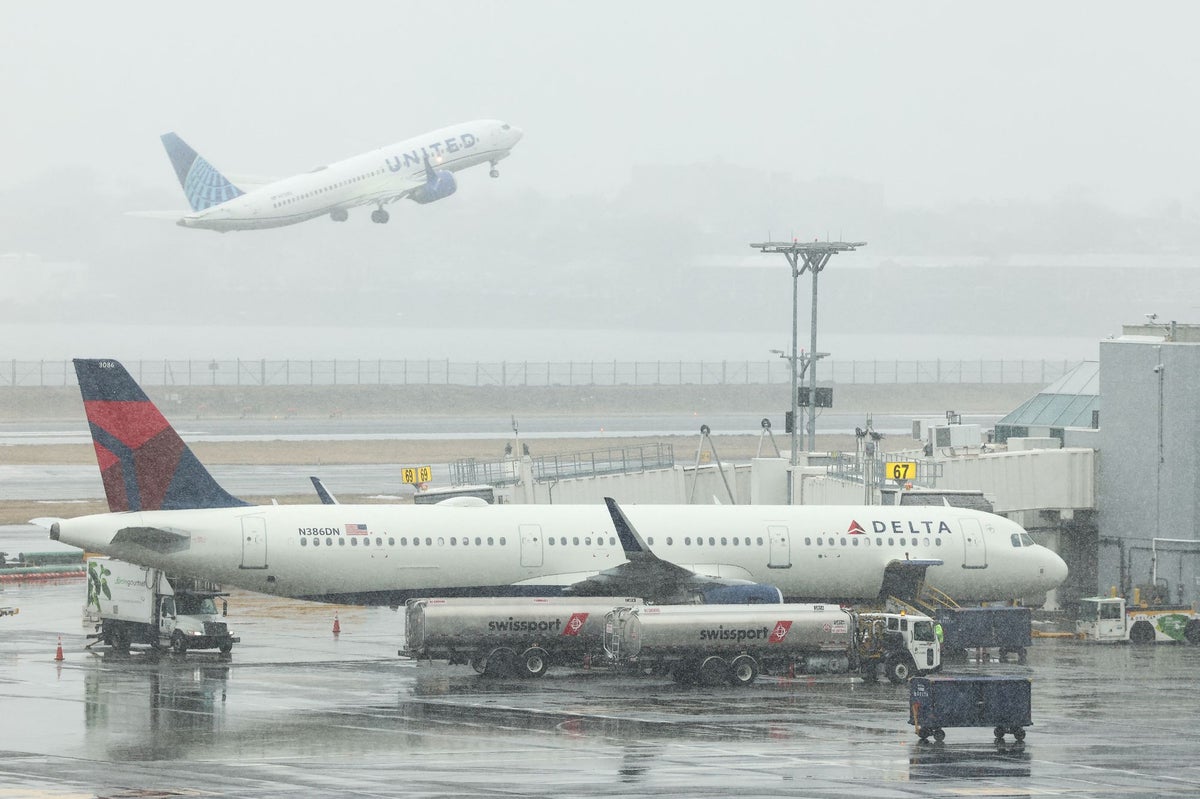
The hospitalization of three flight attendants following a severe turbulence event highlights a systemic failure in how aviation safety protocols account for non-linear atmospheric energy shifts. While standard media narratives focus on the sensationalism of "crew members thrown into the air," a rigorous structural analysis reveals that these incidents are not random acts of nature but predictable outcomes of kinetic energy transfer within the aircraft cabin. The injury of crew members represents a specific breakdown in the operational safety margin—the gap between forecasted atmospheric stability and the physical response time required for unrestrained personnel to secure themselves.
The Physics of Vertical Acceleration and Unrestrained Mass
To understand why flight attendants sustain critical injuries during these events, one must move past the term "turbulence" and instead analyze the Vertical Load Factor. Turbulence is a manifestation of atmospheric pressure gradients or wind shear that results in rapid changes in the aircraft's lift coefficient. When an aircraft encounters a powerful downdraft, the airframe drops faster than gravity can pull an unrestrained object downward.
The resulting "lofting" effect occurs because the floor of the aircraft accelerates downward at a rate exceeding $9.81 m/s^2$. For a flight attendant in the aisle, the floor essentially vanishes. The injury occurs not during the "flight" phase, but during the Reacquisition of Contact, where the aircraft's downward momentum is arrested by a pocket of denser air, causing the floor to surge upward and strike the suspended occupant with a force often exceeding $2.5G$.
This creates a specific injury profile:
- Compression Fractures: Resulting from the floor rising to meet the feet or tailbone during a rapid recovery of lift.
- Lacerations and Blunt Force Trauma: Caused by contact with the overhead bins or Passenger Service Units (PSUs) during the initial negative-G phase.
- Secondary Impact Injuries: Occurring when service carts—which can weigh over 100 kilograms—become unmoored projectiles.
The Clear Air Turbulence (CAT) Detection Gap
The incident in question likely involved Clear Air Turbulence (CAT), a phenomenon that remains the most significant threat to in-cabin safety due to its invisibility to standard Onboard Weather Radar. Conventional radar operates by bouncing pulses off water droplets or ice crystals. CAT occurs in cloudless regions, typically near the boundaries of jet streams where high-speed air interacts with slower ambient air, creating "Kelvin-Helmholtz" waves.
The inability to "see" these waves creates a zero-warning environment. In this specific case, the "packed plane" variable increases the complexity of the cabin environment. High passenger density limits the available "grab points" for crew members and increases the likelihood that a falling body or object will strike a passenger, compounding the casualty count.
The Economic and Operational Cost Function of In-Flight Injuries
Aviation entities often view turbulence as an "act of God," but from a consultancy perspective, it is a quantifiable risk that impacts the Direct Operating Cost (DOC) of a carrier. When three crew members are removed from service via emergency medical transport, the airline triggers a cascade of financial liabilities:
- Immediate Operational Disruption: If the crew falls below the FAA-mandated minimum (typically 1 attendant per 50 seats), the aircraft is legally grounded at the next point of landing, regardless of the original destination.
- Short-term Labor Volatility: The cost of "deadheading" replacement crew to the location of the grounded aircraft, combined with overtime premiums for standby staff.
- Long-term Liability and Insurance Escalation: Hull insurance premiums and workers' compensation claims are sensitive to "preventable" injury patterns.
The "Three Pillars of Turbulence Risk Management" currently used by airlines are failing to mitigate these costs because they rely on reactive rather than proactive technologies. These pillars—Forecasting, Pilot Reports (PIREPs), and Seatbelt Signs—possess a fundamental latency. A PIREP from a preceding aircraft may be five to ten minutes old by the time a trailing aircraft enters the same coordinates, by which time the atmospheric cell may have shifted or intensified.
Structural Limitations of Current Cabin Hardware
The article referencing the "packed plane" underscores a critical bottleneck in aircraft design: the Static Rigidity of the Service Environment. Cabin interiors are designed for comfort and aesthetic appeal, but they are functionally hazardous during high-magnitude vertical accelerations.
- Galley Design: The areas where the three attendants were likely positioned are filled with hard edges and metallic latches.
- Service Carts: These remain the most dangerous unrestrained masses in the cabin. Even with "dead-man brakes," a cart can be lofted if the vertical acceleration exceeds the friction coefficient of the brake pad on the carpet.
- Overhead Bin Integrity: While bins are rated for specific weights, the dynamic load of a 75kg human body being thrown against them from below is not a standard test parameter for certification.
The Mechanism of Injury in "Packed" Environments
In a high-occupancy flight, the air volume per person is minimized, but the "debris field" during a turbulence event is maximized. The presence of three injured flight attendants suggests they were likely in the middle of a service cycle. This is the Maximum Vulnerability Window. During service, the following conditions are met:
- Crew members are unbuckled.
- Carts are in the aisles (obstructing passenger egress and providing a massive projectile).
- Hot liquids are exposed.
The failure to transition from "Service Mode" to "Safety Mode" is a function of the Warning-to-Action Latency. If the cockpit receives a signal of impending turbulence, it takes an average of 10 to 15 seconds for a crew member to secure a cart and reach a jumpseat. CAT events often occur in less than 3 seconds. This 7-to-12-second deficit is where the hospitalizations occur.
Proposed Systemic Shift: LiDAR and Automated Safety Integration
To eliminate the "hospitalization" outcome, the industry must move toward LiDAR (Light Detection and Ranging) integration. Unlike radar, LiDAR uses ultraviolet laser pulses to measure the movement of air molecules themselves, providing a high-resolution map of turbulence up to 10 miles ahead of the aircraft.
The implementation of such technology would allow for a Decoupled Safety Protocol:
- Automated Pre-emption: The aircraft detects CAT and automatically triggers the seatbelt sign and a "Cabin Alert" tone before the pilot even perceives the bump.
- Variable Lift Logic: Modern fly-by-wire systems could theoretically adjust wing surfaces (flaps and flaperons) at millisecond speeds to counteract the vertical gust, "smoothing" the G-load felt by the cabin occupants.
The current reliance on "manual" warnings and pilot-to-cabin intercom announcements is an analog solution to a high-speed digital atmospheric problem. The injured flight attendants are a lagging indicator of a fleet that is physically capable of Mach 0.85 but safety-managed at the speed of human speech.
Strategic Imperative for Carriers
Airlines must reclassify turbulence from a "weather event" to a "structural safety breach." This requires an immediate audit of cabin service windows during known periods of jet stream volatility.
The primary move is the implementation of Dynamic Service Windows. Instead of a fixed service schedule, flight management systems must integrate real-time CAT probability maps to dictate when the "Safe-to-Serve" window is open. If the probability of a vertical acceleration event exceeding $0.5G$ is higher than 15%, the galley must remain locked.
The second move involves the Kinetic Hardening of the Galley. This includes the installation of ceiling-mounted handrails and energy-absorbing flooring in crew-heavy areas. If the airframe's floor is going to strike a crew member, the interface must be designed to dissipate energy rather than transfer it directly to the skeletal structure.
The final strategic play is the adoption of wearable "Haptic Alert" devices for crew. These devices, synced with the aircraft's detection suite, would provide a tactile countdown to a predicted impact, bypassing the auditory clutter of a "packed plane" and allowing for the immediate securing of person and property. Failure to adopt these integrated systems ensures that crew hospitalizations will remain a steady, and expensive, variable in the aviation cost equation.