Energy analysts love a good apocalypse. When tensions spike between Israel and Iran, the headlines default to a singular, lazy narrative: "The World’s Biggest Gas Field is at Risk." They point to South Pars, the massive offshore expanse shared by Iran and Qatar, and claim that a few well-placed missiles would collapse the global economy and bring Tehran to its knees.
They are wrong.
The obsession with South Pars as a "choke point" for global energy is a misunderstanding of how modern gas markets, regional power dynamics, and physical infrastructure actually function. If Israel strikes South Pars, they aren't cutting off the world’s oxygen. They are triggering a sequence of events that would leave the West structurally weaker while failing to significantly dent Iran’s long-term regional influence.
The consensus view assumes that South Pars is a fragile glass house. In reality, it is a sprawling, redundant industrial complex that is far harder to "kill" than a simple refinery or a single port. More importantly, the geopolitical fallout of hitting a shared field would alienate the very allies the West needs to contain Iran.
The Myth of the Instant Global Shortage
The loudest argument for the "peril" of a South Pars strike is the immediate impact on global Liquefied Natural Gas (LNG) prices. Pundits scream about $100 gas and freezing European winters.
Here is the data they ignore: Iran barely exports any LNG.
Unlike Qatar, which has used its half of the field (the North Field) to become an export titan, Iran’s gas is almost entirely consumed domestically or sent via pipeline to neighbors like Iraq and Turkey. Iran has spent decades trying to build LNG liquefaction plants, but sanctions have stalled those projects indefinitely.
If South Pars goes offline tomorrow, the "global" supply of LNG doesn't drop by a single cubic foot. The impact is felt in Tehran’s power grid and Baghdad’s industrial sector. The "global" shock is purely psychological—a spike driven by algorithmic traders and panicked headlines rather than a physical deficit in the market.
I have watched energy desks trade on "Middle East tension" for twenty years. They price in the fear of a Strait of Hormuz closure, not the loss of Iranian domestic molecules. By conflating Iranian production with Qatari exports, analysts create a false sense of global vulnerability that serves Iran’s deterrent strategy perfectly.
Why Qatar is the Real Shield
South Pars isn't just an Iranian asset. It is the northern half of a single geological structure. The southern half is Qatar’s North Field.
Think of it like two kids sharing a milkshake with two different straws.
If Israel launches a kinetic strike on the Iranian side of the field, they are operating in immediate proximity to the world’s most vital energy infrastructure belonging to a key U.S. ally. Shrapnel, navigational errors, or the resulting environmental disaster (like a massive subsea blowout) wouldn't respect maritime borders.
- The Insurance Nightmare: The moment missiles fly near the 25th parallel, maritime insurance for the entire Persian Gulf goes vertical.
- The Qatari Pivot: Qatar hosts the largest U.S. airbase in the region (Al Udeid). Do we honestly think Doha will sit quietly while their primary source of national wealth becomes a target zone?
- The Spillover: A major fire at an offshore platform creates a thermal and ecological signature that would force the suspension of operations across the border.
By hitting South Pars, Israel wouldn't just be attacking Iran. They would be de facto attacking Qatar. This isn't "surgical" warfare; it’s a sledgehammer swung in a china shop where the shop owner is your best friend.
The Resilience of Subsea Infrastructure
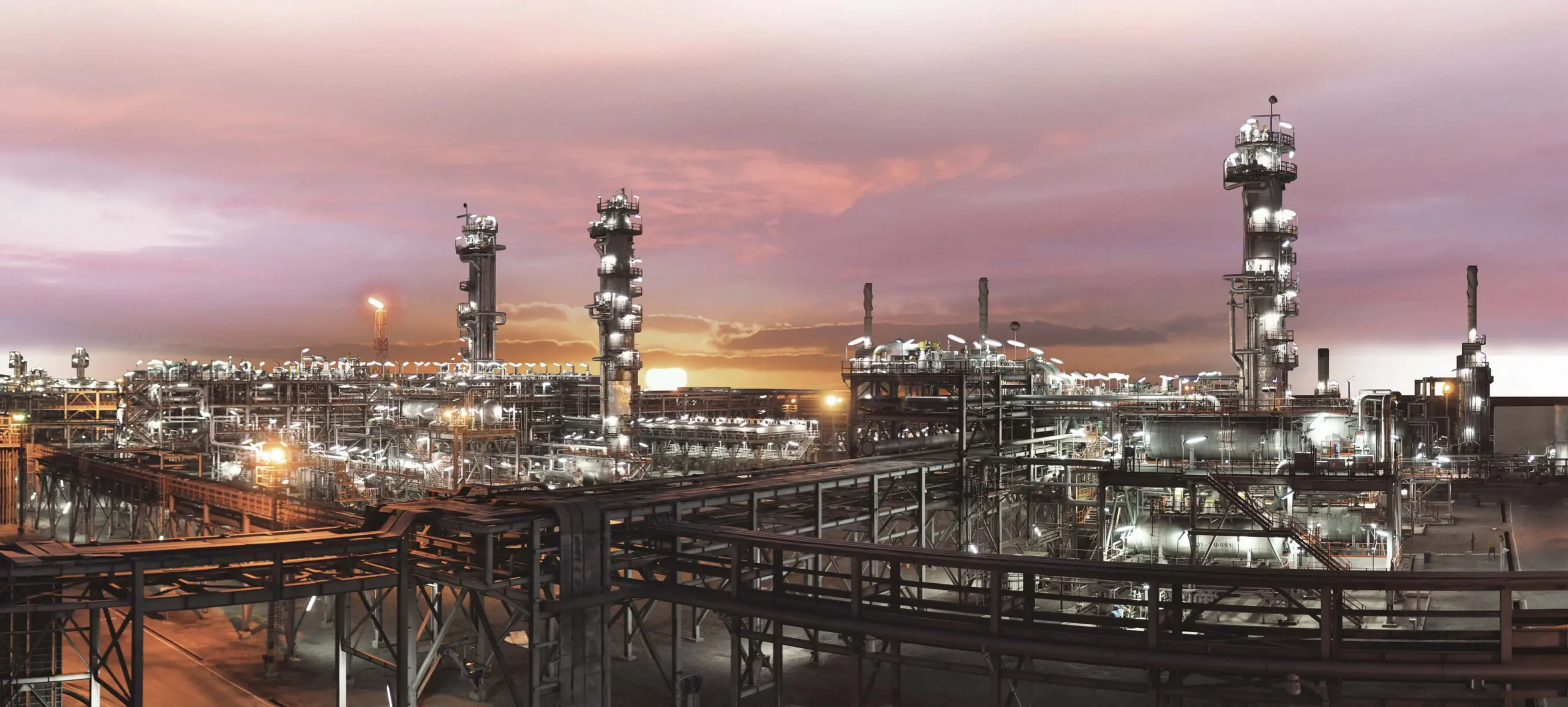
People imagine South Pars as a single building you can blow up. It is actually a network of dozens of platforms, hundreds of wells, and thousands of kilometers of subsea pipelines buried under the seabed.
To actually "stop" the flow of gas, you have to do more than knock over a platform. You have to destroy the gathering centers and the massive onshore processing facilities at Asaluyeh.
I’ve seen how these facilities are built. They are hardened, redundant, and spread across a massive footprint. Iran has spent thirty years preparing for exactly this scenario. They have "spare" capacity built into the system. You might take out a platform, but the gas just gets rerouted through another manifold.
To achieve a total shutdown, you would need a sustained bombing campaign on the scale of the Gulf War. A single "retaliatory" strike—the kind currently being debated in security cabinets—would be nothing more than an expensive firework show. It would cause a temporary dip in pressure, followed by a surge in Iranian nationalist fervor and a rapid repair cycle.
The Fallacy of "Maximum Pressure" via Energy
The "lazy consensus" suggests that if Iran loses its gas revenue, the regime collapses.
This ignores the basic math of the Iranian economy. Iran is already the most sanctioned nation on earth. They have learned to operate a "resistance economy" where internal consumption is prioritized over external trade.
If you take out their gas, you aren't stopping their nuclear program. You are making the average Iranian citizen cold and dark in the winter. History shows that when you freeze a population, they don't revolt against their government; they consolidate around the flag against the "foreign aggressor" who cut the heat.
Furthermore, Iran has a massive surplus of heavy fuel oil and diesel stored in tankers. If the gas stops flowing to power plants, they simply flip a switch and start burning the dirty stuff. It’s an environmental catastrophe, but the lights stay on. The "perilous moment" for the regime is a myth constructed by people who haven't spent time looking at the dual-fuel capabilities of Iranian industrial turbines.
The Real Risk: The "Suicide" Counter-Move
The true danger of hitting South Pars isn't what happens to the gas. It’s what Iran does in response.
If Iran loses its primary energy source, they have no reason to play by the rules anymore. This is the "Samson Option" of energy politics. If Iran can't use the Gulf, no one can.
- The Sea Mine Reality: It takes one wooden dhow to drop a few dozen "dumb" mines in the shipping lanes to halt all LNG traffic out of Qatar and the UAE.
- Drone Swarms on Abqaiq: We already saw in 2019 how a few drones can take half of Saudi Arabia’s oil production offline.
- Cyber Sabotage: The industrial control systems (ICS) of regional energy hubs are vulnerable. If Iran’s infrastructure is burning, their cyber units will have a "nothing to lose" mandate.
The competitor article frames a strike on South Pars as a way to "check" Iranian power. In reality, it removes the last bit of leverage the West has. As long as Iran has something to lose, they are predictable. Take away South Pars, and you unleash a cornered animal with a massive arsenal of asymmetric tools.
The Invisible Winners: Russia and China
Let’s talk about who actually benefits from a South Pars conflagration. It isn't the West.
- Russia: Every time Middle Eastern gas is threatened, Gazprom’s leverage over Europe increases. Even if the molecules aren't physically linked, the price parity is. High prices in Asia (due to Qatari fear) pull American LNG away from Europe, forcing the EU back into the arms of "shadow" Russian supplies.
- China: Beijing is the primary buyer of Iranian "ghost" oil. They are also the primary investor in regional stability because they need the energy. An Israeli strike on South Pars is a direct slap to Chinese interests. Do we want to give Beijing a reason to fully back Iran’s military integration?
The idea that we can "win" by destroying energy infrastructure in 2026 is an 20th-century mindset. We live in a world of interconnected loops. You cannot break one link without the entire chain snapping back and hitting you in the face.
Stop Looking at the Map, Start Looking at the Ledger
If you want to actually hurt the Iranian war machine, you don't bomb a gas platform. You go after the shadow banking networks in Dubai and Turkey that wash the money. You go after the dual-use technology supply chains in East Asia.
Bombing South Pars is the "tough guy" move that feels good in a briefing room but fails every logic test of modern geopolitics. It is high-risk, low-reward, and strategically illiterate.
The "perilous moment" isn't the strike itself. The peril is that the people making the decisions actually believe their own hype about how easy it is to dismantle a petro-state from the air.
Energy security isn't about who has the biggest bombs. It’s about who understands the plumbing. And right now, the pundits calling for a strike on South Pars don't even know where the pipes are buried.
Don't ask if Israel can hit South Pars. Ask why they would be stupid enough to try.
The "biggest gas hub" isn't a target; it's a hostage. And when you kill the hostage, you lose all your bargaining power.
Stop cheering for the explosion and start bracing for the blowback.