The air in a modern medical facility has a specific, sterilized weight to it. It smells of ozone, industrial floor cleaner, and a faint, metallic sharpness that feels like it’s scraping the inside of your lungs. For a technician in a specialized oncology ward, the most important thing in the room isn't the patient or the doctor. It is the isotope. These tiny, flickering embers of radioactive material are the miracles of the twenty-first century. They find tumors. They kill cancers. They are the fragile threads connecting a terminal diagnosis to a second chance at life.
But those same threads are currently being pulled taut across the globe.
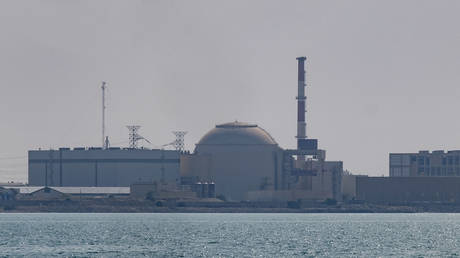
In a recent, sobering briefing, the World Health Organization looked past the political theater of the Middle East and focused on something much more primal: the "worst-case scenario" for nuclear safety. We often talk about nuclear issues in the language of war—missiles, silos, and treaties. We forget that the infrastructure of the atom is woven into the very fabric of our public health. When a nuclear site becomes a point of contention, or worse, a target, we aren't just talking about a flash in the sky. We are talking about the poisoning of the well.
The Ghost in the Machine
Radiation is a ghost. You cannot see it. You cannot smell it. You cannot hear it until a Geiger counter begins its frantic, staccato chattering. To understand the stakes in Iran, you have to look away from the centrifuges and toward the soil, the water, and the wind.
If a containment breach occurs—whether by accident, technical failure, or external force—the geography of the disaster doesn't respect borders. It doesn't care about the ideology of the government in Tehran or the sanctions imposed by Washington. It follows the thermal currents. It settles into the groundwater.
Consider a farmer in a province hundreds of miles from a facility like Natanz or Bushehr. He is a hypothetical man, let’s call him Abbas. He has no interest in uranium enrichment percentages. He cares about his pomegranate trees. If the "worst-case" happens, Abbas doesn't see a mushroom cloud. He simply wakes up to a world where the rain is a carrier for Cesium-137. This isotope mimics potassium. The trees soak it up. The fruit carries it. The children eat the fruit.
This is the "human-centric" reality that the WHO is trying to scream into the void. A nuclear incident is a generational poison. It is a slow-motion catastrophe that rewrites the DNA of a region.
The Fragility of the Shield
We like to believe that high-tech facilities are fortresses. We trust in the "robust" nature of the concrete—wait, let’s be more honest. We trust in the idea that someone, somewhere, has thought of everything. But history is a graveyard of things we thought were "fail-safe."
The WHO’s warning is centered on the collapse of oversight and the degradation of safety protocols under the pressure of geopolitical tension. When a country is isolated, when supply lines for specialized parts are cut, and when international inspectors are kept at arm's length, the safety margins begin to thin. It is like driving a high-performance car on an icy road while the brakes are slowly leaking fluid. You might stay on the road for a long time. You might even feel in control. But the physics of the situation are moving against you.
The technical reality of nuclear power requires a constant, obsessive level of maintenance. Cooling systems need power. Power requires a stable grid. A stable grid requires a nation not on the brink of chaos. When the WHO warns of a worst-case scenario, they are describing a cascade of failures where the very systems meant to protect the public become the source of their undoing.
The Invisible Supply Chain
There is another side to this story that rarely makes the front page. It is the quiet, desperate need for medical isotopes. Iran, like many nations, relies on nuclear technology for healthcare. When the nuclear sector is engulfed in conflict or extreme sanctions, the first people to suffer aren't the generals. They are the patients in the basement of the hospital.
I once spoke with a radiologist who described the feeling of running out of diagnostic tracers. It’s like being a scout in a dark forest and having your flashlight batteries die. You know the danger is there, but you can no longer see where it starts or ends. The "nuclear scenario" includes the total collapse of this medical infrastructure. If the facilities are compromised, the production of these life-saving materials stops. The irony is bitter: the same atoms that can destroy a city are the only things capable of seeing inside a human chest to find a hidden sickness.
The Weight of the Dust
Why does this matter to someone living in London, Tokyo, or New York?
Because we live in a closed system. The atmosphere is a single, shared lung. When the WHO discusses the "worst-case," they are looking at the environmental data from Chernobyl and Fukushima. They see the way radioactive particles can travel across continents in days. They see the long-term cost to the global food supply.
But more than that, they see the psychological fallout. A nuclear event creates a specific kind of terror. It is the fear of the invisible. It is the realization that the ground beneath your feet—the most fundamental thing we rely on—has turned against you.
The international community often treats these warnings as white noise. We have become desensitized to the word "nuclear." We associate it with 1980s movies or abstract political debates. We have forgotten that it is a physical reality governed by the laws of thermodynamics, not the whims of diplomats.
The WHO isn't trying to be alarmist for the sake of a headline. They are looking at the math. They are looking at the aging infrastructure, the lack of transparent inspections, and the rising temperature of regional rhetoric. They see a clock. It is a silent clock, tucked away in a basement, ticking toward a midnight that nobody is prepared for.
If the "worst-case" manifests, there will be no "synergy" of international response that can undo the damage. There will only be the frantic, late-night meetings of health officials trying to figure out how to distribute stable iodine to millions of people. There will be the heartbreaking task of telling farmers their land is no longer theirs to till.
The stakes are not about who wins a seat at a table or who gets to keep their centrifuges spinning. The stakes are the fundamental right to breathe air that doesn't carry a hidden price and to drink water that doesn't vibrate with the ghost of a failed policy.
We are currently betting the health of millions on the hope that the "worst-case" remains a hypothetical. But hope is not a safety protocol. It is not a containment dome. It is just a thin, flickering candle held against a rising wind.
The technician in the oncology ward knows this. They handle the isotopes with lead-lined gloves and a deep, practiced respect. They know that the atom is a tool of immense power, one that demands total honesty and absolute care. It is a lesson the rest of the world has yet to learn.
Somewhere, in a quiet village on the outskirts of an industrial zone, a child is playing in the dirt. They are small, vibrant, and completely unaware of the geopolitical chess match being played above their head. To that child, the dirt is just a place to build things. To the WHO, that dirt is a potential frontline.
We owe it to that child to ensure the dirt remains just dirt.
The clock is ticking. You can't hear it yet. But if you listen closely to the silence between the headlines, the vibration is there.