The border between Israel and Lebanon is no longer a line on a map. It is a ticking clock. While diplomatic cables from Washington and Paris scramble to provide a "de-escalation" framework, the reality on the ground has shifted from sporadic skirmishes to the logistical precursors of a full-scale ground invasion. Lebanon is not merely bracing for an onslaught; it is watching the slow-motion collapse of the status quo that has held since 2006.
This isn’t about rhetoric. It is about the physical movement of brigades, the hardening of civilian infrastructure, and a catastrophic economic calculation that makes war seem, to some players, more logical than peace. For months, the focus remained on Gaza, but the gravity of the conflict has moved north. The displaced populations on both sides of the Blue Line—roughly 80,000 Israelis and over 90,000 Lebanese—have created a political vacuum that can only be filled by a return to homes or a march into battle.
The Logistics of Inevitability
Armies do not move tens of thousands of troops to a border for a bluff that lasts six months. The Israeli Defense Forces (IDF) have shifted their "center of gravity" northward, transitioning from defensive postures to what military analysts call "offensive readiness." This involves more than just tanks on trailers. It involves the establishment of forward supply depots, the clearing of brush to create kill zones, and the mobilization of reserve units specifically trained for the jagged, mountainous terrain of Southern Lebanon.
Southern Lebanon is a fortress of limestone and tunnels. Unlike the sandy, urban density of Gaza, this geography favors a defender with long-range anti-tank guided missiles (ATGMs). Hezbollah has spent nearly two decades turning every basement and cave south of the Litani River into a launch point. They aren't just a militia anymore. They are a regional military power with a sophisticated command structure and an arsenal that dwarfs many European armies.
The Missile Gap
The primary deterrent against an Israeli invasion has always been the sheer volume of Hezbollah’s rocket fire. We are talking about an estimated 150,000 projectiles. In a high-intensity conflict, Hezbollah could theoretically launch 3,000 to 4,000 rockets a day. This would overwhelm the Iron Dome. It isn't a question of if the system is good; it’s a question of simple math. When the interceptors run out or the sensors are saturated, the missiles get through.
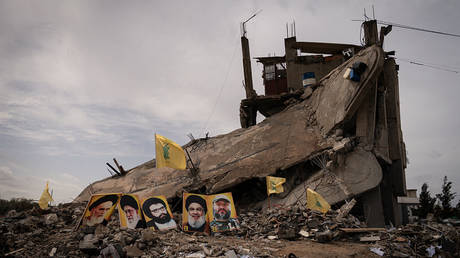
Israel’s strategy to counter this is not a mystery. It is the Dahiya Doctrine—the application of disproportionate force against civilian infrastructure used by combatants. If a ground invasion starts, the destruction in Beirut and the south will likely make the 2006 war look like a minor police action.
Hezbollah’s Impossible Choice
Hassan Nasrallah, Hezbollah’s Secretary-General, finds himself in a strategic vice. By tying the northern front to the ceasefire in Gaza, he has surrendered his agency to Hamas’s leadership. If he stops firing without a Gaza deal, he loses face and the "unity of fronts" narrative collapses. If he continues, he invites the total destruction of Lebanon’s remaining functional infrastructure.
The Lebanese state is a ghost. Its currency is toilet paper, its port is a ruin, and its government is a collection of feudal lords masquerading as ministers. Hezbollah knows that a war which levels what remains of the national power grid or the airport might finally turn the Lebanese street—including parts of its own Shia base—against the "Resistance."
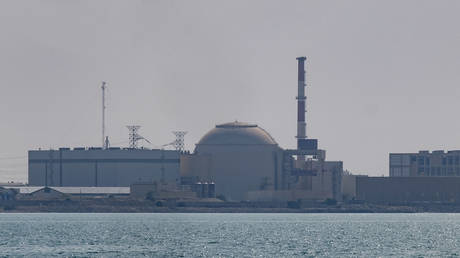
Yet, the Iranian patron has its own requirements. For Tehran, Hezbollah is the ultimate insurance policy. It is the gun held to Israel’s head to prevent a strike on Iranian nuclear facilities. Expending that insurance policy on a tactical dispute over border villages is a massive gamble.
The Northern Border Buffer Zone
Israel’s demand is simple but geographically complex: Hezbollah must move its elite Radwan forces north of the Litani River, roughly 18 miles from the border. This was the requirement of UN Resolution 1701, which has been functionally dead since the day it was signed.
Israel cannot politically afford to keep the Galilee empty forever. The pressure on the Netanyahu government from displaced residents is immense. These people are not refugees in a foreign land; they are citizens displaced within their own country, and their patience has evaporated. To get them back, Israel must either secure a diplomatic guarantee that Hezbollah won't repeat an October 7th-style raid—which Hezbollah will never grant—or create a "security zone" by force.
A Buffer Built of Rubble
A ground invasion would likely aim to create a "no-man's land" in Southern Lebanon. This wouldn't be a classic occupation like the 1982-2000 period, which bled the IDF dry. Instead, the goal would be to destroy every structure within five miles of the border, making it impossible for Hezbollah to maintain observation posts or launch sites.
But history is a cruel teacher. Buffer zones have a habit of becoming quagmires. Once an army crosses the line, the "just five more miles" logic takes over to protect the troops already inside.
The Economic Suicide Pact
Lebanon’s economy cannot sustain a week of war, let alone a month. The country is already suffering from one of the worst financial collapses in modern history. A full-scale Israeli air campaign would target bridges, fuel depots, and telecommunications. In 2006, the Arab Gulf states stepped in with billions to rebuild. That money is gone.
The geopolitics have changed. Saudi Arabia and the UAE are no longer interested in subsidizing a state dominated by an Iranian proxy. They have pivoted to internal development and have little appetite for cleaning up the wreckage of a war they didn't want. If Lebanon breaks this time, there is no Marshall Plan waiting in the wings.
The Energy Factor
There is a quiet, desperate hope involving the maritime gas fields. Both Israel and Lebanon have stakes in the Mediterranean’s natural gas deposits. A total war would see Hezbollah targeting Israeli rigs like Karish, and Israel reciprocating by ensuring Lebanon never sees a cent of its potential offshore wealth. This "mutually assured destruction" of energy assets is perhaps the only thread currently preventing total escalation.
The False Promise of Diplomacy
Amos Hochstein and other Western envoys are peddling a plan that involves land swaps and "economic carrots." It is a noble effort, but it ignores the ideological DNA of the combatants. To Hezbollah, "resistance" is not a policy; it is their reason for existence. To Israel, the post-October 7th reality dictates that "containment" is a failed strategy.
We are witnessing the death of the "mowing the grass" philosophy. The idea that you can just manage a threat by occasionally hitting it has been replaced by a demand for permanent solutions. In the Middle East, permanent solutions usually involve heavy armor.
The air in Beirut is heavy with a specific kind of dread. It’s the dread of people who have seen this movie before but know the sequel has a much higher budget and a far darker ending. Hospitals are stockpiling fuel. Families are scouting apartments in the mountains, away from the likely strike zones in the southern suburbs.
The "onslaught" isn't a future possibility. It is a machine that has already been turned on. The gears are grinding, the shells are being fuzed, and the diplomatic exits are narrowing to a point.
Would you like me to map out the specific military capabilities of the Radwan Force compared to the IDF's Northern Command?