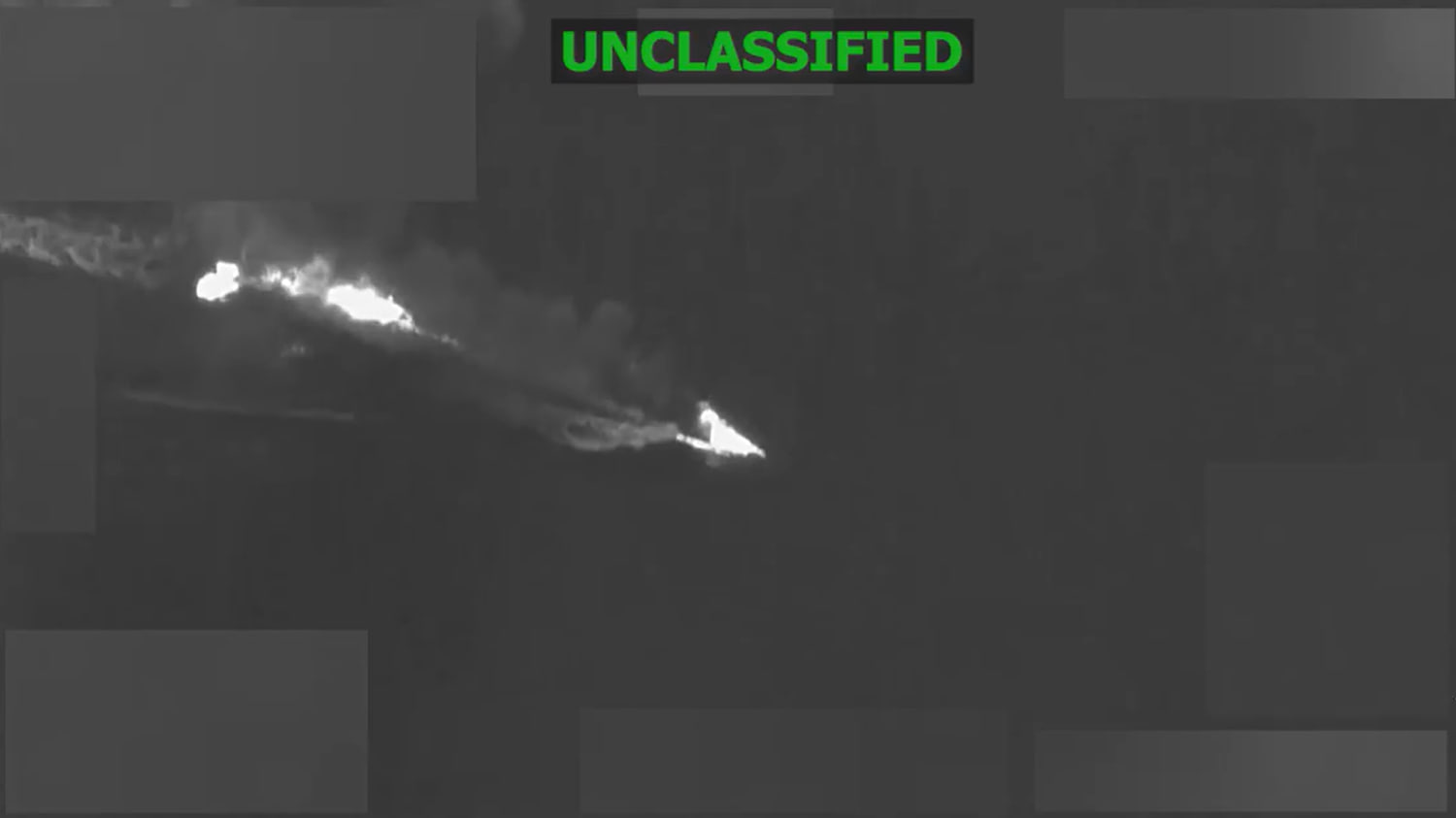
The U.S. Coast Guard just dropped a multi-million dollar kinetic solution on a hundred-thousand dollar problem, and the media is calling it a "strike." We are witnessing the military-industrial complex play Whac-A-Mole with a bathtub, yet the reporting remains stuck in a 1990s action-movie loop. Another "alleged drug boat" splintered in the Eastern Pacific. Three survivors. A few hundred kilos of product at the bottom of the ocean. The headlines treat this as a tactical success. In reality, it is a glaring admission of strategic bankruptcy.
If you think sinking low-profile vessels (LPVs) is "winning" the war on narcotics, you don't understand the logistics of the modern cartel. You are looking at the splash; you are missing the ripple.
The Cost-Efficiency Trap
Let’s talk about the math that the Pentagon hides behind "operational security." A single National Security Cutter (NSC) costs upwards of $700 million to build and millions more per month to operate. We are deploying these behemoths to chase fiberglass "go-fasts" and semi-submersibles built in the jungles of Colombia for less than the cost of a luxury SUV.
When the U.S. strikes a boat, the cartel views it as a rounding error. It is a cost of doing business, pre-calculated into their quarterly margins. For the U.S. taxpayer, however, it is a high-stakes gamble with diminishing returns. We spend $25,000 per hour to keep a ship in the area, only to celebrate the destruction of a vessel that will be replaced by two more within a week.
The "success" of a kinetic strike is a vanity metric. It measures activity, not impact.
The Myth of Interdiction as Deterrence
The prevailing "lazy consensus" among defense analysts is that aggressive interdiction creates a "deterrent effect." This is demonstrably false.
I have spent years watching the data on street-level purity and price. If interdiction worked, the price of cocaine in Miami or Chicago would spike every time a boat gets blown out of the water. It doesn't. The supply chain is too fragmented and too resilient.
- The Hydra Effect: Every time we sink a semi-submersible, the cartels innovate. They moved from surface boats to LPVs. When we started detecting LPVs with infrared, they moved to fully submersible narco-subs. When we got better at sonar, they started using "parasite" torpedoes attached to the hulls of legitimate commercial tankers.
- The Survivor Bias: We only catch the ones who fail. The three survivors from the latest strike aren't the masterminds; they are impoverished "mules" who are entirely expendable. By focusing on the strike, we ignore the 95% of traffic that slips through because our assets are busy processing three survivors in the middle of the ocean.
We aren't stopping the flow; we are just forcing the evolution of a more sophisticated predator.
Why "Alleged" Is the Most Dangerous Word in the Report
The media glosses over the phrase "alleged drug boat." It sounds like a legal formality. It is actually a massive liability.
In the Eastern Pacific, "tactical certainty" is an oxymoron. We are firing on vessels based on "visual cues" and "intelligence patterns." Imagine a scenario where a legitimate fishing vessel, running dark to avoid pirates or simply because of electrical failure, is targeted by a high-speed interceptor. The margin for error is razor-thin.
When we celebrate "striking" a boat before the cargo is even seized or verified, we are drifting into a "shoot first, verify later" maritime policy that would be condemned in any other theater of war. This isn't law enforcement. This is low-intensity conflict with zero accountability.
The Wrong Tools for the Wrong Job
The U.S. Navy and Coast Guard are built for peer-state conflict. They are built to fight the Chinese PLAN or the Russian Northern Fleet. Using them to chase drug runners is like using a scalpel to mow a lawn.
- Over-Engineering: We use Aegis-equipped destroyers to track plywood boats.
- Information Silos: The intelligence on where these boats launch from is often held by local governments that are either too corrupt or too underfunded to act.
- The "Last Mile" Obsession: We focus on the transit zone because it’s where we can use our "cool toys." We ignore the financial systems where the actual money is laundered.
If you want to stop the boats, you don't shoot them in the water. You seize the chemical precursors in the ports and the bank accounts in the skyscrapers. But that isn't as good for the recruitment videos.
The Humanitarian Farce
Let's address the three survivors. The press release treats their rescue as a sign of American magnanimity. "We blew up their boat, but look, we gave them a blanket."
This ignores the systemic reality. These men are often coerced. In many cases, their families are held hostage by the Sinaloa or CJNG cartels to ensure the trip is made. When we "strike" a boat, we are killing the bottom rung of a global trade. We are treating the symptoms of a terminal illness with a shotgun.
True authority in this space requires admitting a hard truth: the kinetic approach has failed for forty years. Since the inception of the "War on Drugs," the purity of narcotics has gone up, and the price has gone down.
The Real People Also Ask (And The Brutal Answers)
- Q: Doesn't sinking the boats keep drugs off our streets?
- A: No. It creates a temporary localized shortage that is immediately filled by a competitor. It’s like trying to stop the ocean with a sieve.
- Q: Why don't we just use more drones?
- A: More surveillance only confirms how much we are losing. We already have more targets than we have interceptors. Information is not action.
- Q: Is there a better way?
- A: Yes. Shift the billions spent on maritime "strikes" to demand reduction and financial warfare. Stop chasing the shadow and start following the money.
The Inevitable Pivot
The status quo is a self-perpetuating loop. The military gets to justify its budget by showing "drug seizures" (usually measured in theoretical "street value" which is a fake number). The cartels get to write off the losses. The politicians get to look "tough on crime."
The only loser is the reality of the situation. We are currently losing a war against an enemy that doesn't even have an air force, solely because we refuse to acknowledge that our tactics are outdated.
The next time you read about a "successful strike" in the Pacific, ask yourself: Why is the price of cocaine at an all-time low? Why are the cartels wealthier than ever?
The answer is simple. We are fighting a business with bullets. You cannot shoot a supply-and-demand curve.
Stop cheering for the explosions. They are just the sound of money burning in the wind.
Buy the better sensors, sure. Deploy the cutters, fine. But stop pretending that a few survivors and a sunken hull is a victory. It’s a funeral for a failed strategy.
End the kinetic theater. Follow the cash or get out of the way.