The water in the Strait of Hormuz is a deceptive, shimmering turquoise. From a satellite, it looks like a tranquil ribbon of glass. But for the captain of a 300,000-ton Very Large Crude Carrier (VLCC), that water feels like a tightening noose. To understand why a single stretch of ocean, barely twenty-one miles wide at its narrowest point, can make a superpower hold its breath and a global economy tremble, you have to stop looking at maps and start looking at the pressure.
Everything you touched today likely has a ghost of this strait within it. The fuel in your car. The plastic in your phone. The heat in your home. One-fifth of the world’s total oil consumption passes through this needle’s eye. When Iran threatens to slam that door shut in retaliation for American sanctions, it isn't just a military maneuver. It is a direct threat to the heartbeat of modern civilization. In related developments, we also covered: The Sabotage of the Sultans.
The Geography of Anxiety
Imagine a hallway where the floor is made of glass and the walls are closing in. To your left, the rugged, sun-scorched cliffs of Oman’s Musandam Peninsula. To your right, the heavily fortified Iranian coastline. There is no alternative route. There is no "Plan B" that doesn't involve adding weeks of travel and billions of dollars in costs to the global supply chain.
When President Trump calls upon US allies—the United Kingdom, France, Germany, Japan—to send their own warships into these waters, he is acknowledging a brutal reality. The United States has shouldered the burden of patrolling this "toll booth" for decades. But the burden is becoming too heavy to carry alone. The call for a "multilateral maritime effort" is a polite way of saying the world needs to start guarding its own lunch. The Washington Post has provided coverage on this important issue in great detail.
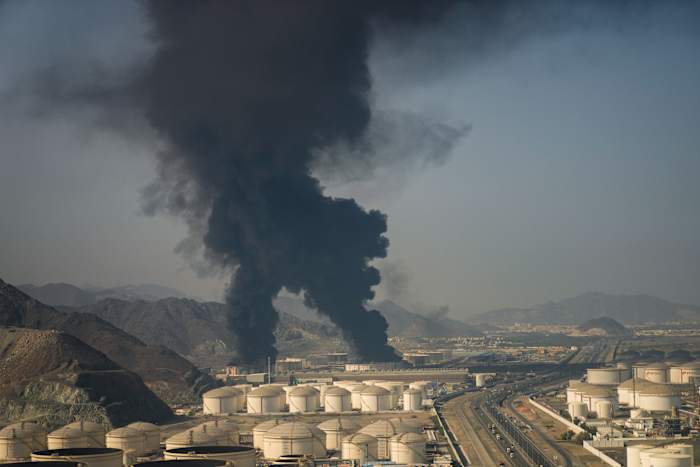
Iran knows exactly how much leverage it holds. Its leaders have been clear: if they cannot export their oil due to "maximum pressure" sanctions, then no one will. This isn't a playground boast. It is a calculated economic siege. By deploying fast-attack boats and sea mines, Iran can turn this vital artery into a graveyard of steel.
The Human Cost of a Blip
Let’s talk about a hypothetical sailor named Elias. He is a third engineer on a Panamanian-flagged tanker. He hasn't seen his family in four months. As his ship enters the Strait, he isn't thinking about geopolitical grandstanding or the nuances of the Joint Comprehensive Plan of Action. He is listening. He is listening for the roar of a revolutionary guard speedboat or the sickening metallic thud of a limpet mine attached to the hull below the waterline.
For Elias, the "Strait of Hormuz" isn't a headline. It is a high-octane adrenaline spike.
When a ship is attacked, the ripples travel faster than the oil itself. Within minutes, traders in London and New York are screaming into headsets. The "risk premium" spikes. Insurance companies, the silent giants who actually decide where ships can go, suddenly hike their rates or refuse coverage altogether. This is the invisible tax of instability. You pay it at the pump. You pay it at the grocery store.
The United States argues that if the world benefits from this oil, the world must help protect the passage. It is a logical pivot from "America First" to "Everyone Together," born out of a necessity to spread the risk. If a British-flagged tanker is seized, as has happened before, the response shouldn't just be an American problem. It is a challenge to the very concept of "Freedom of Navigation."
A Chessboard of Steel and Shadow
The tension isn't just about ships. It’s about the shadow war. Iran’s strategy is asymmetrical. They don't need a blue-water navy that can go toe-to-toe with a US carrier strike group. They only need to be able to make the water too dangerous for a commercial vessel to cross.
Mines.
Drones.
Small, fast, erratic boats.
These are the tools of a gatekeeper who knows he is outgunned but remains in total control of the gate.
Washington’s request for a coalition is met with a cold, flickering silence from many European capitals. They are caught in a pincer. On one side, they fear the collapse of the nuclear deal and a full-scale war. On the other, they cannot ignore the reality that their economies are tethered to the safety of these waters. They want the oil, but they are terrified of the optics of joining a "war footing" fleet.
Consider the irony. We live in a digital age of instant communication and cloud computing, yet our entire existence still hinges on the physical movement of a thick, black liquid through a narrow channel of salt water. We are one miscalculation away from a global cardiac arrest.
The Logic of Retaliation
Iran’s vow to retaliate isn't just talk. It is a survival mechanism. When a nation is backed into a corner by economic strangulation, the "rational" move is to make the status quo unbearable for everyone else. They are playing a game of chicken with the global economy.
If the US and its allies flood the Strait with warships, the density of hardware increases the chance of an accidental spark. A nervous radar operator. A misunderstood radio transmission. A warning shot that hits its mark. This is how "dry facts" turn into wet decks and burning horizons.
The "invisible stakes" are the lives of sailors who have no dog in this fight, and the stability of nations thousands of miles away that depend on a predictable price of energy. We are all passengers on these tankers, whether we realize it or not.
The sun sets over the Strait, casting long, jagged shadows from the Iranian hills over the water. A tanker glides through the darkness, its lights dimmed, its crew on edge. It carries enough energy to power a city for a month. Behind it, another ship follows. And another. They move through a gauntlet of silent threats, hoping that the diplomacy failing on land doesn't finally break the peace at sea.
The ocean remains indifferent to the flags we fly or the oil we crave, but it keeps the score in rust and silence.