The air in Dubai’s International Financial Centre usually smells of expensive Oud and filtered oxygen. It is a sterile, pressurized environment where the world’s capital flows through glass capillaries. But lately, that oxygen feels thin. It isn’t just the heat of the desert. It is the heat of the world.
When a city builds its identity on being a friction-less vacuum—a place where history doesn't matter as much as the next transaction—it becomes uniquely vulnerable when the world starts to catch fire. Geopolitics used to be something that happened elsewhere. Now, the tremors of regional instability are rattling the floor-to-ceiling windows of the Burj Khalifa.
Money is cowardly. It seeks the path of least resistance. For decades, that path led straight to the Emirates. But as the shadows of conflict lengthen across the Middle East, the global "nomadic" capital is looking for a new place to land. It is looking for a shore that feels less like a temporary oasis and more like a fortress.
That shore is Mumbai.
The Myth of the Neutral Ground
Consider a hypothetical fund manager named Elias. Elias doesn't care about flags or anthems. He cares about "basis points" and "sovereign risk." For ten years, Dubai was his playground because it promised him he could ignore the messy reality of the surrounding region. He could be in the Middle East without being of the Middle East.
But the illusion of the vacuum is breaking. As regional tensions escalate, the cost of insuring that neutrality is rising. Logistics are warping. The "safe haven" tag is peeling off. Elias is looking at his terminal, and for the first time in a decade, the vibrant, chaotic, and often frustrating skyline of Mumbai looks like something more than just a back-office destination.
It looks like an anchor.
Mumbai has never been sterile. It is a city that forces you to breathe its humidity, to navigate its bureaucracy, and to contend with its sheer, overwhelming scale. But that scale is exactly why it is currently positioned to cannibalize Dubai’s lunch. India isn't just a market; it is a subcontinent. When you invest in Mumbai, you aren't betting on a city-state’s ability to stay out of a neighborhood brawl. You are betting on an internal engine that generates its own heat.
The Shift from Transit to Origin
Dubai’s genius was being the world’s middleman. It sits perfectly between the East and the West, a gleaming transit lounge for the planet’s wealth. But middlemen are only useful when the roads are open. When the roads get blocked, you stop going to the middleman. You go to the source.
India is the source.
The strategic opportunity isn't just about Mumbai being "safer" in a traditional sense. It’s about the gravity of the ASEAN and East African corridors. If you are a business in Nairobi or a tech firm in Jakarta, the old route was to funnel through the Gulf. Why? Because the infrastructure was there.
Now, look at the numbers. India’s GDP growth consistently outpaces almost every other major economy. The digital infrastructure—the "India Stack"—has turned a country of 1.4 billion people into a single, unified digital market. Mumbai is the cockpit of this machine.
For a trader in Singapore, the friction of dealing with Indian regulations is finally being outweighed by the sheer mass of the Indian opportunity. The GIFT City (Gujarat International Finance Tec-City) project, often criticized as a ghost town in its early years, is finally finding its pulse. It is the bridge. It is the regulatory "safe zone" that allows the Elias of the world to step into the Indian market without getting bogged down in the traditional mire of local litigation.
The Invisible Stakes of Stability
We often talk about "hubs" as if they are just clusters of buildings and fiber-optic cables. They aren't. They are ecosystems of trust.
Dubai’s trust was built on a social contract of "don't ask, don't tell" and "everything is for sale." It worked brilliantly during the era of hyper-globalization. But we are moving into an era of blocs. Friend-shoring. Strategic autonomy. In this new world, the most valuable currency isn't just a low tax rate. It is deep, institutional resilience.
India has a legal system that, while slow, is rooted in recognizable common law. It has a democracy that, while loud and messy, provides a release valve for social pressure that monarchies simply don't have. When a crisis hits a democratic hub, the system bends. When it hits an autocracy, the system breaks.
Investors are starting to feel this in their gut. They see a Dubai under fire—literally and metaphorically—and they see a Mumbai that is finally cleaning its windows and inviting the world in.
The ASEAN-Africa Pivot
The real story isn't just Dubai versus Mumbai. It’s about who controls the flow of the "Global South."
For years, the Middle East was the financier for East Africa. But the cultural and economic ties between Mumbai and the African coast go back centuries, long before the first barrel of oil was pulled from the desert. There is a "lived experience" of trade here that predates modern banking.
The modern version of this is the "India-Middle East-Europe Economic Corridor" (IMEC). Ironically, while this project was designed to include the Gulf, the current instability is forcing a rethink. If the Middle East portion of the bridge is shaky, the ends of the bridge become even more important. Mumbai is the eastern terminus. It is the gatekeeper for the ASEAN markets looking for a democratic counterweight to China and a stable alternative to the volatile Gulf.
The Friction of the Transition
Let’s be honest. Mumbai is not an easy city.
Anyone who has tried to drive from Nariman Point to Bandra during monsoon season knows that the "financial hub" dream often hits a literal wall of traffic. The bureaucracy can still feel like a Kafkaesque nightmare. But compare that to the friction of geopolitical risk.
You can fix a road. You can digitize a permit process. You can build a new airport—which Mumbai is doing with the massive Navi Mumbai project. These are engineering problems. You cannot "engineer" your way out of being located in a region where the geopolitical tectonic plates are grinding against each other.
The "Mumbai Opportunity" is the realization that the city’s flaws are manageable, while Dubai’s current risks are existential.
The Human Capital Flight
Behind every billion-dollar trade is a person who wants to know if their kids can go to a good school, if their assets are safe from sudden policy shifts, and if they can stay for thirty years rather than three.
Dubai has always been a place of "expats." It is a city of people who are passing through. Mumbai is a city of citizens. That distinction is becoming the deciding factor for the world’s elite. The "Golden Visa" is a nice perk, but a seat at the table of the world’s fastest-growing democracy is a legacy.
We are witnessing a quiet exodus of the "brain trust." It isn't a flood yet, but the trickle is steady. Young analysts, hedge fund founders, and tech entrepreneurs are looking at the volatility of the Gulf and the stagnation of the West, and they are looking at Mumbai. They see a city that is finally beginning to value its own potential.
They see a place where they aren't just guests of the state, but participants in an epochal shift.
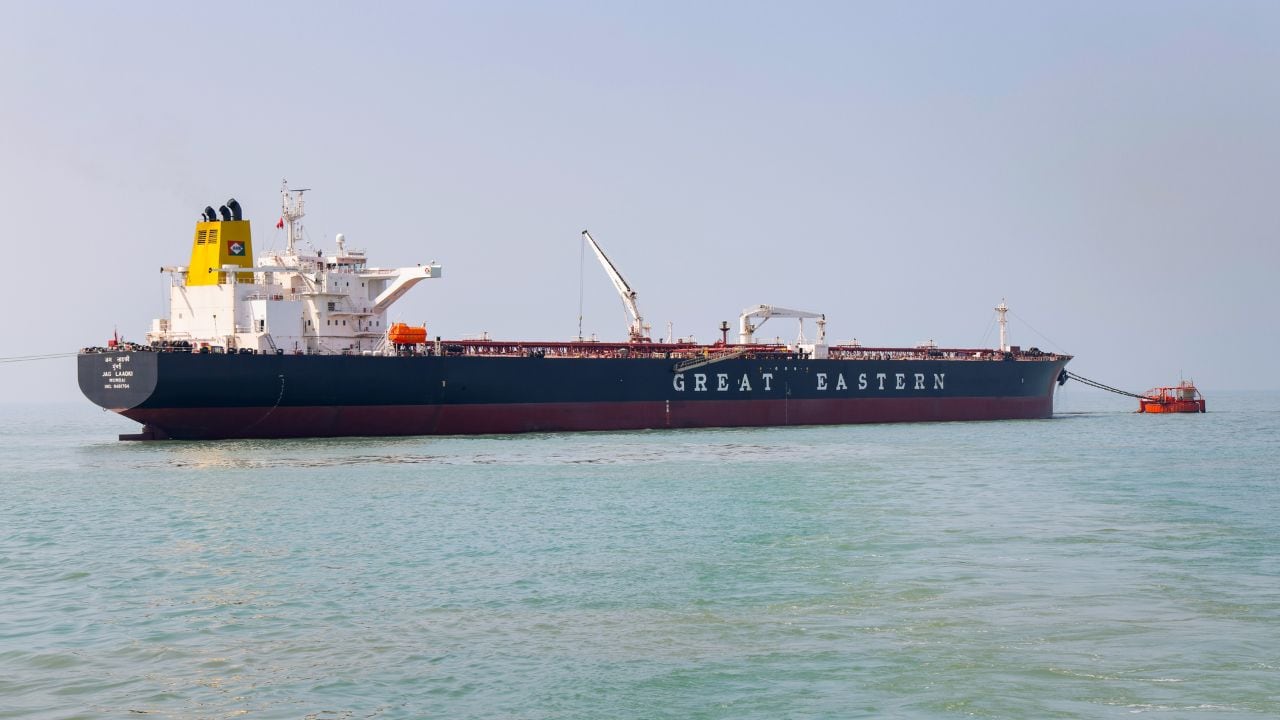
The sun sets over the Arabian Sea, casting a long, golden shadow from the hotels of Colaba. In the distance, the container ships wait to enter the harbor. They are carrying more than just goods. They are carrying the momentum of history.
The desert has its charm, its luxury, and its speed. But the coast has the tide. And the tide is coming in.
Mumbai isn't waiting for permission to become the center of the world. It is simply waiting for the world to realize that the center has already moved.