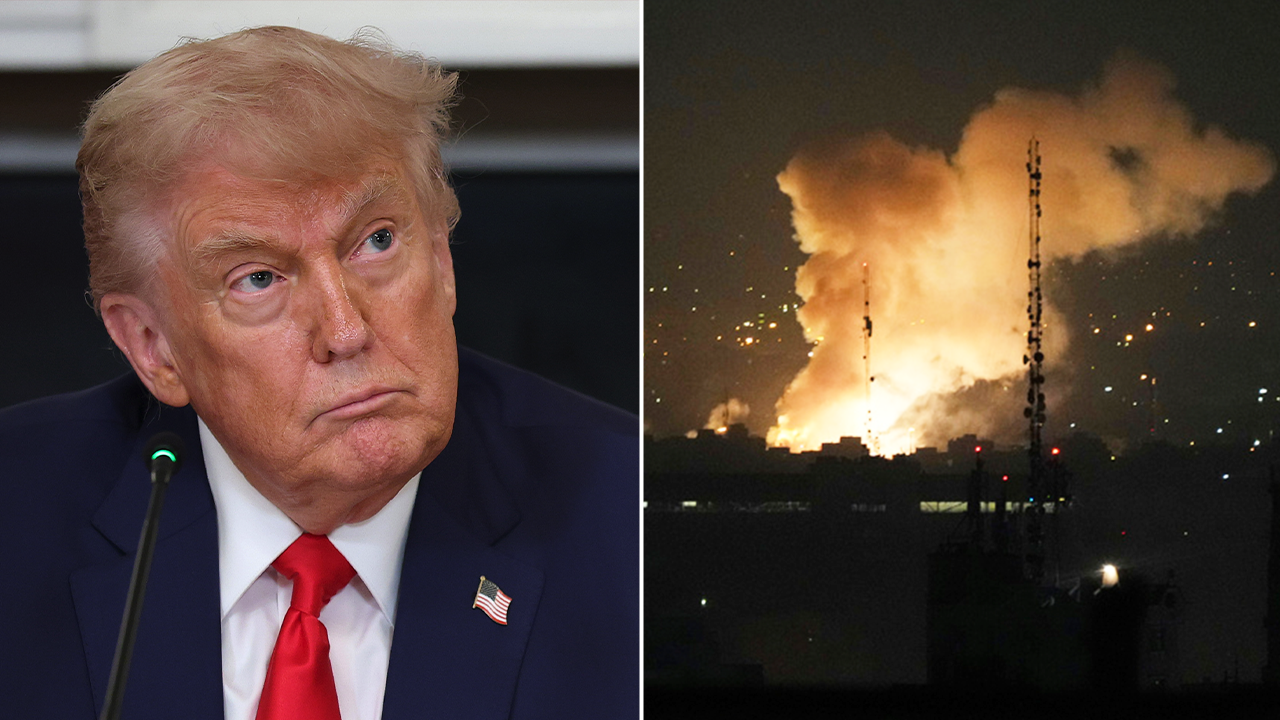
The global foreign policy establishment is currently clutching its collective pearls over the suggestion of sending a massive naval presence to the Strait of Hormuz. Critics call it "escalatory." Diplomats call it "reckless." International analysts are busy drafting white papers on the "fragile balance of power" and the "necessity of multilateral de-escalation."
They are all wrong.
The "caution" being preached by European and Asian capitals isn't a strategy; it is a confession of cowardice. For decades, the world has operated on the delusional premise that global trade routes are maintained by the "goodwill" of regional actors or the "sanctity" of international law. It is time to dismantle that fantasy. Law without an enforcement mechanism isn't law—it’s a polite suggestion. In the Strait of Hormuz, where roughly 20% of the world’s petroleum liquids pass through a choke point narrower than a Manhattan cross-town trek, polite suggestions are a currency that has long since devalued to zero.
The Myth of the "Symmetric Escalation"
The most tired argument in the "cautionary" playbook is that a heavy naval footprint invites a kinetic response. This logic assumes that the Tehran regime and its proxies are rational, symmetric actors who only act when provoked.
History proves the opposite.
Irregular maritime warfare—limpet mines on tankers, drone strikes on merchant vessels, and the "arrest" of commercial crews—thrives in the gray zone. That gray zone exists precisely because the West refuses to define a hard, physical boundary. When you leave the door cracked, you don't "prevent" a break-in; you invite it.
I have watched energy markets freak out over a single speedboat encounter because the market knows there is no permanent, overwhelming deterrent on-site. We pay a "volatility tax" every single day because of this perceived vacuum. Sending a carrier strike group isn't about starting a war; it’s about ending the ambiguity that makes war profitable for regional spoilers.
Why "Multilateral Cooperation" is a Dead Letter
The competitor’s narrative suggests that the U.S. should wait for a "coalition of the willing" to ensure maritime security. This sounds sophisticated in a Geneva conference room, but it is a logistical disaster on the water.
- Conflicting Rules of Engagement (ROE): When you have eight different navies under eight different flags, nobody knows who is allowed to shoot when a drone is screaming toward a VLCC (Very Large Crude Carrier).
- The Free Rider Problem: Nations like China and Japan rely more heavily on Hormuz oil than the United States does, yet they expect the U.S. Navy to provide the security for free while they criticize the "aggression" of the deployment.
- Speed of Response: Diplomacy moves at the speed of a glacier. A cruise missile moves at Mach 3.
By the time a multilateral committee finishes debating the "proportionality" of a response, the hull of a 300,000-ton tanker is already at the bottom of the Gulf. True maritime security requires a single, unified, and overwhelming command structure. It requires the ability to turn a "threat" into "debris" in seconds, not after a UN Security Council vote.
The Math of Deterrence: Cost vs. Chaos
Let’s talk about the money, because that’s what actually drives these "cautious" responses. Critics argue that maintaining a permanent warship presence is too expensive.
This is the peak of economic illiteracy.
The cost of a permanent naval rotation is a rounding error compared to the economic carnage of a 48-hour closure of the Strait. If the Strait is blocked, the Brent crude price doesn't just "rise." It breaks. We are talking about an immediate spike to $150 or $200 per barrel. That is an instant global recession. That is the collapse of supply chains that are already struggling with post-inflationary pressures.
- The Insurance Reality: Marine insurance premiums for "War Risk" areas skyrocket the moment a tanker is harassed. These costs are passed directly to the consumer.
- The Strategic Petroleum Reserve (SPR) Fallacy: You cannot "drill your way out" of a blocked Strait. Even if the U.S. is energy independent, oil is a fungible global commodity. If the global price spikes, the price at a pump in Ohio spikes.
A massive naval presence is the cheapest insurance policy in human history. To call it "expensive" or "unnecessary" is to admit you don't understand how the modern world eats, moves, or survives.
Dismantling the "Diplomacy First" Premise
People often ask: "Can't we just negotiate a new maritime treaty?"
The premise is flawed because it assumes both sides value the treaty more than the leverage of chaos. For a rogue state or a non-state actor, the ability to threaten the Strait is their only leverage. You cannot negotiate away someone’s primary weapon with words. You can only make that weapon obsolete through physical negation.
If you want diplomacy to work, you need to bring a hammer to the table. The "warships" aren't the alternative to diplomacy; they are the foundation of it. You don't get a seat at the table if you don't control the room.
The Risks of the Hardline Approach
Is there a downside? Of course. This isn't a fairy tale.
A permanent, aggressive posture increases the risk of a "spark" incident—a misunderstood signal or a trigger-happy commander. But we must weigh that against the certainty of continued harassment and the eventual, inevitable closing of the waterway if left unchecked. I would rather manage a spark in a controlled environment than try to put out a forest fire when the entire global economy is the fuel.
We have spent twenty years pretending that "soft power" can secure hard assets. It can't. You cannot protect a pipeline with a trade agreement, and you cannot protect a shipping lane with a press release.
The Actionable Truth for Energy Markets
Stop listening to the pundits who think "stability" is a natural state. Stability is an artificial construct maintained by the threat of violence. For investors, the play isn't to fear the warships; it’s to fear their absence.
If you see a headline about "nations responding with caution," sell. It means they are paralyzed. If you see a headline about warships moving into position, stay long. It means the adults have finally entered the room and are willing to pay the price for order.
The Strait of Hormuz is not a diplomatic puzzle to be solved. It is a physical territory that must be owned. Any nation that relies on the flow of energy but refuses to support the physical securing of that flow is essentially a passenger who refuses to pay for the pilot but complains about the turbulence.
Stop apologizing for the warships. Start asking why there aren't more of them.
The era of "maritime ambiguity" is over. We either secure the lanes with steel or we watch the global economy burn in the name of "nuance." Choose one.