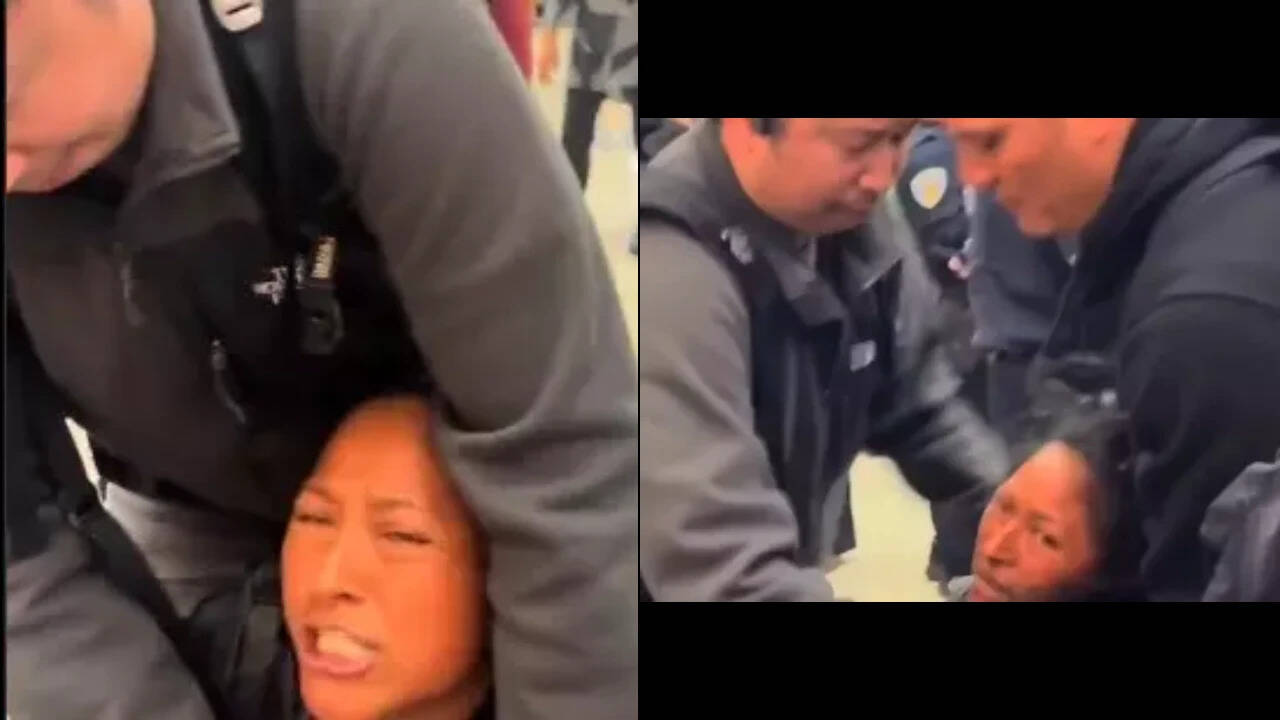
Fear-mongering is the cheapest currency in modern journalism. When headlines broke suggesting that ICE agents were being "deployed" to replace TSA staff at San Francisco International Airport (SFO) to arrest American citizens, the internet did exactly what it was programmed to do: it lost its collective mind.
But if you’re looking at this through the lens of a "constitutional crisis" or a "targeted crackdown on dissent," you’re missing the actual machinery at work. The debate isn't about whether a US citizen was "wrongfully" detained by a rogue agency. It’s about the fact that most travelers have no idea how the jurisdictional lines between the TSA, CBP, and ICE have already blurred into a single, cohesive surveillance apparatus. You might also find this connected coverage insightful: The $2 Billion Pause and the High Stakes of Silence.
The competitor narrative focuses on the outlier—the "what if" scenario of a citizen being grabbed. That’s lazy. The real story is the quiet, systematic integration of enforcement agencies that makes the specific patch on a uniform irrelevant.
The Myth of the TSA ICE Takeover
Let’s dismantle the "crisis" narrative first. The idea that ICE is "filling in" for TSA because of a staffing shortage is a fundamental misunderstanding of federal labor categories. You cannot simply swap a TSO (Transportation Security Officer) with an HSI (Homeland Security Investigations) agent. Their training, legal authorities, and unions are worlds apart. As extensively documented in detailed reports by The Guardian, the effects are worth noting.
When the Department of Homeland Security (DHS) moves personnel to airports, it isn't to check your 3.4-ounce liquids. It’s for "Surge Capacity Force" requirements—typically administrative or perimeter support. If you see an ICE agent at SFO, they aren't there because the guy at the X-ray machine called in sick. They are there because the airport is a "border equivalent."
I have spent years navigating the regulatory sludge of DHS protocols. Here is the truth: The airport is a legal gray zone where your Fourth Amendment rights don't just "bend"—they evaporate. Whether it's ICE, CBP, or a TSA VIPER team, the authority to question your status and search your person exists regardless of your citizenship. Focusing on the specific agency is like arguing about which finger is pulling the trigger.
Why the Citizenship Argument is a Dead End
The outrage machine loves the "US Citizen" angle. "They arrested a citizen!" makes for a great tweet. It’s also legally naive.
Under the Border Search Exception, federal agents don't need a warrant or even "reasonable suspicion" to search you at a port of entry. SFO is a port of entry. If you are in the international terminal, you are, for all intents and purposes, not fully "in" the United States in the eyes of the law.
- The Jurisdictional Blur: ICE and CBP often operate under the same umbrella at airports.
- Identity Verification: If an agent asks for your ID and you refuse because "I'm a citizen," you are technically interfering with an administrative search.
- The Trap: Most "arrests" of citizens at airports aren't for immigration violations; they are for "Interfering with a Federal Official" or "Disorderly Conduct" triggered by the traveler’s own indignant reaction to a legal (if annoying) request.
If you want to protect your rights, stop shouting about your passport and start understanding the Title 19 and Title 8 authorities that these agents carry. An ICE agent at an airport doesn't need a "Trump deployment" to talk to you. They already have the badge.
The Surveillance Shell Game
While the media bickers over whether ICE is "replacing" TSA, they are ignoring the Biometric Exit programs and the CBP One integration that are actually changing how you travel.
The real "deployment" isn't people; it’s facial recognition.
We’ve seen airports like SFO and ATL pilot programs that hand off identity verification from human TSA agents to automated gates. These gates aren't just checking if you're the person on your driver's license. They are pinging databases shared by the FBI, INTERPOL, and—you guessed it—ICE.
The "crisis" isn't that an agent is standing in the terminal. The crisis is that the agent doesn't need to be there to flag you. By the time you’ve reached the gate, your digital ghost has already been interrogated by three different agencies.
Stop Asking if ICE is There and Start Asking Why You Care
People ask: "Can ICE arrest me at the airport?"
Brutally honest answer: Yes. If you have an outstanding warrant, if you are suspected of a customs violation, or if you simply fail to comply with a lawful order in a sterile area.
The obsession with "ICE at the airport" stems from a misplaced belief that the airport is a public square. It’s not. It’s a high-security funnel. If you are a citizen, you cannot be deported, but you can absolutely be detained, delayed, and documented.
The contrarian take? You should want specialized agents at the airport—but for the reasons the media hates. A bored TSA agent with six weeks of training is far more likely to violate your rights through incompetence than a seasoned ICE HSI agent is through malice. The former doesn't know the limits of their power; the latter knows exactly where the line is and how to walk it.
The Industry Insider’s Reality Check
I’ve watched agencies burn through billion-dollar budgets trying to "streamline" the traveler experience. Every time they use the word "streamline," they mean "automate surveillance."
The deployment of personnel is a theater. It’s meant to look like "action" to the administration and "security" to the public. In reality, it’s a logistics nightmare that usually results in more paperwork than actual enforcement.
If you’re traveling through SFO, don't look for the ICE jacket. Look for the cameras. Look for the data-sharing agreements between the airline and the government. That is where your "citizen rights" are actually being negotiated away.
The downside to this perspective? It’s not as "activist-friendly." It doesn't give you a villain to protest at a rally. It’s just cold, hard administrative reality. The system isn't "broken" because ICE is at the airport; the system is functioning exactly as designed to ensure that no one—citizen or otherwise—moves through a port of entry without a digital footprint being scrutinized by a dozen different algorithms.
Stop looking for the boogeyman in the green uniform. He’s already in the software.
Stop reacting to the "deployment" headlines and start reading the privacy policy on your boarding pass.