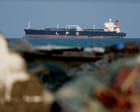
If you’ve checked the price of gas lately, you know the Strait of Hormuz is basically the carotid artery of the global economy. Right now, that artery is constricted. President Donald Trump spent the weekend on Truth Social practically begging the rest of the world to send their warships to the Persian Gulf. He name-dropped China, France, Japan, South Korea, and the UK, telling them it’s time to start "taking care" of the passage that fuels their own economies.
The logic is simple: if you use the oil, you should help protect the tankers. But so far, the response from those "allies" and partners has been a resounding silence. Despite Trump’s claim that "many countries" are ready to join a U.S.-led escort mission, no major capital has actually stepped up to confirm a deployment.
It’s a high-stakes game of chicken. While Trump insists the U.S. has "totally obliterated" Iran’s military, the reality on the water is a lot messier. A few cheap drones or a handful of naval mines can still do billions in damage, and America's partners aren't exactly lining up to be the next target.
The problem with Trump’s Hormuz naval coalition
The U.S. has already hit over 90 targets on Kharg Island, Iran’s primary oil terminal. Secretary of Defense Pete Hegseth says Iran’s missile capacity is down 90%. That sounds like a victory until you realize that in the Strait of Hormuz, "90% destroyed" isn't good enough. You only need one missile to sink a tanker and send insurance rates into the stratosphere.
The main reason for the "muted response" isn't a lack of interest in cheap oil. It's a lack of trust in the plan. Trump wants a team effort, but he's already moved the pieces without consulting the team. By launching massive strikes on Iranian soil and then asking others to come help with the cleanup, he's created a scenario where any nation joining the coalition becomes a "legitimate target" in Iran’s eyes.
Tehran has already warned the UAE that its ports—including the massive logistics hub in Dubai—are on the hit list if they continue to support U.S. operations. For a country like Japan or South Korea, which relies on the Gulf for nearly all its energy, sending a destroyer isn't just a military move; it's a gamble that could see their entire domestic energy supply cut off in retaliation.
Why China and France aren't biting
Trump’s inclusion of China in his "hoped-for" list is particularly interesting. It’s peak pragmatism: China is the biggest buyer of Iranian oil and the biggest consumer of Gulf energy. But Beijing isn't about to put its PLAN (People's Liberation Army Navy) under U.S. command. They've already carved out their own side deal, with Iran reportedly allowing Chinese-flagged ships to pass through the Strait while others are blocked. Why would China join a U.S. coalition when they currently have the "VIP pass" to the waterway?
France and the UK are in a different bind. They're already overstretched. The French Navy has assets in the Mediterranean and Red Sea, but committing to a high-intensity escort mission in the Gulf is a massive logistical nightmare. They’ve said they’re "discussing options," which is diplomatic speak for "we’re looking for any excuse not to do this."
The reality of a functionally closed Strait
Don't believe the hype that the Strait is "open" just because a few brave captains are still making the run. Vessel traffic has collapsed. Shipowners aren't stupid. Even with Trump promising federal political-risk insurance backstops, most companies don't want to lose a $100 million vessel and a crew of twenty just to keep the lights on in a different hemisphere.
We're seeing a shift in how maritime security works. It used to be that the U.S. Navy guaranteed the "freedom of the seas" for everyone. Trump is officially ending that era. He's made it clear: if you want the oil, you bring the guns.
The Iranian strategy doesn't require a massive navy. They're using what's called "A2/AD" (anti-access/area denial). They’ve got thousands of small, fast boats and portable missile launchers hidden along a rugged coastline. You can bomb the shoreline all day—as Trump promised to do—but you can't hit every guy with a shoulder-fired missile or every submerged mine.
The cost of the stalemate
The numbers are staggering. In the first week of this intensified conflict alone, the U.S. has spent an estimated $11 billion. Brent crude is dancing around $100 a barrel. If the Strait stays "functionally closed" for another month, we aren't just talking about higher gas prices; we're talking about a global recession.
- Global Oil: 20% of the world's supply is currently trapped or at extreme risk.
- LNG: 20% of global liquefied natural gas passes through here. If this stops, Europe freezes.
- Insurance: Rates have spiked 500% in some sectors, making even "safe" trips unprofitable.
What happens next
If you're waiting for a grand international fleet to sail in and save the day, don't hold your breath. We’re more likely to see a "coalition of the desperate"—nations that have no choice but to fight their way through.
The U.S. Navy is preparing to start its own tanker escorts "soon, very soon." That’s the real tell. If the allies were coming, Trump wouldn't have to commit American sailors to the most dangerous escort duty since the "Tanker War" of the 1980s.
Keep an eye on the following:
- The UAE’s stance: If they actually expel U.S. forces to save their ports, the U.S. loses its primary staging ground.
- Mine-clearing operations: The U.S. recently decommissioned several minesweepers. If Iran has heavily mined the Strait, "opening" it could take months, not days.
- The "China Pass": If more ships start fake-broadcasting as Chinese to get through, the U.S. might start intercepting them, which could pull Beijing into the conflict in a way nobody wants.
If you're an investor or just someone worried about your commute, start hedging for $120 oil. The "muted response" from allies isn't just about politics; it's a cold calculation that the Strait of Hormuz has become a "no-win" zone for everyone involved.
Watch the shipping insurance indices (like the Baltic Exchange) over the next 48 hours. If those numbers keep climbing despite Trump’s "obliteration" tweets, you know the market doesn't believe the Strait is safe. The next step for the administration will likely be an attempt to use emergency powers to bypass environmental laws and ramp up domestic production—but that won't help the global supply chain tomorrow.