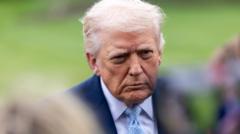
Donald Trump just hit the pause button on a massive military escalation, and the world is holding its breath. On Monday, March 23, 2026, the President announced he’s pushing back a deadline to "obliterate" Iranian power plants by five days. Why? Because he claims the U.S. and Iran are suddenly having "very good and productive" talks. It’s a classic Trump move—threatening fire and fury one minute, then pivoting to "the art of the deal" the next.
But here’s the kicker: Iran says none of this is actually happening.
While Trump is on Truth Social talking about a 15-point framework and "major points of agreement," Iranian officials are calling it "fake news." They claim Trump is just trying to stop oil prices from skyrocketing while he figures out his next military move. It’s a messy, dangerous, and incredibly confusing moment in a war that’s already lasted nearly a month.
The Five Day Window to Avert a Total Blackout
The U.S. was ready to pull the trigger. After 24 days of U.S.-Israeli airstrikes, the administration issued an ultimatum: reopen the Strait of Hormuz or lose your entire energy grid. We're not talking about surgical strikes here. We're talking about the total destruction of Iran's power plants and energy infrastructure.
Instead of a mushroom cloud over Tehran, we got a social media post. Trump says Jared Kushner and Steve Witkoff spent Sunday night in "intense" discussions. He’s now giving diplomacy a 120-hour window. If a deal isn't reached, he says the U.S. will "just keep bombing our little hearts out."
It’s a brutal way to describe a war that’s already claimed over 3,200 lives, including hundreds of children. But that’s the reality of "Maximum Pressure" in 2026. The U.S. strategy is simple: break the regime’s back until they have no choice but to hand over every scrap of enriched uranium they own.
What Is Actually on the Table
Trump says there's a 15-point plan. He hasn't released the full list, but he made it very clear what the first three points are:
- No nuclear weapons.
- No nuclear weapons.
- No nuclear weapons.
The White House wants Iran to dismantle the Fordow, Natanz, and Esfahan facilities completely. They aren't asking for a freeze or a "sunset clause" like the old JCPOA. They want the U.S. to take physical custody of Iran's enriched uranium. In exchange? Trump is dangling the promise of "as much oil in the system as possible" and lifting the crushing tariffs he recently imposed.
The Iranian Denial
Tehran’s response has been a flat "no." Mohammad Bagher Ghalibaf, the Iranian Parliament Speaker, didn't hold back on X (formerly Twitter). He called Trump’s claims a manipulation tactic designed to "escape the quagmire."
This creates a bizarre diplomatic split-screen:
- The Trump Version: Productive talks, "top people" involved, a deal is imminent, oil prices drop 13%.
- The Iranian Version: No contact, Trump is retreating because he's scared of Iranian retaliation against Gulf energy sites, "fake news" to stabilize markets.
Why Oil Prices Are the Real Barometer
If you want to know who’s winning this argument, don't look at the press releases—look at the markets. The moment Trump announced the "productive" talks, Brent crude prices tumbled. They dropped over 11% in a single day.
The global economy has been "taken hostage" by this conflict, according to Singapore’s Foreign Minister. With the Strait of Hormuz effectively closed, the 1970s energy crisis looks like a minor hiccup compared to what we’re facing now. Trump knows that if gas hits $10 a gallon in the States, his political capital evaporates. This five-day pause isn't just about peace; it’s about preventing a global economic heart attack.
The Risks of the "Bombing Our Hearts Out" Strategy
There’s a massive gamble happening here. By publicly claiming Iran is ready to deal, Trump is trying to force their hand. He’s creating a narrative where the Iranian leadership looks like the sole obstacle to peace and lower prices.
But Iran has shown they can still bite back. Over the weekend, two Iranian missiles hit southern Israel near Dimona. Israel’s "David’s Sling" interceptor failed. It was a clear message: We can still reach you. If the talks fail and the U.S. destroys Iran's power plants, Tehran has already threatened to "irreversibly destroy" desalination plants and energy hubs across the UAE, Saudi Arabia, and Kuwait.
We aren't just talking about a war between two countries anymore. We're looking at a potential regional collapse where the people of the Middle East lose access to basic drinking water and electricity in the middle of a brutal heatwave.
What You Should Watch for Next
The clock is ticking on that five-day extension. Here’s what actually matters over the next 48 hours:
- Oman’s Role: Watch for movements in Muscat. Oman’s Foreign Minister, Badr Albusaidi, is the only one who actually seems to be talking to both sides. If he confirms a meeting, the "talks" are real.
- The Strait of Hormuz: If even one tanker gets through with Iranian "permission," it’s a sign that a backroom deal is being cooked.
- Internal Iranian Shifts: Trump has been calling for the Iranian people to "take back their country." Keep an eye on reports of protests or military defections within Iran.
Don't get distracted by the "very good talks" rhetoric. This is a brutal negotiation being conducted through airstrikes and market manipulation. If you're looking for a sign of true de-escalation, watch the oil tankers. Until they start moving through the Strait again, the "deal" is nothing more than a temporary ceasefire in a very loud room.
If you want to stay ahead of how this affects your energy costs and investments, keep a close eye on the daily Brent crude fluctuations. They are a more honest indicator of peace than any Truth Social post or Iranian state media broadcast. Don't wait for the five-day deadline to expire before you look at your portfolio's exposure to the energy sector.