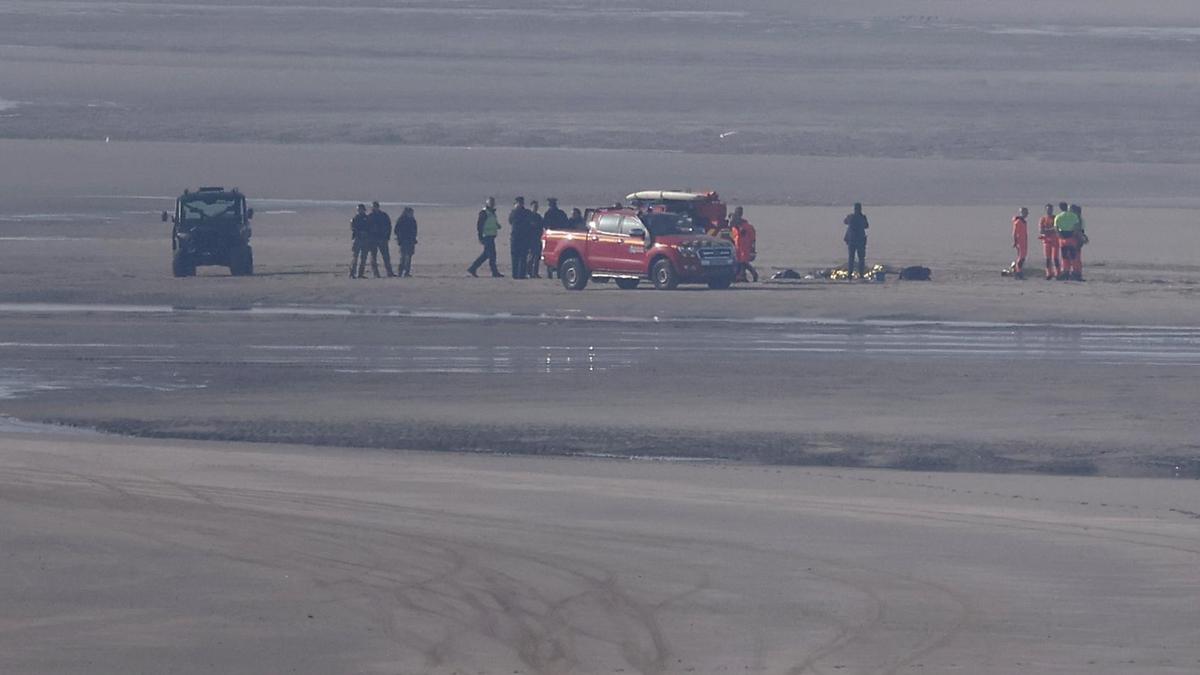
The English Channel isn't just a waterway; it's a graveyard that keeps growing. Early Thursday morning, April 9, 2026, the coast off northern France became the scene of another preventable catastrophe. Four people—two men and two women—died while trying to board an inflatable boat near Equihen Beach. While 38 others were pulled from the surf, the reality is that these "small boat" crossings have moved from a political talking point to a persistent humanitarian crisis that European governments can't seem to get a grip on.
If you're looking for the reason why people keep dying in one of the world's busiest shipping lanes, you won't find it in a single policy. It's a mix of desperate human ambition, ruthless smuggling networks, and a border strategy that often pushes people into deeper, more dangerous waters.
What happened at Equihen Beach
The incident didn't even happen in the middle of the sea. According to François-Xavier Lauch, the prefect of the Pas-de-Calais region, the victims died during the boarding process. This is a terrifying trend I've seen more of lately: "beach deaths." Smugglers are often in such a rush to launch before French police arrive that they force dozens of people into the water simultaneously. The panic, the weight of waterlogged clothing, and the frigid April temperatures create a lethal environment before the boat even leaves the shore.
Emergency services were alerted before dawn, but for four individuals, the response was too late. The 38 survivors are now facing the grim reality of processing centers, while the local community in Equihen-Plage is left to witness the aftermath of a journey that ended in the shallows.
The numbers don't tell the whole story
While the media often focuses on the daily "arrival" numbers, the death toll in the Channel has reached record heights recently. In 2024, we saw at least 69 deaths, which was more than the previous four years combined. As we move through 2026, the pattern isn't breaking.
- Arrivals are surging: Over 41,000 people arrived via small boats in 2025 alone.
- Nationalities are shifting: While we saw a massive spike in Albanian arrivals in 2022, recent data shows a heavy concentration of people from Vietnam, Afghanistan, and Iran.
- The boats are worse: Smugglers are now using "taxi boats" that are effectively inflatable rafts with plywood floors, often carrying twice their intended capacity.
The British government’s rhetoric about "stopping the boats" has led to increased surveillance, but paradoxically, this has made the crossings riskier. When one launch point is closed, smugglers move to more remote, rocky, and dangerous parts of the French coastline.
Why the rescue operations are struggling
I've talked to maritime experts who highlight a growing problem: the hand-off between French and British authorities. The Channel is a patchwork of jurisdictions.
When a boat is in distress, the coordination involves:
- HM Coastguard (UK)
- CROSS Gris-Nez (France)
- RNLI Lifeboats (Volunteers)
- Border Force
The problem is that many of these boats are so overcrowded that they are unseaworthy from the moment they touch the water. If a rescue vessel approaches too quickly, the sudden movement of people to one side of the raft causes an immediate capsize. That’s likely what happened in many of the 2022 and 2024 disasters. You aren't just rescuing people; you're trying to manage a fragile, floating platform that wants to flip the second a wave hits it.
The smuggling economy is booming
Don't be fooled by the "amateur" look of these rafts. This is a multi-million dollar industry. Smugglers charge anywhere from £3,000 to £7,000 per seat. They don't care if the engine fails two miles out—they’ve already been paid.
There's a common misconception that these people can just "apply for a visa." For the vast majority of those on Equihen Beach this morning, there is no legal "line" to stand in. Without a humanitarian visa or a family reunion scheme that actually works, the plywood raft becomes the only option.
What actually needs to happen next
If you're tired of reading these headlines every few weeks, the solution isn't just more drones or more barbed wire in Calais.
- Establish safe passages: Creating centers in France where asylum claims can be processed would strip the smugglers of their customer base overnight.
- Target the supply chain: These inflatable boats aren't made in France. They are mass-produced elsewhere and shipped across Europe. We need better intelligence on the logistics of the hardware, not just the people sitting in it.
- Pressure the "Big Tech" facilitators: A lot of these trips are organized via encrypted messaging apps and even advertised on TikTok.
The four lives lost today aren't just statistics; they're a reminder that the current system is broken. Until the cost of a "legal" entry is lower than the price of a seat on a death trap, the English Channel will continue to be a site of tragedy.
If you want to stay updated on the legal challenges regarding these crossings, keep an eye on the High Court rulings concerning the latest asylum legislation. The legal landscape is changing fast, and it’s the only place where the cycle of "launch, rescue, repeat" might actually be broken.