The erosion of established international legal norms regarding kinetic conflict has moved from a theoretical risk to an operational reality. When an executive authority bypasses traditional legislative oversight to pursue an "illegal" war—defined here as conflict initiated outside the constitutional or international frameworks of collective security—the objective is rarely simple territorial acquisition. Instead, the strategic endgame centers on structural decoupling: the systematic dismantling of a rival’s economic and security dependencies to force a new geopolitical equilibrium. Understanding this requires a shift from viewing war as a series of battles to viewing it as a high-stakes stress test of institutional resilience and logistics.
The Architecture of Extra-Legal Mobilization
A war conducted outside established norms functions through three distinct operational pillars. Traditional diplomacy relies on predictability, but unconventional executive action leverages unpredictability as a primary tool for market and political disruption.
- The Executive Disruption Cycle: By bypassing standard notification protocols, an administration minimizes the lead time for opposition—both domestic and foreign—to organize a counter-strategy. This creates a "fait accompli" environment where the cost of reversal exceeds the cost of continuation.
- Informational Asymmetry: The use of "grey zone" narratives ensures that the legal status of the conflict remains debated rather than settled. This ambiguity slows the deployment of international sanctions and delays the formation of cohesive defensive alliances.
- Fiscal Autonomy: Operating outside traditional budget appropriations requires the redirection of existing departmental funds or the utilization of emergency powers. This shifts the financial burden away from public scrutiny, allowing for prolonged engagement without immediate legislative interference.
The mechanism at play is the sunk-cost saturation point. Once a conflict begins, the institutional apparatus (intelligence, military logistics, and private contractors) becomes tethered to the mission's success, regardless of the legality of its origin. The "endgame" is not necessarily a signed peace treaty, but the permanent alteration of the status quo to a point where returning to the pre-war baseline is functionally impossible.
The Cost Function of Attrition
The efficacy of an unconventional war is measured by the Attrition Ratio ($A_r$), which compares the resource exhaustion of the aggressor against the systemic degradation of the target. Unlike traditional warfare, where the goal is the destruction of the enemy’s military, this model focuses on the destruction of the enemy’s predictability.
$$A_r = \frac{C_a + P_a}{E_t + I_t}$$
Where:
- $C_a$ = Direct capital expenditure of the aggressor.
- $P_a$ = Political capital expended domestically.
- $E_t$ = Economic output loss of the target.
- $I_t$ = Institutional degradation (loss of trust in alliances, civil unrest).
When the ratio favors the aggressor, the "illegal" nature of the war becomes a secondary concern to the reality of its results. The objective is to reach a state of hegemonic exhaustion, where the target’s allies determine that the cost of support outweighs the value of the target’s sovereignty. This is the "real endgame": the forced renegotiation of global or regional hierarchies under duress.
Alliances as Friction Points
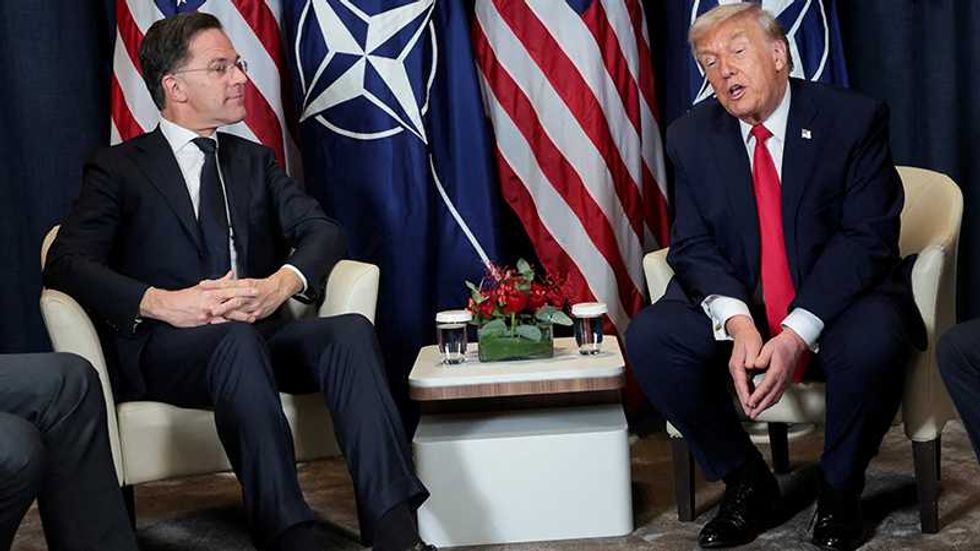
The commentary from seasoned diplomats often highlights the strain placed on NATO and similar collective security organizations. These institutions are built on the bedrock of shared legal definitions. When a primary member—specifically a superpower—acts outside these definitions, it introduces structural friction.
The first casualty is Interoperability of Intent. While military hardware remains compatible, the political willingness to share intelligence or commit troops evaporates. This creates a vacuum that the aggressor can exploit. Instead of a monolithic front, the alliance fragments into "coalitions of the willing" and "factions of the hesitant."
This fragmentation serves the aggressor’s long-term strategy by:
- Testing Article 5 Thresholds: By engaging in "illegal" or grey-zone actions, the aggressor forces allies to define exactly what constitutes an attack. If the definition is too narrow, the alliance becomes irrelevant; if it is too broad, it risks unintended escalation.
- Economic Divergence: Conflicts drive up energy and commodity prices unevenly. Allies with high resource dependency suffer more than those with internal supply chains, creating an economic wedge that prevents a unified long-term response.
Logistic Realities vs. Legal Theory
A common oversight in political analysis is the preoccupation with the law of war at the expense of the physics of war. Whether a war is deemed "illegal" by an ex-ambassador or an international court does not stop the flow of munitions. The logistical reality is that supply chains, once activated, have a kinetic momentum that is difficult to arrest.
The "curtain" being pulled back reveals that modern conflict is less about capturing capitals and more about Supply Chain Interdiction. By controlling or threatening key maritime corridors, energy pipelines, or semiconductor hubs, the aggressor exerts a "soft" siege that complements the "hard" kinetic actions.
- Weaponization of Interdependence: The very globalism that was supposed to prevent war becomes the primary tool of the aggressor. By cutting off a target from the global financial system (SWIFT) or trade routes, the aggressor turns the target’s own economic integration into a liability.
- Private Sector Integration: Modern "illegal" wars often utilize private military companies (PMCs) and cyber-mercenaries. These entities operate in a legal gray area, providing the executive with "plausible deniability" while maintaining high operational efficiency.
The Credibility Deficit and Its Long-Term Yield
The pursuit of an illegal endgame creates a Credibility Deficit. While the short-term tactical gains might be significant, the long-term cost is the erosion of the "Rule of Law" as a tool of statecraft. When a dominant power ignores the rules it helped create, it signals to every other middle-market power that the era of institutional restraint is over.
This leads to a Proliferation of Revisionist Strategies. Other nations, observing the success of executive-led, extra-legal conflicts, will likely adopt similar models. The result is a global security environment characterized by:
- Permanent Mobilization: States will maintain higher levels of readiness, diverting funds from social infrastructure to defense.
- Regional Hegemony: The decline of global enforcement will lead to the rise of regional bullies who can act with relative impunity within their spheres of influence.
- Legal Nihilism: International law will be viewed increasingly as a rhetorical tool rather than a binding constraint.
The strategic pivot for a defending state is not to argue the legality of the war—which is a slow and often fruitless process—but to increase the Kinetic Cost of Entry. This involves "porcupine" defense strategies: making the target so difficult and expensive to digest that the Attrition Ratio becomes unsustainable for the aggressor.
Strategic Recommendation: The Resilience Pivot
Nations and organizations facing an aggressor operating outside legal norms must abandon the hope for a "return to order." The order has already shifted. The priority must be the construction of redundant systems—economic, military, and digital—that can withstand prolonged isolation.
The focus should move from preventing illegal conflict to surviving it. This requires the decentralization of critical infrastructure, the diversification of energy sources away from aggressive neighbors, and the formation of rapid-response "micro-alliances" that can act without the bureaucratic lag of larger organizations. The endgame is not won by those who have the best legal argument, but by those who can remain functional while the rules are being rewritten in real-time.