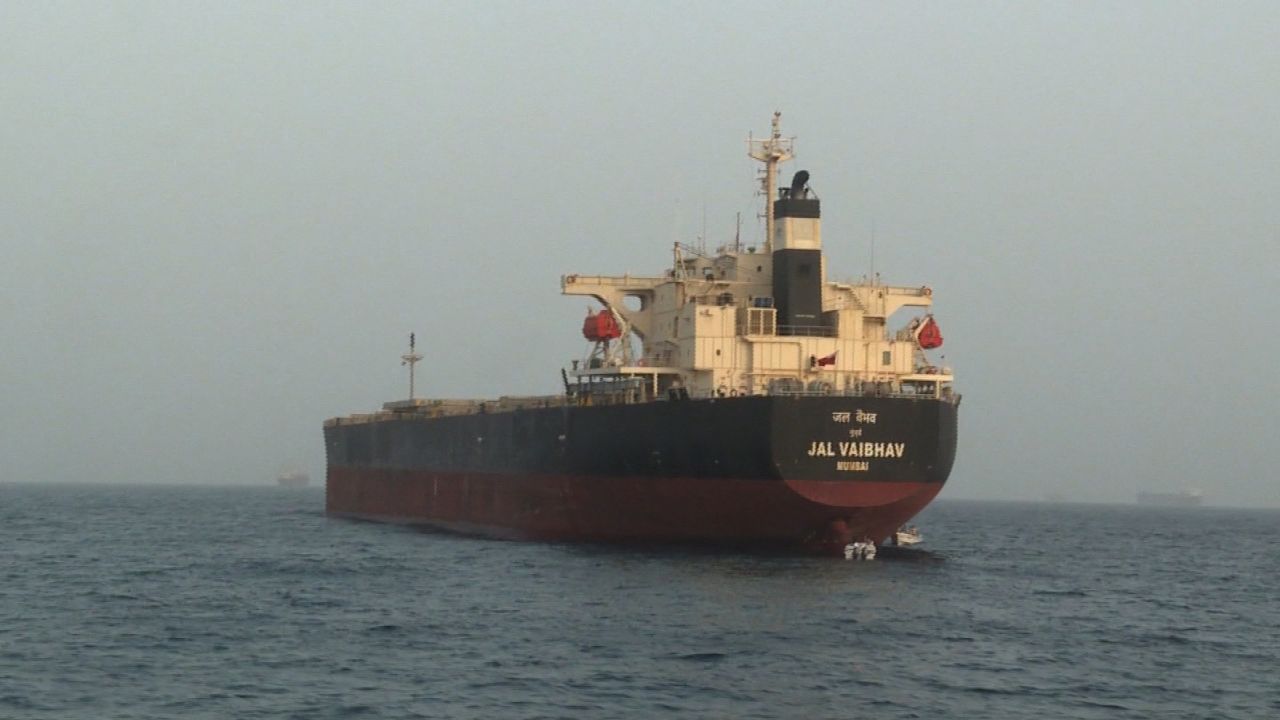
The Strait of Hormuz functions as the primary jugular of the Japanese economy, facilitating the transit of approximately 80% of the nation’s crude oil imports. Prime Minister Sanae Takaichi’s recent confirmation that Japan will not currently join a multinational escort mission represents a calculated prioritisation of diplomatic flexibility over immediate military posturing. This decision is not a sign of passivity but a reflection of the rigid legal and constitutional constraints governing the Self-Defense Forces (SDF), coupled with a sophisticated risk-management strategy that balances Tokyo’s alliance with Washington against its energy dependencies in the Middle East.
The Tripartite Constraint Framework
Japan’s maritime security policy in the Persian Gulf is dictated by three intersecting vectors: constitutional legality, operational capability, and diplomatic equilibrium. Each vector imposes specific limits on how Tokyo can respond to threats against commercial shipping. Don't forget to check out our previous post on this related article.
1. The Legal-Constitutional Threshold
Under the 2015 Security Legislation, the deployment of the SDF for "collective self-defense" requires the fulfillment of the Three New Conditions for Use of Force. The most critical hurdle is the existence of a "clear danger" to the Japanese state’s survival or a threat that fundamentally overturns the people’s right to life and liberty. Participation in a foreign-led escort mission—specifically one targeting a state actor like Iran—could be interpreted as an unconstitutional use of force unless Japan itself is under direct attack. Consequently, the government opts for "independent information-gathering" missions, which operate under the survey and research provisions of the Ministry of Defense Establishment Act.
2. Operational Distance and Logistics
The maritime geography of the region creates a significant "power projection gap." Deploying a single Takanami-class destroyer and P-3C Orion maritime patrol aircraft requires an immense logistical tail. Unlike the United States Fifth Fleet, Japan lacks a permanent deep-water port or sovereign base in the immediate vicinity of the Strait. This necessitates reliance on third-party logistics or the long-range rotation of assets, which dilutes the "persistent presence" required for effective escort duties. If you want more about the context of this, BBC News offers an in-depth breakdown.
3. Diplomatic Equilibrium
Japan maintains a unique relationship with Iran that differs fundamentally from the adversarial stance of the United States. By refusing to join a U.S.-led "Coalition of the Willing" (such as the International Maritime Security Construct), Tokyo preserves its role as a potential mediator. The cost of joining an escort mission is not merely financial; it includes the potential loss of Iranian cooperation and the increased risk of Japanese-flagged vessels becoming specific targets for asymmetric retaliation.
The Economics of Maritime Insecurity
When a chokepoint like the Strait of Hormuz faces disruption, the impact on the Japanese market manifests through two primary transmission mechanisms: the Insurance Premium Spike and the Just-in-Time Energy Bottleneck.
Variable Cost: War Risk Surcharges
The moment a region is designated as high-risk by the Joint War Committee (JWC) in London, insurance premiums for hull and machinery (H&M) and Protection and Indemnity (P&I) cover skyrocket. For a standard Very Large Crude Carrier (VLCC) carrying two million barrels of oil, a 1% increase in the vessel's insured value can translate into hundreds of thousands of dollars in additional costs per transit. Japan’s refusal to escalate militarily is partly an attempt to de-escalate the "risk perception" that drives these market costs.
Structural Cost: The LNG Dependency
While crude oil is often the focus, Liquefied Natural Gas (LNG) represents a more rigid dependency. Crude can be sourced from strategic reserves or alternate markets (West Africa, US Gulf Coast) over a 30-to-60-day window. LNG, however, relies on specialized terminals and long-term contracts. A closure of Hormuz would halt Qatari LNG exports, which constitute a significant portion of Japan's power generation mix. The lack of a viable "Plan B" for LNG makes the maintenance of regional stability via diplomacy more attractive than a military solution that might trigger a total blockade.
Deconstructing the Independent Information-Gathering Mission
The current Japanese deployment is often criticized as "symbolic," but an analytical breakdown reveals a specific utility in intelligence gathering that serves the National Security Secretariat (NSS).
- Signal Intelligence (SIGINT) Accumulation: By operating independently, Japanese assets can monitor electronic emissions and communication patterns without being integrated into a broader coalition's "target-fixated" data stream.
- Asymmetric Threat Profiling: The use of P-3C Orions allows for high-altitude persistence, mapping the movement of fast-attack craft and mine-laying vessels. This data provides the Japanese shipping industry with proprietary risk assessments.
- The "Shadow" Escort: While not providing a kinetic shield, the presence of a Japanese destroyer in the Gulf of Oman provides a psychological deterrent and a rapid-response capability for Search and Rescue (SAR) operations, which falls under a less controversial legal umbrella than combat.
The Strategic Bottleneck of International Law
A primary failure in standard reporting on this issue is the omission of the UN Convention on the Law of the Sea (UNCLOS) and its interaction with Japanese domestic law. Article 17 of UNCLOS guarantees the right of "innocent passage." However, if a state actor (like Iran) claims that passage is no longer "innocent" due to the presence of foreign military escorts, it provides a legal pretext for interference.
Japan’s strategy avoids this "Provocation Loop." By keeping its naval assets outside the immediate vicinity of Iranian territorial waters and focusing on the Gulf of Oman and the northern Arabian Sea, Tokyo adheres to a strict interpretation of international law that minimizes the likelihood of a legal or physical confrontation.
Future Contingencies: The Shift Toward Autonomous Defense
The Takaichi administration’s current stance is likely a bridge toward a more technologically integrated maritime strategy. As the cost of manned deployments rises, the focus is shifting toward:
- Unmanned Surface Vessels (USVs): Deploying autonomous sensor platforms to monitor chokepoints without risking Japanese lives or triggering constitutional debates over "military personnel."
- Satellite Constellation Integration: Enhancing the "Quasi-Zenith" satellite system to provide real-time, unhackable tracking for Japanese merchant fleets.
- Energy Diversification as Defense: Reducing the "Hormuz Variable" by accelerating hydrogen imports from Australia and increasing the nuclear baseload, thereby lowering the stakes of Middle Eastern instability.
The refusal to join an escort mission today is a tactical preservation of tomorrow’s options. If Japan were to commit its limited naval resources now, it would be depleted both politically and operationally should a more direct threat emerge in the East China Sea.
The strategic play for Japanese stakeholders is clear: prioritize the expansion of the "Independent Information-Gathering" mandate to include advanced AI-driven predictive modeling of maritime threats. This allows Japan to provide its shipping industry with high-value intelligence that mitigates insurance risks while maintaining the diplomatic vacuum necessary to prevent a regional conflagration. The objective is not to win a naval engagement in the Strait, but to ensure that the necessity for such an engagement never arises.