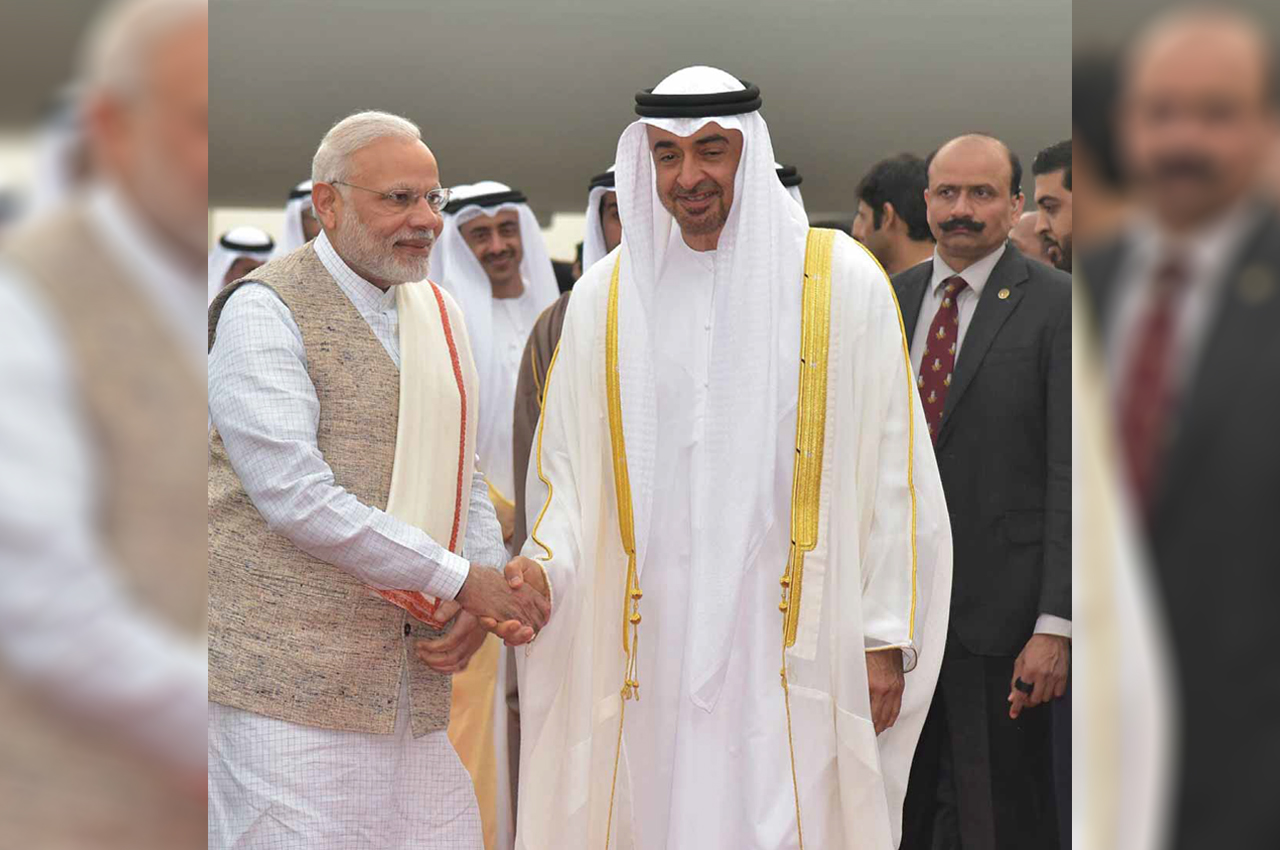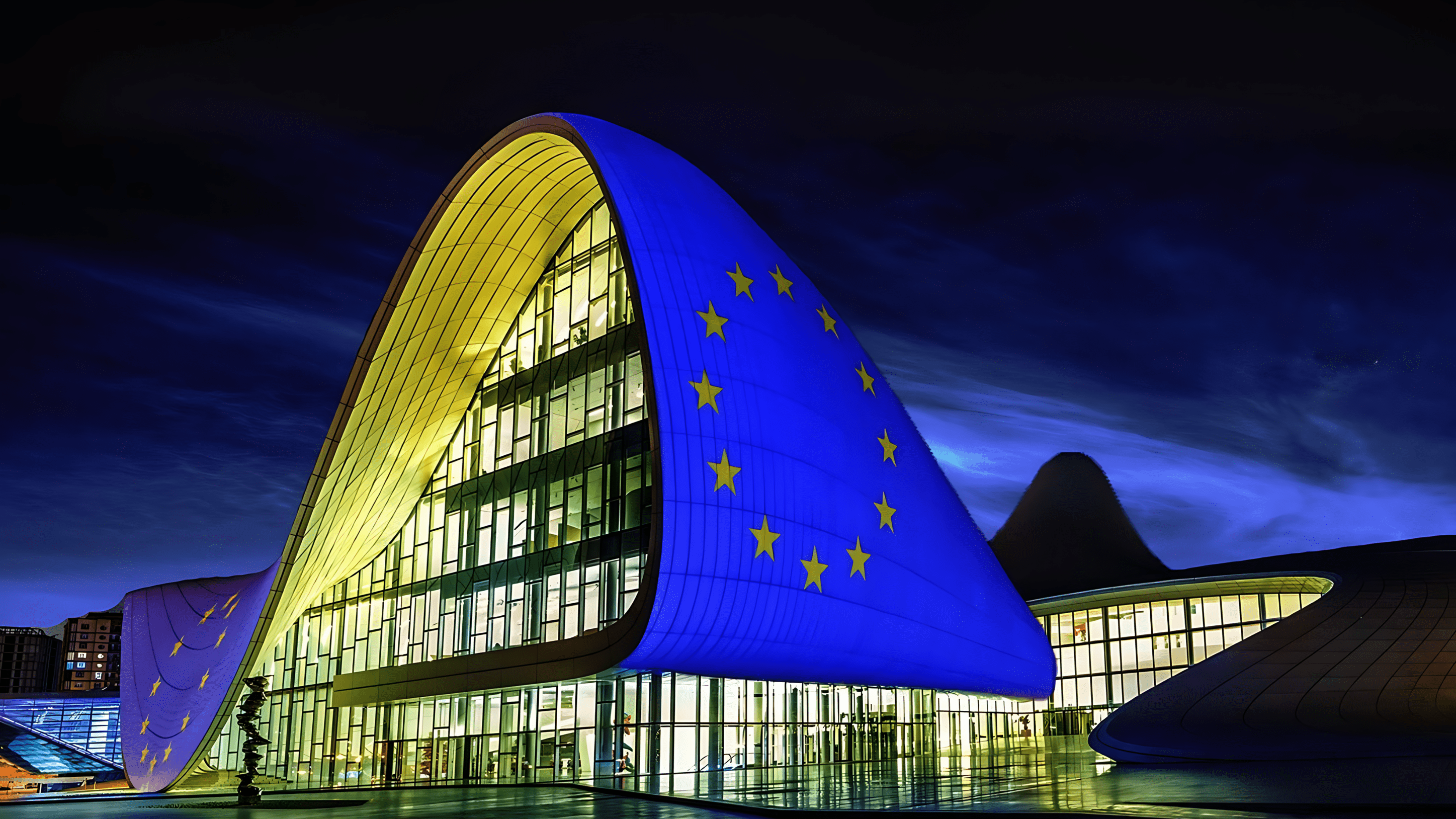
External Affairs Minister S. Jaishankar’s arrival in Brussels signals a transition from general diplomatic alignment to the technical synchronization of two of the world’s three largest democratic market economies. This engagement is not merely a diplomatic courtesy; it is an operational necessity driven by the divergence of global supply chains and the emergence of "trusted geography" as the primary variable in national security. The mission aims to resolve the friction between India’s rapid industrial scaling and the European Union's increasingly stringent regulatory environment, specifically regarding the Trade and Technology Council (TTC) and the proposed Free Trade Agreement (FTA).
The Triad of Strategic Friction
The relationship currently operates under a high-pressure system defined by three distinct but intersecting vectors. Understanding the Brussels consultations requires deconstructing these vectors rather than treating them as a singular diplomatic agenda.
1. The Carbon Border Adjustment Mechanism (CBAM) as an Economic Barrier
The EU’s implementation of CBAM represents a fundamental shift from traditional tariffs to "values-based" trade barriers. For India, this is a direct challenge to the cost-competitiveness of its heavy industry.
- The Cost of Compliance: Indian exports in steel, aluminum, and cement face a looming carbon tax that could range from 20% to 35% depending on the specific carbon intensity of the production cycle.
- The Data Gap: A primary point of contention in Brussels is the verification of carbon footprints. India lacks a standardized domestic carbon market that aligns with the EU’s Emissions Trading System (ETS). Without a mutual recognition agreement, Indian exporters face "double-taxation" through both the cost of green transition and the terminal carbon border tax.
- The Strategic Response: Jaishankar’s objective is to negotiate a "developing nation" grace period or a "technology transfer offset" where the EU facilitates the greening of Indian MSMEs (Micro, Small, and Medium Enterprises) in exchange for market access.
2. The Trade and Technology Council (TTC) Operationalization
The TTC is the engine room of the India-EU relationship, designed to prevent the "weaponization of interdependence" by non-market economies. In Brussels, the focus shifts from high-level statements to the granular technical standards that will govern the next decade of innovation.
- Semiconductor Resilience: Both regions are attempting to reduce reliance on East Asian manufacturing clusters. The discussion centers on "Design-to-Fab" cooperation, where India’s massive talent pool in chip design (nearly 20% of the world's semiconductor engineers) integrates with Europe’s specialized manufacturing equipment (such as ASML’s lithography dominance).
- Artificial Intelligence Governance: A critical bottleneck exists between the EU’s "Regulation-First" approach (typified by the AI Act) and India’s "Innovation-First" stance. The Brussels talks are aimed at creating a "Sandboxed Equivalence," allowing AI startups to operate across both jurisdictions without redesigning their core neural architectures to meet divergent ethical guidelines.
- Quantum and 6G: The goal is to establish common standards early in the development cycle to avoid the "Huawei Trap"—a situation where one actor sets the infrastructure standard, forcing others into a path-dependency that compromises national security.
3. Critical Minerals and the Security of Supply
India’s "Atmanirbhar Bharat" and the EU’s "Green Deal" both require immense quantities of Lithium, Cobalt, and Rare Earth Elements (REEs). The current reality is a Chinese monopoly on the processing of these minerals.
- Processing vs. Extraction: While India is identifying domestic reserves (e.g., in Jammu and Kashmir), it lacks the high-end processing facilities found in Europe. Brussels serves as the venue for a "Capital-for-Resource" swap: European investment in Indian processing plants to create a non-Chinese mid-stream supply chain.
The Logic of De-Risking vs. Decoupling
The term "de-risking" has replaced "decoupling" in the European lexicon, but for India, this distinction is functional. India views itself as the primary beneficiary of European de-risking. The Brussels consultations are a stress test of whether the EU is willing to accept the "India-Specific Exception" in its foreign policy.
The European Union historically demands high levels of regulatory alignment before granting deep market access. However, India’s scale makes it a "Systemic Actor" rather than a "Rule Taker." This creates a structural tension. The EU needs India to balance its trade dependencies, but India requires the EU to relax its "Regulatory Imperialism"—the tendency to export its internal standards as global norms.
The Human Capital Corridor
A significant portion of the Jaishankar mission involves the Migration and Mobility Partnership Agreement (MMPA). The quantification of this impact is often undervalued in political reporting.
- STEM Deficit: Germany alone projects a shortage of several hundred thousand skilled workers in the tech sector by 2030.
- Standardization of Qualifications: A primary hurdle is the recognition of Indian degrees and certifications. The Brussels agenda includes the "Skills Mapping" project, aimed at aligning Indian vocational training with the European Qualifications Framework (EQF).
- Digital Nomad Visas: Streamlining the movement of tech professionals is seen as a precursor to deeper R&D collaboration. If the personnel cannot move, the technology remains siloed.
Geopolitical Constraints and the Russia-Ukraine Variable
The elephant in the room remains the differing tactical approaches to the conflict in Ukraine. While the EU maintains a hardline sanction-based posture, India maintains a "Multi-Aligned" stance.
The strategic brilliance of Jaishankar’s approach lies in "Compartmentalization." By separating the geopolitical friction of the Ukraine conflict from the geo-economic necessity of the TTC, India has successfully prevented the relationship from being hijacked by a single-issue agenda. The EU has increasingly accepted that India’s energy security requirements and its historic defense ties are a reality that must be managed, not a barrier to trade.
The Infrastructure Pivot: IMEC
The India-Middle East-Europe Economic Corridor (IMEC) is the counter-narrative to the Belt and Road Initiative (BRI). In Brussels, the discussion moves from the conceptual to the logistical.
- Port Synchronization: Aligning the operations of Indian ports (like Mundra or JNPT) with European entries (like Piraeus or Trieste).
- Digital Connectivity: Laying subsea cables that bypass traditional chokepoints, ensuring data sovereignty for the India-EU digital economy.
- Green Hydrogen: Investigating the possibility of India becoming a primary exporter of Green Hydrogen to the EU, utilizing the IMEC as the transport backbone.
Tactical Limitations and Risks
No analysis of this depth is complete without acknowledging the "Implementation Gap." The primary risk factors for the India-EU partnership include:
- Agricultural Sensitivities: The EU’s insistence on Geographical Indications (GIs) and India’s protection of its massive farming population remain the "poison pills" of any FTA negotiation.
- Data Sovereignty: India’s Data Protection Act contains clauses on data localization that conflict with the EU’s GDPR "Adequacy" requirements.
- Bureaucratic Inertia: The EU’s consensus-based decision-making often moves at a speed that is incompatible with the rapid technological shifts India is currently navigating.
The Strategic Play
The Brussels consultations should be viewed as the "Final Assembly" phase of a new geopolitical engine. To capitalize on this momentum, the following actions are necessary:
- Establish a Permanent TTC Secretariat: To move beyond annual summits and into daily technical coordination.
- Launch a "Green Tech Bridge": A dedicated fund to help Indian manufacturers meet CBAM standards through European equipment.
- Formalize the IMEC Working Group: Transitioning the corridor from a memorandum of understanding to a bankable infrastructure project with clear timelines.
The window for this alignment is narrow. As the EU prepares for its next electoral cycle and India continues its rapid industrialization, the technical agreements reached this week in Brussels will dictate the economic gravity of the Indo-Pacific for the next twenty years. The objective is to move from being "partners in principle" to "interoperable in practice."