The headlines are lazy. You’ve seen them everywhere: "War in the East Drives Gas Prices Higher" or "Global Conflict Pinches the American Pump." It’s a convenient narrative for politicians and a simple one for journalists who don’t want to read a balance sheet. It’s also wrong.
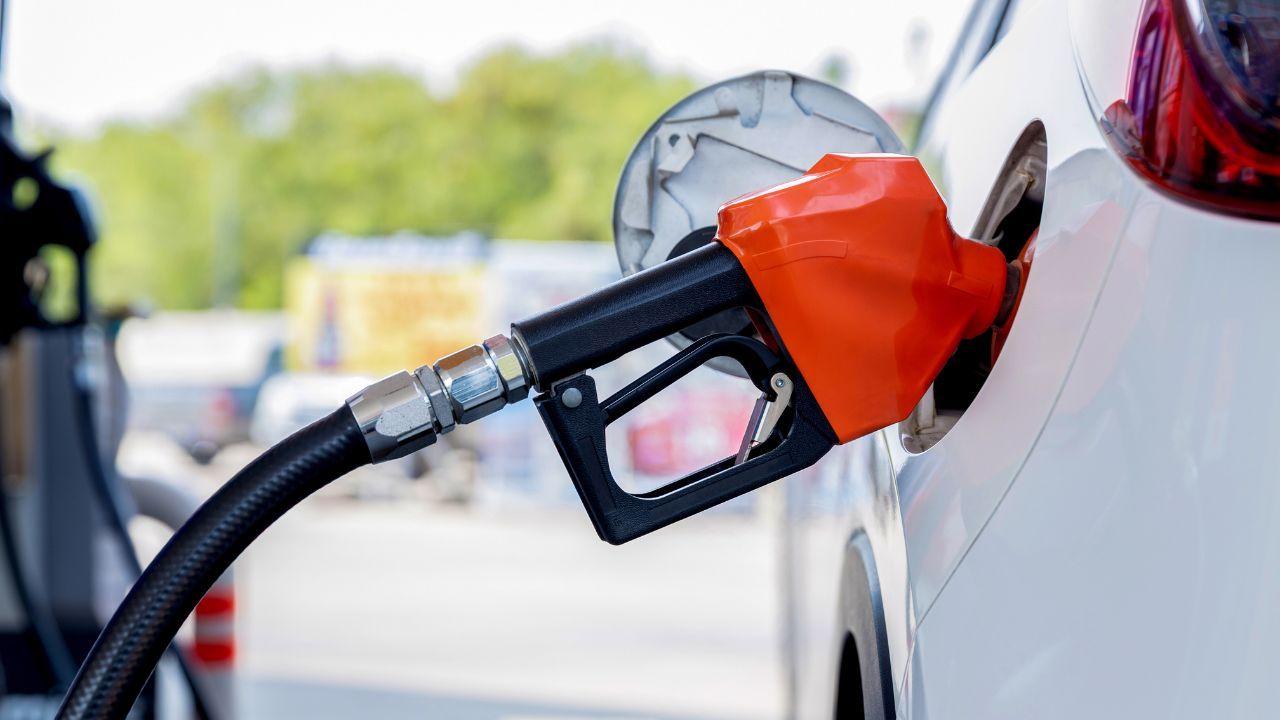
Blaming a distant conflict for the fact that you’re paying over $4.00 a gallon is like blaming the rain for a leaky roof you refused to patch for ten years. The war isn't the cause; it’s the catalyst that exposed a decade of systemic, intentional underinvestment in the very infrastructure that keeps the world moving.
If you think a ceasefire tomorrow would drop prices back to $2.50, you’re setting yourself up for a brutal awakening. We didn't stumble into high fuel costs. We built them.
The Myth of Geopolitical Scarcity
The standard argument suggests that because a major oil producer is under sanctions or embroiled in conflict, the world is "running out" of oil. This is a fundamental misunderstanding of how the energy market functions.
The world isn't short on crude. It’s short on the ability to turn that crude into something your car can actually use.
For years, the "Environmental, Social, and Governance" (ESG) movement pressured banks and institutional investors to starve the oil and gas sector of capital. I’ve sat in rooms where hedge fund managers bragged about "divesting" from fossil fuels to appease pension fund boards. The result? We stopped building refineries. We stopped maintaining pipelines. We stopped drilling the "unfashionable" wells.
Refining capacity in the United States has been shrinking, not growing. When a refinery goes offline—whether for maintenance or because it’s no longer "economically viable" under a mountain of new regulations—that capacity doesn't just come back. You can't flip a switch and restart a catalytic cracker that’s been cold for three years. We are currently operating at near-total capacity with zero margin for error.
The war didn't create the bottleneck. It just poured more water into a funnel that was already clogged with bureaucratic and ideological sludge.
Inflation is a Policy, Not an Accident
Let’s talk about the dollar. Oil is priced in USD. When the Federal Reserve spends years printing money to "stimulate" an economy while keeping interest rates at floor levels, the value of that dollar erodes.
You aren't just paying for the oil; you’re paying for the devaluation of your currency.
If the price of a barrel stays flat but the dollar in your pocket is worth 20% less than it was three years ago, the price at the pump must go up. This isn't "greedflation" or "war profiteering." It’s basic math. When politicians scream about "big oil" price gouging, they are performing a sleight of hand to distract you from the fact that their own fiscal policies have gutted your purchasing power.
Why "Drill, Baby, Drill" is a Half-Truth
Conservative pundits love to shout that we just need to drill more. While increasing domestic production is necessary, it’s a partial solution at best.
- Crude Quality: Not all oil is the same. Much of the shale oil produced in the US is "light, sweet" crude. Many American refineries are configured to process "heavy, sour" crude from places like Venezuela or Canada. You can’t just swap them out without multi-billion dollar retrofits.
- Labor Shortage: You can’t drill a well without crews. After the 2014 and 2020 price crashes, the industry lost hundreds of thousands of skilled workers who never came back. They moved into construction or tech. You can have all the permits in the world, but if you don't have the roughnecks and engineers, that oil stays in the ground.
- The Investor Mandate: Wall Street changed the rules. Investors no longer want "growth at all costs." They want dividends and share buybacks. After a decade of burning cash to grow production, oil companies are finally being forced to act like disciplined businesses. They aren't rushing to drill because their shareholders would fire the CEO if they did.
The Ethanol Scams and Regulatory Drag
If we were serious about lowering prices, we’d look at the "Renewable Fuel Standard" (RFS). This is the federal mandate that requires a certain amount of ethanol to be blended into gasoline.
It’s a massive subsidy for the corn lobby disguised as environmental policy.
Ethanol is less energy-dense than pure gasoline. It lowers your fuel economy, meaning you have to buy more of it to go the same distance. Furthermore, the logistical nightmare of transporting and blending ethanol adds cents to every gallon. During a "crisis," you’d think the first move would be to suspend these mandates. Instead, they are doubled down upon because no politician wants to lose the Iowa caucus.
Then there are the seasonal blends. Every spring, refineries have to switch from "winter" to "summer" blends to meet EPA smog requirements. This switchover creates a supply hiccup every single year, guaranteed. We have created a fractured market where California needs one specific type of gas, the Midwest needs another, and the East Coast needs a third. This lack of fungibility means a localized problem—like a single pipe leak—can send prices skyrocketing in one region while the rest of the country is fine.
The "Green" Transition's Dirty Secret
We are told that the high price of gas is a "necessary pain" to force the transition to Electric Vehicles (EVs). This is a privileged, coastal fantasy.
The average age of a car on American roads is over twelve years. People aren't driving 2012 Ford F-150s because they hate the planet; they’re driving them because they can’t afford a $60,000 electric SUV and the $10,000 home charging installation that comes with it.
By intentionally making gasoline expensive through regulation and restricted supply, the government isn't "fostering" a transition. It’s taxing the working class to subsidize the toys of the wealthy.
$4.00 gas is a regressive tax. It hits the person driving thirty miles to a warehouse job far harder than it hits the software engineer working from home. When energy costs rise, everything else follows. Fertilizer is made from natural gas. Diesel fuels the trucks that deliver your groceries. If you think your grocery bill is high now, wait until the full effect of sustained $4.00+ gas hits the agricultural supply chain.
The Hard Truth About "Energy Independence"
The phrase "Energy Independence" is a marketing slogan, not a geopolitical reality. As long as oil is a globally traded commodity, we are tied to the global price. Even if we produced every drop we consumed, American producers would still sell to the highest bidder.
To actually decouple our prices from global volatility, we would need to nationalize the industry—a move that would lead to the same efficiency and shortages we see in Caracas—or we would need to build so much redundant capacity that we could ignore global shocks. We have chosen neither. We have chosen to live in a middle ground of high regulation, low investment, and constant "surprise" when the inevitable happens.
The Real Winners of High Prices
It isn't just the oil companies. It’s the governments.
In many states, gasoline taxes are a percentage of the price or are at least a significant fixed cost. When prices rise, the tax revenue often climbs along with it. Politicians love to rail against high prices while quietly pocketing the windfall to fund their pet projects. They have no real incentive to see gas return to $1.99.
Stop Asking the Wrong Questions
People ask, "When will the war end so gas prices go down?"
That is a flawed premise. You should be asking: "Why is our energy grid so fragile that a conflict 5,000 miles away can threaten my ability to afford a commute?"
The answer is that we have prioritized virtue signaling over energy security. We have treated the oil and gas industry as a dying patient we want to euthanize, only to realize we still need it to run the hospital.
You want cheaper gas? It’s not about diplomacy in Europe. It’s about:
- Ending the RFS ethanol mandates immediately.
- Streamlining the NEPA process so a pipeline doesn't take ten years to approve.
- Providing federal guarantees for new refinery construction.
- Stopping the weaponization of the banking system against energy producers.
Until those things happen, $4.00 is the new floor, not the ceiling. The war is just the latest excuse for a failure of leadership that has been decades in the making.
Stop looking for a villain in a foreign capital. The call is coming from inside the house.
Stop complaining about the price and start demanding a return to energy sanity. Or buy a bike, because the people running the show don't care if you can afford to drive.
The era of cheap, easy energy was killed by choice, not by combat.