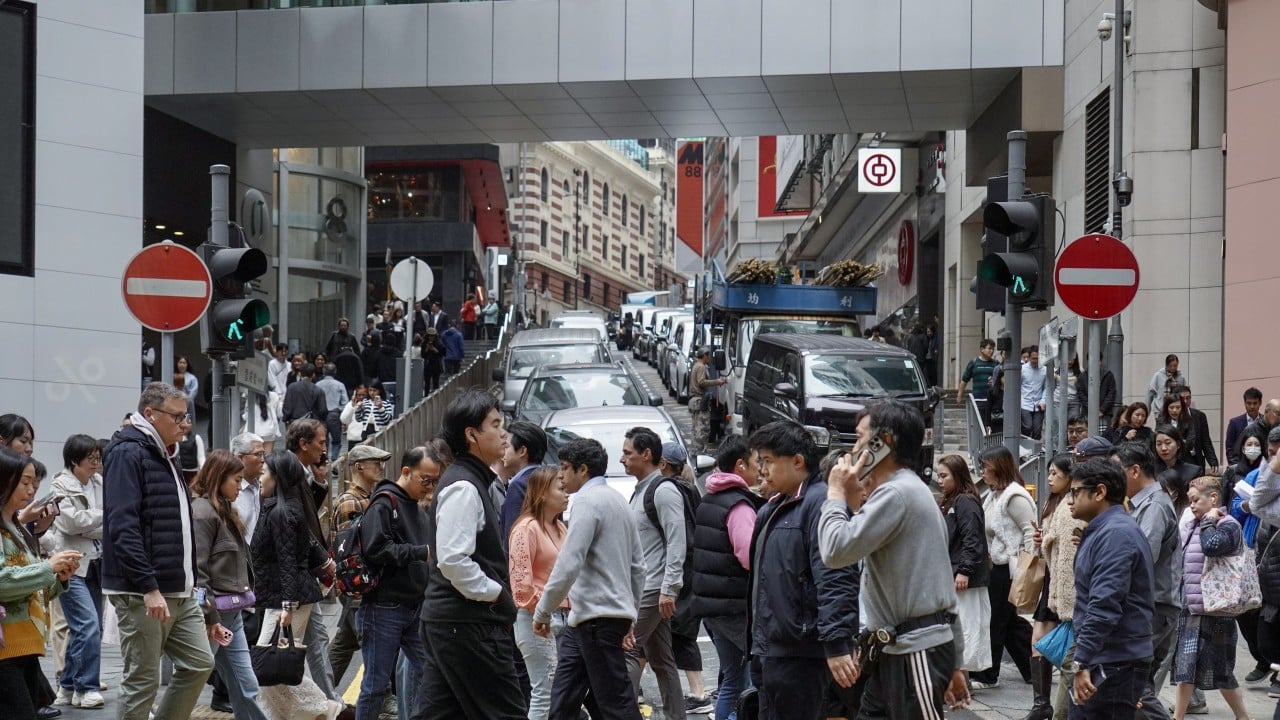
The headline figures released by the Census and Statistics Department suggest a city in recovery. With the seasonally adjusted unemployment rate inching down from 3.0% to 2.9%, the official narrative is one of "tightening" labor markets and a return to pre-pandemic stability. But these numbers are a shell game. Beneath the surface of a 0.1 percentage point drop lies a far more volatile reality involving a shrinking workforce, a massive exodus of skilled professionals, and a desperate reliance on low-tier service roles to prop up the data.
To understand why the unemployment rate is falling, you have to look at the people who are no longer there to be counted. Unemployment is a ratio of people seeking work against the total labor force. If the labor force shrinks faster than people find jobs, the rate drops. This isn't a sign of economic health; it is a symptom of a systemic drain. Hong Kong’s total labor force has contracted significantly over the last three years, driven by a combination of an aging population and a high-profile wave of emigration to the United Kingdom, Canada, and Australia. When a mid-level manager at a Tier-1 bank leaves for London, they aren't "unemployed"—they simply vanish from the local denominator.
The Participation Gap
The most glaring omission in the government’s celebratory tone is the labor force participation rate. While the unemployment rate fell, the actual number of people employed didn't see a symmetrical surge in high-value sectors. Instead, we are seeing a structural shift. The city is losing the very "middle" that once made its economy the envy of Asia.
We are witnessing a "hollowing out" of the professional class. Vacancies in finance, insurance, and technology remain stubbornly high, not because of a lack of interest, but because the domestic talent pool has been depleted. The government has attempted to plug this hole with various talent pass schemes, but these initiatives primarily attract mainland Chinese professionals who often view Hong Kong as a temporary stepping stone rather than a permanent home. This creates a transient workforce that lacks the long-term institutional knowledge required for a stable recovery.
The Service Sector Trap
A significant portion of the recent "job gains" has occurred in the retail, accommodation, and food services sectors. This is largely a byproduct of the reopening of borders and a slight uptick in tourism. However, these are often low-wage, high-turnover positions.
- Retail and Catering: These sectors saw the most visible improvements, yet they struggle with a chronic shortage of manual labor.
- Construction: Infrastructure projects keep the numbers up, but the industry is aging rapidly, with few young locals willing to enter the trade.
- Professional Services: This sector remains stagnant, plagued by a "brain drain" that statistics conveniently ignore.
If the engine of Hong Kong's economy is supposed to be high-finance and logistics, then a growth in burger-flipping and floor-sweeping isn't a victory. It’s a pivot toward a less sophisticated economic model.
Why the 0.1 Percent Matters Less Than You Think
Economists often obsess over these marginal shifts, but in a city of over seven million people, a 0.1% change is often within the margin of error or represents a seasonal fluke. The real story is the underemployment rate, which remains a persistent thorn. Thousands of workers are stuck in part-time or gig-economy roles, unable to secure the 40-hour weeks necessary to survive in one of the world’s most expensive cities.
Consider the "wealth effect." When property prices are in a slump—as they have been in Hong Kong for the past several quarters—consumer confidence wanes. People spend less. Small businesses, the backbone of the local employment market, face a pincer movement of high rents and declining foot traffic. A business that survives by cutting two full-time staff and replacing them with one overworked part-timer might technically contribute to a "lower unemployment rate" because those two former staffers might have left the city entirely, but the economic output is objectively worse.
The Hidden Underemployed
Let’s look at the "hidden" categories. Many professionals who were laid off during the restructuring of the banking sector have not found equivalent roles. Instead, they have transitioned into "consultancy" or "freelancing"—polite terms for being underutilized. These individuals are not counted as unemployed. They are, for all intents and purposes, the working ghost-class of the Central District.
The Importation Gambit
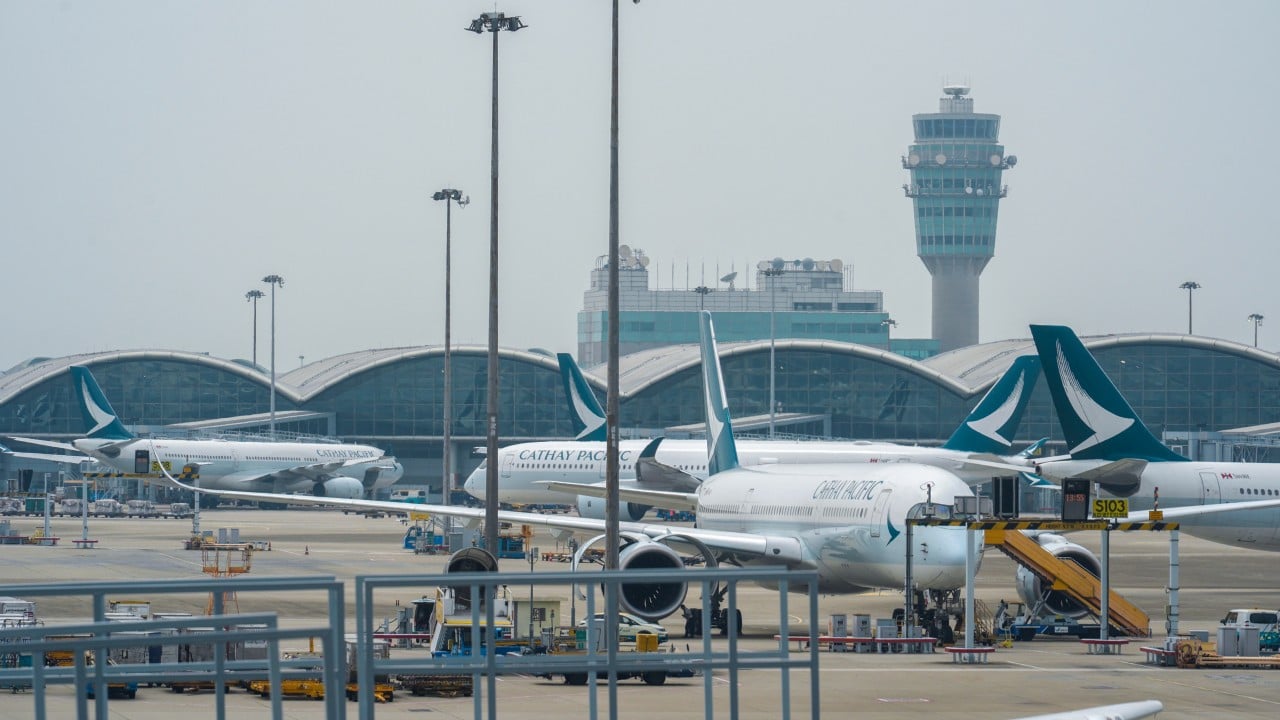
Chief Executive John Lee’s administration has doubled down on labor importation schemes. From construction workers to aircraft technicians, the gates are opening to foreign labor to keep the city running. This is a double-edged sword.
On one hand, it prevents the total collapse of essential services. On the other, it suppresses local wage growth. If a firm can import a technician at a lower cost than training a local youth, they will do so every time. This creates a cycle where the local population feels increasingly alienated from the "growth" the government keeps touting.
The "Top Talent Pass Scheme" (TTPS) is the flagship policy here. While the government boasts about the number of applications approved, they are remarkably quiet about the actual "onboarding" rate. How many of these "talents" are actually paying taxes in Hong Kong? How many are simply securing a visa as an insurance policy while they continue to work or live elsewhere? Without transparent data on job placement and residency, the TTPS is a vanity metric.
The Productivity Parity Problem
A falling unemployment rate should, in theory, lead to higher productivity. In Hong Kong, the opposite is happening. Output per worker is under pressure because the most productive segment of the population—those aged 30 to 45 with specialized skills—is the exact demographic that has led the emigration statistics.
We are replacing high-output veterans with entry-level workers or imported labor that requires significant cultural and professional integration. This creates a "productivity lag." You see it in the lengthening wait times for banking services, the declining standards in hospitality, and the delays in major infrastructure projects. The city is functioning, but the "gold standard" of Hong Kong efficiency is tarnishing.
A Look at the Numbers
If we adjust the unemployment figures to account for the 200,000+ people who have left the workforce since 2020, the "true" unemployment or labor-slack rate would likely be significantly higher.
| Sector | Official Change | Real-World Context |
|---|---|---|
| Finance | Slight Increase | Heavy layoffs in investment banking offset by insurance hiring. |
| Retail | 0.2% Decrease | Driven by seasonal part-time work and border reopening. |
| Construction | Stable | Artificial stability created by government-funded projects. |
| Tech | Not Disclosed | Massive talent gap; roles are going unfilled. |
The Regional Rivalry
While Hong Kong massages its 2.9% figure, Singapore is aggressively courting the very firms that are scaling back in the Special Administrative Region. The competition isn't just for capital; it’s for people. A low unemployment rate doesn't matter if the "talent" you’re left with is insufficient to compete on a global stage.
The narrative of "0.1% improvement" is a distraction from the fundamental question: What kind of city is Hong Kong becoming? If the goal is to be a secondary hub for the Greater Bay Area, then these stats are fine. If the goal is to remain a "World City," the labor data is a warning light flashing red.
The focus must shift from the quantity of jobs to the quality of the workforce. Every time a specialized professional leaves, the city loses decades of accumulated expertise that cannot be replaced by a simple "labor importation" tick-box. The government needs to address the root causes of the exodus—political stability, education standards, and the cost of living—rather than just celebrating a decimal point shift in a skewed dataset.
The reality on the ground is that businesses are struggling to find quality staff, and workers are struggling to find quality wages. Until those two things align, the unemployment rate is nothing more than a political tool used to mask a profound economic transformation.
Stop looking at the 2.9% and start looking at the empty desks in the office towers of West Kowloon. That is where the real story of the Hong Kong economy is written.
Check the vacancy-to-applicant ratio in the specific industry you operate in to see if the "tightening market" actually applies to your salary negotiations.