The traditional two-party system in South Australia didn't just break on Saturday night. It disintegrated. While the headlines scream about Peter Malinauskas securing a second term, the real story isn't that Labor won—it's how the Liberal Party almost ceased to exist as a relevant political force.
Labor’s landslide is massive, but the rise of Pauline Hanson’s One Nation has sent a shockwave through the country. For the first time in modern history, we're seeing a major conservative party being cannibalized by an insurgent right-wing movement in real-time. It’s messy, it’s loud, and it’s a warning to every career politician in Canberra.
The Night the Liberal Heartland Vanished
Peter Malinauskas didn't just win; he cruised. By 9:30 PM, the result was so obvious that ABC analysts called it before the first beer was finished at Labor HQ. Labor’s primary vote sat comfortably above 37%, a dominant position that allowed them to flip blue-ribbon city seats like Unley, Hartley, and Colton.
But look at the other side of the ledger. The Liberal vote didn't just dip—it fell off a cliff to around 19%. That’s a catastrophic number for a party that used to govern this state. They’ve been reduced to single digits in the House of Assembly. To put that in perspective, the Liberals might end up with fewer than five seats once the final postal votes are tallied.
Why the Liberal Collapse Happened
- Leadership Carousel: Four leaders in four years. You can't build trust when voters need a program to know who’s in charge.
- The Hurn Factor: Ashton Hurn, at only 35 and a first-term MP, was handed a sinking ship just months before the poll. She was outclassed and out-resourced.
- Preference Suicide: The Liberals tried to play cute by directing preferences to One Nation to "stop Labor." Instead, they just gave their own voters permission to leave the party forever.
One Nation’s Regional Takeover
If you want to see where the anger lives, look at the regions. One Nation didn't just "do well" in the bush; they dominated. In seats like Chaffey and Hammond, the One Nation primary vote surged past 20%, often leapfrogging the Liberals.
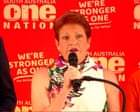
Pauline Hanson spent the final week of the campaign on the ground with Cory Bernardi, the former Liberal Senator who has now reinvented himself as One Nation’s state leader. Bernardi has secured an Upper House seat, and he’s likely bringing Carlos Quaremba and possibly a third colleague with him.
This isn't just a protest vote anymore. It’s a migration. Voters in the Riverland and the South East feel abandoned by a Liberal Party they view as "Adelaide-centric" and indistinguishable from Labor on social issues. When One Nation talks about capping immigration at 130,000 or protecting local land rights, it resonates with a demographic that feels ignored by the city elite.
The Malinauskas Mandate
While the Right is in a state of civil war, Peter Malinauskas has been handed the keys to the state with zero speed limits. His "Better Premier" rating was double that of Ashton Hurn’s throughout the campaign.
He didn't win by being a radical. He won by being a populist who actually delivers. His second-term agenda is clear:
- Free Public Education: A massive swing at the cost-of-living crisis.
- Housing Blitz: Aggressive new builds to tackle the rental crisis.
- Screen Bans: A popular, if controversial, plan to keep children away from social media.
He’s admitted he hasn't fixed "ramping" at hospitals—the very issue that got him elected in 2022. Usually, a broken promise like that is a death sentence. But because the opposition was so busy fighting itself, Malinauskas was able to own the failure, apologize, and ask for more time. And the voters gave it to him.
What This Means for the Rest of Australia
Don't think this is just a South Australian quirk. This result is a terrifying preview for the federal Coalition. If One Nation can peel off 21% of the primary vote in a state like SA, they can do it in regional Queensland, New South Wales, and Victoria.
The "Pincer Movement" is real. Labor is taking the leafy, affluent suburbs in the city. One Nation is taking the farms and the factory towns. The Liberal Party is being squeezed into a tiny, irrelevant middle ground. Federal leaders like Angus Taylor and Matt Canavan will be looking at these numbers today and realizing that the old rules of Australian politics are dead.
The Next 48 Hours
Keep a close eye on the counting in Flinders and Narungga. If these traditional conservative strongholds fall to One Nation or "Orange" independents, the Liberal Party will have to decide if it even wants to continue in its current form.
The immediate task for Labor is to manage a massive majority without becoming arrogant. For the Liberals, it's about survival. They need to find a way to win back the "quiet Australians" who just decided that One Nation speaks their language better than the party of Menzies ever did.
The count continues, but the verdict is in. South Australia has shifted, and the ripples are going to be felt all the way to Canberra. Stop waiting for a return to "normal" politics. This is the new normal.
If you're following the results, focus on the preference flows from the 35% of voters who cast their ballots early. That’s where the final margins in those tight regional seats will be decided. Read the AEC's latest divisional updates to see if the One Nation surge holds as the postal votes land.