The coffee in the breakroom was still warm when the first alarm cut through the rhythmic hum of the assembly line. It was 9:14 AM. In the sterile, high-tech corridors of a South Korean automotive powerhouse, 9:14 AM is usually a time of peak efficiency, a moment where the choreography of robotics and human oversight achieves a kind of mechanical grace.
Ten minutes later, that grace was replaced by a localized sun.
We talk about industrial accidents in the language of spreadsheets. We use words like "casualties," "containment," and "structural integrity." But spreadsheets don't scream. They don't smell like ozone and melting polymer. To understand what happened behind the glass and steel of that facility, you have to look past the headline of 10 dead and 59 injured. You have to look at the silence that preceded the roar.
The Ghost in the Battery
Modern car plants aren't the greasy, soot-stained dens of the twentieth century. They are cathedrals of innovation. In South Korea, these plants are the heartbeat of a national identity built on being faster, smarter, and cleaner than the rest of the world. But there is a hidden tension in that progress.
Consider a hypothetical technician named Min-jun. He isn't a statistic; he is the man who noticed the flicker. In the moments before the inferno, a worker like Min-jun would have been monitoring the lithium-ion cell integration. These batteries are the jewels of the modern energy transition. They are also, essentially, controlled lightning trapped in a box.
When a thermal runaway event begins, it doesn't ask for permission. It starts as a microscopic flaw—a separator failing, a dendrite piercing a layer—and then it feeds on itself. It is a chemical betrayal.
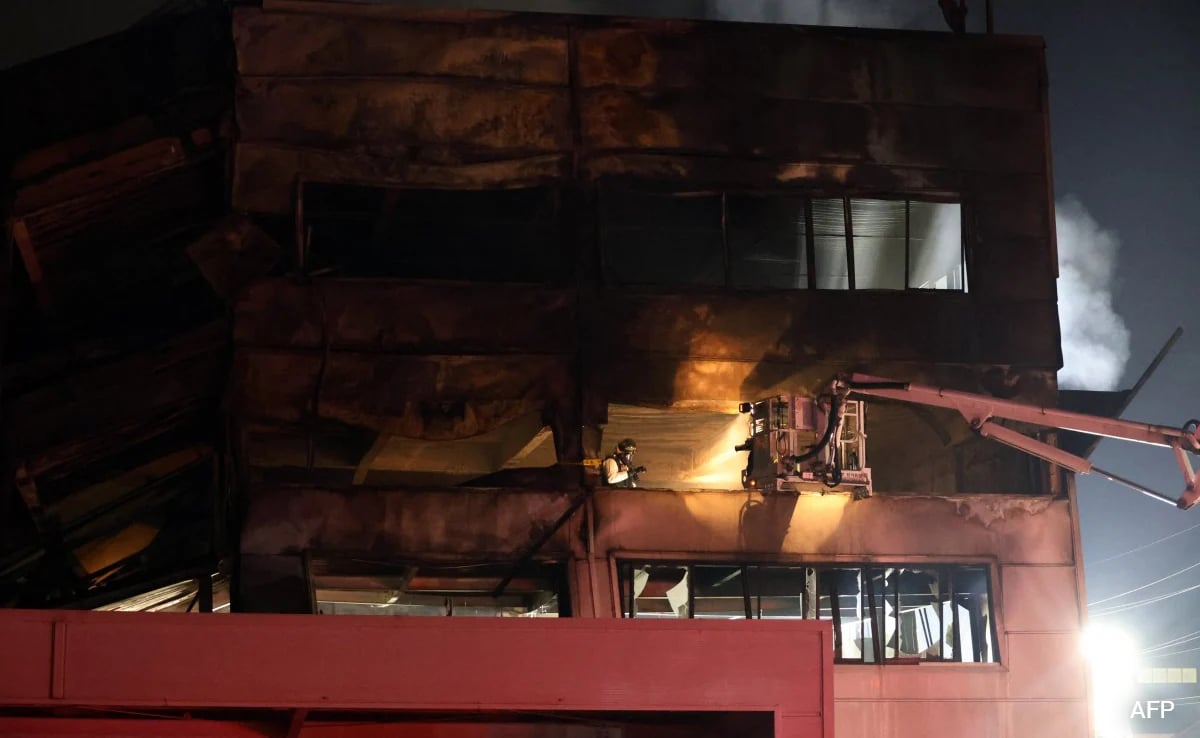
The fire at the plant wasn't a slow burn. It was an atmospheric shift. Witnesses described a thick, acrid smoke that didn't just obscure vision; it felt heavy, like it was trying to occupy the same space as their lungs. Within seconds, the "clean" environment of the high-tech facility became a labyrinth of toxic fumes.
The Cost of a Microsecond
Safety protocols are written in blood. Every exit sign, every sprinkler head, and every fire-suppression canister in that South Korean plant was the result of a previous tragedy. Yet, the fire moved with a velocity that rendered standard human reaction times obsolete.
Of the 59 injured, many weren't caught by the flames themselves. They were caught by the panic. Imagine the transition from a focused, quiet work environment to a pitch-black furnace in under sixty seconds. The psychology of an industrial disaster is a study in the breakdown of the "normalcy bias." Most people, when they first hear an alarm, look around to see if others are moving. They wait for a signal.
In this instance, the signal was the floor vibrating.
The structural reality of these plants—vast, open-plan floors designed for the movement of heavy machinery—creates a chimney effect. Once the fire breached the initial containment zone, the oxygen in the building acted as an accelerant. It wasn't just a fire in a building; the building became the fuel.
The 10 lives lost weren't just numbers on a ledger. They were the engineers who stayed a second too long to trigger a manual override. They were the floor managers who turned back to ensure the temporary contractors—often less familiar with the complex layout—found the stairwells. Their absence is now a permanent hole in the fabric of their families and the industry itself.
The Infrastructure of Risk
Why does this matter to someone who will never step foot in a South Korean manufacturing hub? Because the world is currently being rebuilt in the image of that plant.
We are in the middle of a global pivot. Every major economy is racing to decentralize fossil fuels and centralize high-density energy storage. The "invisible stakes" here aren't just about one company’s quarterly earnings or a temporary dip in car production. It is about the fundamental trust we place in the machines that power our lives.
When a car plant burns, it reveals the fragility of our "robust" systems. We have optimized for speed. We have optimized for output. But we are still learning how to optimize for the volatile nature of the materials required for a green future. The South Korean fire is a jarring reminder that our technological reach occasionally exceeds our safety grasp.
The 59 survivors carry more than just physical scars. There is a specific kind of trauma that comes from surviving a high-tech disaster. It is the realization that the gleaming, white-walled future we were promised is still subject to the ancient, chaotic whims of fire and heat.
The Human Oversight
There is a temptation to blame the machines. To point at the batteries or the automated systems and say, "This is the danger." But the machines only do what we tell them to do. They operate within the margins we define.
The investigation into the 10 deaths will likely find a "cascade of failures." It always does. It will be a combination of a faulty component, a delayed sensor, and a fire door that was propped open for ventilation on a humid morning. It is rarely one big mistake; it is a thousand tiny compromises that eventually align to create a catastrophe.
We see this pattern in every industry, from aerospace to deep-sea drilling. We build a system so complex that no single human can fully grasp its totality, and then we are shocked when it behaves in ways we didn't predict.
The families of the deceased are now navigating the brutal bureaucracy of corporate grieving. In South Korea, the relationship between the "Chaebols"—the massive family-run conglomerates—and their workforce is deeply paternalistic but also incredibly demanding. To lose a life in the service of the company is a profound cultural shock. It ripples through the community, questioning the worth of the relentless drive for "K-Tech" supremacy.
The Weight of the Aftermath
As the smoke cleared and the investigators moved in with their drones and chemical sniffers, the plant stood as a charred skeleton of its former self. The financial loss is estimated in the hundreds of millions. The reputational loss is harder to calculate.
But the real story is in the 59 people who went home that night and couldn't stop coughing, couldn't stop shaking, and couldn't look at their own cars the same way. It’s in the empty lockers of the ten who didn’t.
We often treat news as a fleeting moment, a notification on a screen that we swipe away to get to the next headline. We forget that for those involved, the "news" never ends. It just becomes a permanent part of their history. The fire in South Korea wasn't just an accident in a factory; it was a fracture in the dream of a frictionless, automated world.
The lights in the facility will eventually be replaced. The soot will be scrubbed from the reinforced concrete. New machines will be bolted to the floor, and the hum of the assembly line will return, perhaps even more efficient than before. But in the quiet corners of the breakroom, where the coffee once sat warm, there will be a lingering shadow. It is the memory of the day the sun came inside, reminding everyone that the cost of progress is often paid in the most human currency imaginable.
The charred remains of a single work glove sat on the blackened pavement outside the main gate, its bright yellow high-visibility strip now a dull, melted grey, forgotten by the cleanup crews but testifying to a hand that was there, then wasn't.