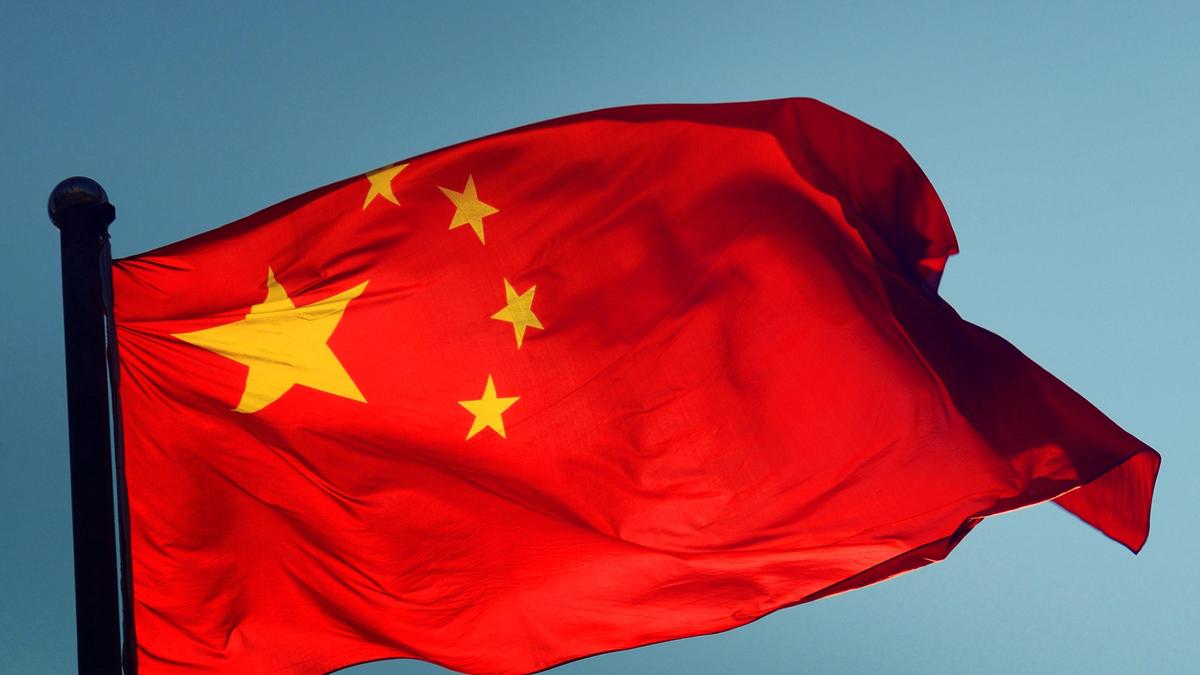
Beijing is walking a razor-thin line that is about to snap. On Thursday, April 9, 2026, the Chinese Defence Ministry issued a categorical denial regarding reports that it provided satellite imagery and semiconductor equipment to the Iranian military. This statement arrived just as a fragile, two-week ceasefire between the United States and Iran began to take hold. While the official line from the Foreign Ministry suggests Beijing is merely a neutral mediator, the reality on the ground—and in the shipping lanes—tells a story of a silent partner providing the high-tech oxygen required for Tehran to survive a high-intensity conflict.
The denial is technically precise but strategically hollow. It focuses on the direct transfer of "military support," a term Beijing defines narrowly to exclude the flood of dual-use technologies that have become the backbone of modern asymmetric warfare. By providing everything from ammonium perchlorate for missile fuel to real-time access to the BeiDou Navigation Satellite System, China has ensured that Iran’s strikes against U.S. and Israeli assets are more accurate than ever before, all while maintaining the plausible deniability necessary to protect its own global trade interests.
The Dual Use Shell Game
For decades, the world watched for crates of Chinese rifles or tanks. That is yesterday’s war. In the 2026 conflict, the most lethal exports are chemicals and silicon. Investigations into recent Iranian missile reconstitutions reveal a massive influx of ammonium perchlorate—a powerful oxidizer essential for solid-fuel rocket motors.
Since the beginning of the conflict in late February 2026, intelligence tracking has identified at least two state-owned Iranian vessels departing from China’s Gaolan Port loaded with these precursors. By shipping chemicals rather than finished missiles, China bypasses traditional arms embargo triggers.
Precision by Proxy
The leap in Iranian lethality since the brief 12-day skirmish in 2025 is not an accident of domestic engineering. It is the result of integration with Chinese geospatial intelligence.
- Satellite Mapping: Companies like MizarVision and Jing’an Technology, which maintain deep ties to the People’s Liberation Army (PLA), have reportedly marketed high-resolution imagery of U.S. regional bases.
- Navigation: By granting Iran full access to the military-grade signal of the BeiDou constellation, Beijing has effectively given Tehran a "digital eye" that Western electronic warfare units find much harder to blind than the standard GPS signals.
- Semiconductors: Despite the denials, the flow of chip-making equipment into Iranian "civilian" labs has allowed the regime to maintain production of guidance systems even under the weight of U.S. precision strikes.
The Islamabad Gambit
The ceasefire negotiated this week in Islamabad is being framed by Beijing as a triumph of Chinese diplomacy. Foreign Minister Wang Yi has logged dozens of calls with regional stakeholders, positioning China as the "adult in the room" compared to what it characterizes as American "military adventurism."
This role as a peacemaker is a calculated necessity. China is currently the world’s largest importer of crude oil, much of it flowing through the very Strait of Hormuz that Iranian-made, Chinese-designed missiles are currently threatening. If the war escalates to the point of a total blockade, the Chinese economy would face an energy shock that could trigger internal instability. Beijing doesn't necessarily want Iran to win a total war; it wants Iran to remain a functional, disruptive thorn in Washington’s side without actually collapsing the global oil market.
Economic Hypocrisy
The financial data underscores the imbalance. While China officially reports roughly $10 billion in bilateral trade with Iran for 2025, that figure is a fiction. When "dark" crude oil exports are factored in—often transferred ship-to-ship in the middle of the ocean to evade sanctions—the real trade volume is estimated closer to **$41 billion**.
Beijing is effectively paying for the war on both sides of the ledger. It buys the oil that funds the IRGC, then sells the technology that the IRGC uses to protect that oil revenue.
A Shifting Strategy in the Middle East
The reason China is so adamant about its neutrality right now is its burgeoning relationship with the Gulf states. Saudi Arabia recently inked a $5 billion deal for local production of the Wing Loong-3 UAV. If Beijing were to overtly admit to arming Iran, it would risk losing the much larger, more stable markets of Riyadh and the UAE.
This creates a paradox. To keep the Gulf states as customers, China must look like a responsible security partner. To keep the U.S. bogged down in a regional quagmire, China must keep Iran’s military infrastructure from being completely dismantled.
The Limits of the Partnership
Despite the "no limits" rhetoric often used to describe the China-Iran-Russia axis, there are clear boundaries. China notably refrained from joining Iran and Russia in joint naval exercises in the Strait of Hormuz this year. When the U.S. threatened strikes on Iranian civilian infrastructure, it was Beijing that reportedly leaned on Tehran to accept the Pakistan-led ceasefire proposal.
China’s "support" is a throttle, not an open valve. It provides enough to prevent an Iranian collapse, but not enough to trigger a direct confrontation between the PLA and the U.S. Navy.
The Reality of the Ceasefire
The current two-week stand-down is not a peace treaty; it is a rearming period. While the U.S. and Iran haggle in Islamabad over uranium enrichment and sanctions relief, the clandestine supply chains from Gaolan and other Chinese ports are likely working overtime.
The Iranian military is currently assessing the damage to its missile production facilities. Based on historical precedent, they will look to Chinese machine tools and precision gyroscopes to rebuild. China’s denials serve as a diplomatic cloak, allowing this rebuilding process to happen in the shadows while the world focuses on the televised negotiations.
The war in 2026 has proven that you don't need to send troops to influence a battlefield. You just need to control the supply of the components that make the modern battlefield function. As long as Beijing controls the flow of chips, chemicals, and coordinates, it remains the silent arbiter of the conflict, regardless of how many official denials it issues from the podium.