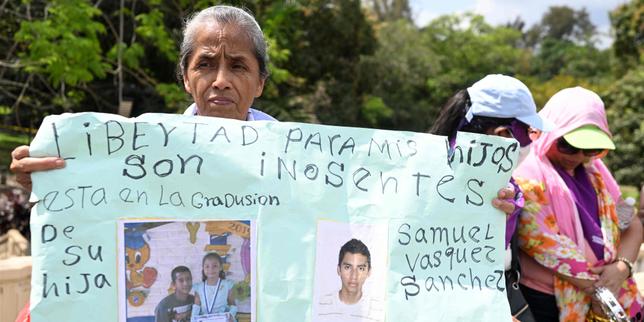
The international press is mourning the death of a gangland that used to murder 100 people per 100,000.
Foreign correspondents sit in comfortable cafes in Madrid or Washington, typing feverish warnings about the "erosion of democracy" in El Salvador. They cite the régime d’exception as a descent into darkness. They focus on the lack of due process for men with teardrop tattoos who previously held a whole nation hostage.
They are missing the point. Or rather, they are terrified of the point.
The reality on the ground in San Salvador isn't a "democratic backsliding." It is a brutal, necessary, and highly efficient reclamation of state sovereignty. For thirty years, the Salvadoran state didn't exist; the MS-13 and Barrio 18 gangs did. When a state cannot protect its citizens from being hacked to death for a $5 extortion fee, the "social contract" isn't being stressed—it’s already dead. Nayib Bukele didn't break the law; he acknowledged that the law was a ghost.
The Human Rights Fallacy
The "lazy consensus" among NGOs and European editorial boards is that human rights are being sacrificed for security. This assumes that "security" is a luxury good. It isn't. Security is the foundation upon which every other right is built.
You cannot have a right to free speech if you are executed for talking to the wrong neighbor. You cannot have a right to property if a gang leader takes 30% of your pupuseria’s revenue every Tuesday. The critics are obsessed with the rights of the 70,000 detained, but they remained silent for decades while six million people lived in a literal open-air prison governed by sociopaths.
If you have to choose between the "due process" of a failed judicial system and the ability of a mother to let her daughter walk to school without being raped, the choice is easy. Bukele made that choice. The people of El Salvador ratified it with an 80% approval rating. To call this "populism" is to admit that you think the people are too stupid to know they aren't being murdered anymore.
The Data the Critics Ignore
Let’s look at the numbers the escalade répressive narrative tries to bury.
In 2015, El Salvador was the most violent country in the world not at war. Today, its homicide rate is lower than that of most American mid-sized cities.
- 2015 Homicide Rate: 103 per 100,000.
- 2023 Homicide Rate: 2.4 per 100,000.
That isn't a statistical fluke. That is a total societal transformation. When the homicide rate drops by 97%, the economy stops being a black hole. Reverse migration is happening. Salvadorans in the diaspora are actually moving back. They aren't returning to a "repressive regime"; they are returning to a country where they can finally breathe.
The Bitcoin Diversion
Critics love to pivot to Bitcoin when the security argument becomes too hard to win. They paint the country’s crypto adoption as a "failed gamble" or a "dictator's toy."
They don't understand the mechanics of remittances.
El Salvador’s economy relies heavily on money sent from the US. Traditionally, Western Union and similar middlemen shaved off 10% to 20% in fees. Using the Lightning Network isn't about "speculating on digital gold." It’s about building a sovereign financial rail that doesn't require permission from a bank in New York. Even if the price of BTC is volatile, the utility of a borderless, low-fee payment system for a country with a 70% unbanked population is a survival strategy, not a hobby.
The "Due Process" Myth in Failed States
NGOs demand that El Salvador use "standard investigative techniques" to dismantle the gangs.
I have seen what "standard techniques" do in the Northern Triangle. They result in witness intimidation, the execution of judges, and police officers who moonlight as gang members because their families are being threatened. You cannot use the legal tools of a stable Swiss canton to fight a paramilitary force that has infiltrated every level of your bureaucracy.
The régime d’exception is a recognition of reality. It is a high-speed purge. Yes, innocent people will be caught in the dragnet. That is the tragic cost of reclaiming a country from the brink of total collapse. But the critics never weigh those individual tragedies against the thousands of lives saved by the cessation of gang warfare. They value the "process" more than the "result." The people living in Soyapango do not have that luxury.
Why the West is Scared
The real reason the international community is so hostile to Bukele isn't because they care about Salvadoran prisoners. It's because Bukele has proven that a small, "third world" country can solve its own problems without a billion-dollar aid package from the IMF or a "nation-building" mission from the UN.
He ignored the "best practices" of the global elite and it worked. He treated the gangs like an invading army rather than a social grievance group. He used social media to bypass the traditional press and talk directly to the people.
He broke the monopoly on how a "developing nation" is supposed to behave.
The Western establishment needs El Salvador to be a basket case. They need it to be a place that requires constant "intervention" and "monitoring." When a leader comes along and says, "We will fix this ourselves by locking up the people who are killing us," it exposes the uselessness of the entire international development industry.
The New Social Contract
We are moving into an era where "effective governance" will trump "theoretical liberty" in the global south. People are tired of empty democratic shells that deliver nothing but corruption and violence.
Bukele’s El Salvador is a beta test for a new kind of state. One that is technologically savvy, unapologetically sovereign, and prioritize results over the approval of the New York Times.
Stop asking if the "regime of exception" is legal. Start asking why your own government can't stop the shoplifting rings in San Francisco or the cartel violence on the border with even a fraction of the same resolve.
El Salvador didn't lose its way. It found a way out.
The gangs are gone. The streets are full. The kids are playing in the parks at night. If that’s what "repression" looks like, the rest of the world should be so lucky.


