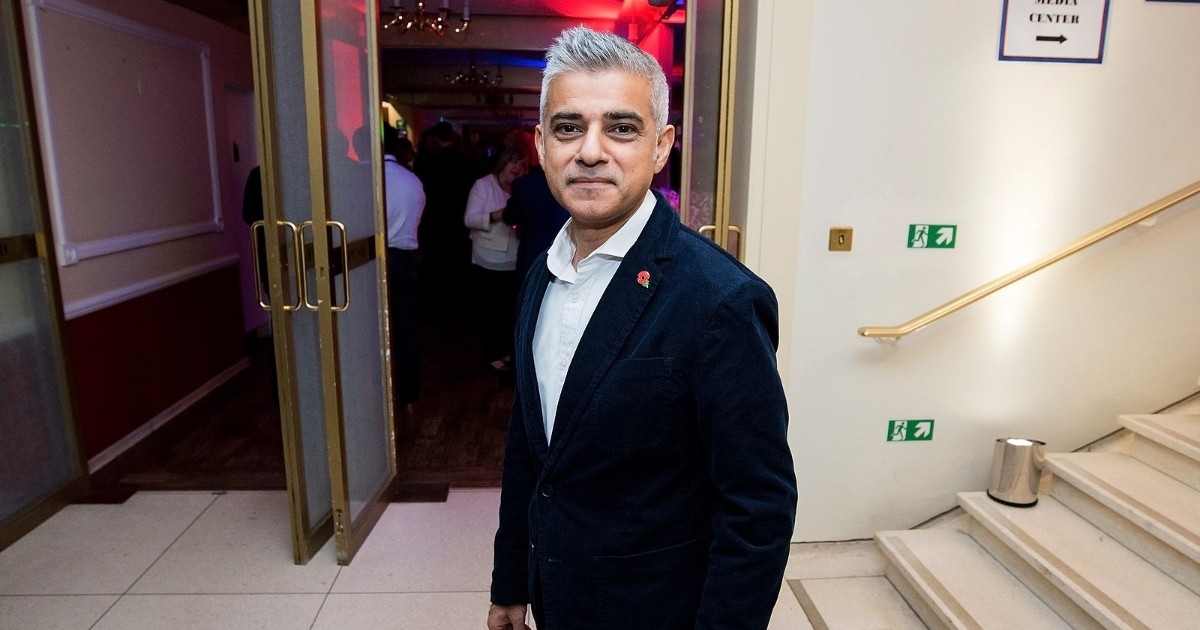
Keir Starmer is reportedly preparing to elevate Sadiq Khan to the House of Lords, a move that signals the beginning of the end for the most dominant era in City Hall’s history. While the move is being framed by some as a well-earned reward for a three-term mayor who has survived everything from ULEZ riots to a global pandemic, the reality is far more calculated. By offering Khan a peerage, Starmer is attempting to neutralize a powerful internal rival while simultaneously clearing the deck for a Labour "reset" in the capital.
The timing is not accidental. London is currently grappling with a housing delivery crisis and a fractured relationship with the business community, and Starmer needs a fresh face to carry the mantle into the next decade. For Khan, the red benches offer a dignified exit from a role that has become increasingly defined by friction with central government. For Starmer, it is a chance to move a "soft left" heavyweight into a legislative chamber where he can be managed, far away from the executive levers of the UK's economic engine. Learn more on a connected topic: this related article.
The Calculus of a Coronation
Political promotions at this level are rarely about merit alone. They are about gravity. Sadiq Khan has occupied City Hall since 2016, becoming the first London mayor to secure three consecutive terms. In that time, he has built a personal brand that often operates independently of—and sometimes in direct opposition to—the national Labour leadership. Most recently, Khan’s public demands for a roadmap to rejoin the EU Single Market have created a massive headache for a Prime Minister trying to maintain a "Make Brexit Work" stance.
By making Khan a lord, Starmer achieves three specific goals: More analysis by Reuters highlights related perspectives on the subject.
- Neutralization: A peerage effectively ends Khan’s career in elective office. You cannot lead a city or sit in the Commons from the Lords.
- Succession Management: It allows the Labour Party to begin an orderly transition to a new mayoral candidate before the next election cycle, avoiding a messy internal power struggle.
- Policy Alignment: Starmer can install a loyalist who will align London’s housing and transport policies more closely with Downing Street’s national growth agenda.
The "Sir Sadiq" transition started months ago with his knighthood, a move that traditionalists saw as a precursor to a full peerage. Critics, mostly from the right, labeled it a "reward for failure," citing London’s homicide rates and the controversial expansion of the Ultra Low Emission Zone. However, in the brutal arithmetic of the Labour Party, Khan is anything but a failure. He is a winner who has become too big for his current boots.
The Growing Friction Over Europe
The most significant driver behind this move is the widening rift over Europe. Khan has become the de facto leader of the "Rejoin" movement within the establishment. Just this month, he used an interview with La Repubblica to argue that rejoining the EU is "inevitable" due to the economic instability caused by global shifts. This is not the message Keir Starmer wants coming from his most powerful elected official.
Downing Street views Khan’s freelance foreign policy as a liability. The Prime Minister is focused on a "reset" with Brussels that involves incremental cooperation, not a full-scale reversal of the 2016 referendum. Every time Khan speaks about the Single Market, he undermines Starmer’s attempt to win over "Red Wall" voters who still view any talk of rejoining as a betrayal. A peerage mutes that megaphone. In the Lords, Khan becomes one of hundreds; in City Hall, he is the undisputed King of the Capital.
A Legacy of Concrete and Congestion
To understand why Khan might accept this "golden handcuffs" offer, one must look at the state of his mayoralty. After ten years, the shine has worn off. The London Plan, Khan’s massive 500-page blueprint for the city, is under heavy fire from both the government and the private sector. Housing starts have slowed, and the complexity of his 123 planning policies has made building in the capital a bureaucratic nightmare.
Internal reports suggest that the Mayor is tired. The constant battles with the Department for Transport over TfL funding and the relentless personal attacks from the far right have taken their toll. Transitioning to the House of Lords allows him to remain a national figure, championing human rights and climate issues, without the daily grind of managing a £20 billion budget and a crumbling Tube network.
The Succession Vacuum
If Khan moves to the Lords, the question shifts to who fills the void. The rumors have already sparked a flurry of activity within the party's different factions.
- The Loyalists: Figures like Angela Rayner or Wes Streeting are often mentioned, though they are currently tied to high-profile Cabinet roles.
- The Technocrats: Local government leaders with proven track records in delivery, who would prioritize "getting London building" over cultural grandstanding.
- The Outsiders: High-profile business leaders or celebrities who could maintain Labour’s grip on the city without the ideological baggage of the current administration.
Starmer wants a builder, not a campaigner. The next Mayor of London will be expected to deliver the thousands of homes Starmer has promised as part of his national "Planning Reform" push. Khan, with his focus on social justice and environmental mandates, is seen by some in No. 10 as an obstacle to the raw industrial growth the Prime Minister demands.
The Risks of the Red Benches
There is, of course, no guarantee that this plan will work. Elevating a figure as polarizing as Khan to the Lords could backfire. It provides the Conservative opposition with a permanent "cronyism" narrative, linking the unpopularity of certain London policies directly to Starmer’s judgment.
Furthermore, Khan is a seasoned political operator. If he feels he is being pushed out before he is ready, he has the grassroots support to make life very difficult for the leadership. He is the most popular Labour politician among the party's rank-and-file, largely because he is seen as a fighter who doesn't back down.
The House of Lords (Hereditary Peers) Act 2026 has already begun the process of "modernizing" the upper chamber, removing the last vestiges of aristocratic privilege. By filling those gaps with political heavyweights like Khan, Starmer is turning the Lords into a "House of the Governors"—a place where former mayors and ministers go to provide expert scrutiny. It sounds noble on paper, but it is fundamentally a retirement home for those who have become too troublesome for the front lines.
Sadiq Khan’s potential elevation is the ultimate "up and out." It rewards a loyal servant while removing a thorn from the Prime Minister’s side. Whether Khan accepts the ermine or chooses to fight for a record-breaking fourth term will determine the direction of London’s—and Labour’s—future for the next decade.
Would you like me to investigate the potential frontrunners currently positioning themselves to succeed Khan in City Hall?

/200199910-001-58b9cf5c5f9b58af5ca83533.jpg)