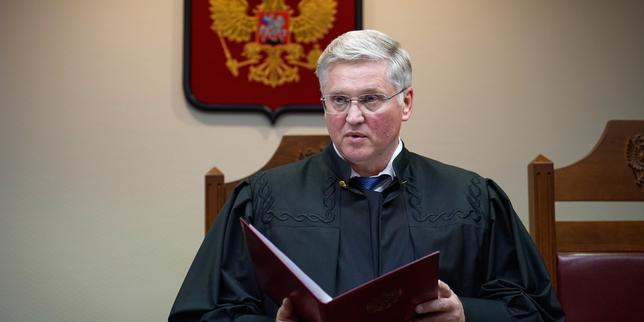
The Russian Supreme Court didn't just shut down a non-profit. They tried to delete the country's conscience. When the news broke that the NGO Memorial was being liquidated, it sent a shockwave through the international community that lingered long after the 2022 Nobel Peace Prize was announced. You might think this is just another legal squabble in a distant court. It isn't. It's a calculated move to rewrite history by silencing the people who keep the receipts on state-sponsored terror.
Russia's legal system used the "foreign agent" law as a blunt instrument. They claimed Memorial failed to label its social media posts and publications correctly. But let's be real. Nobody gets their entire organization dismantled over a missing disclaimer on a Facebook post. This was about power. Specifically, the power to decide which parts of the past are allowed to exist in the public mind.
The systematic dismantling of Russia's oldest rights group
Memorial was born during the twilight of the Soviet Union. Since 1989, it worked on two fronts that the current Kremlin finds deeply uncomfortable. First, they documented the crimes of the Stalinist era. We're talking about the Gulags, the Great Purge, and the millions of lives chewed up by the Soviet machine. Second, they tracked modern human rights abuses, particularly in places like Chechnya.
The court's decision targeted two main branches: Memorial International and the Memorial Human Rights Center. The prosecutor’s office argued that Memorial "creates a false image of the USSR as a terrorist state." That’s a massive red flag. It suggests that telling the truth about historical atrocities is now considered a threat to national security.
If you're looking for the exact moment the door slammed shut on Russian civil society, this is it. By criminalizing the organization, the state essentially declared that digging into the archives is an act of subversion. It’s a classic move. Control the past to control the future.
How the foreign agent law became a weapon
Russia’s "foreign agent" legislation is intentionally vague. It’s designed that way. Any group receiving even a tiny amount of funding from abroad can be slapped with the label. Once you’re a "foreign agent," the administrative burden becomes a nightmare. You have to mark every single thing you produce with a long, legally mandated warning.
Memorial was accused of "systematic violations" of this law. The Supreme Court took those technicalities and turned them into a death sentence for the NGO. During the hearings, the language used by prosecutors was telling. They accused Memorial of being under "foreign influence" and attempting to make modern Russians feel ashamed of their Soviet history.
This isn't just about paperwork. It's about a fundamental shift in how the Russian state views its own legitimacy. If the state is always right, then those who point out when the state was wrong—even 80 years ago—must be treated as enemies.
Why the 2022 Nobel Peace Prize changed the stakes
Winning the Nobel Peace Prize usually provides a layer of protection. Not this time. When Memorial shared the 2022 prize with Ales Bialiatski from Belarus and the Ukrainian Center for Civil Liberties, it was a clear signal from the committee. They wanted to highlight the link between historical memory and modern peace.
The Kremlin saw it differently. To them, the prize was a provocation. Instead of backing off, the Russian authorities doubled down. Just hours after Memorial was honored in Oslo, a court in Moscow ordered the seizure of their headquarters.
It was a petty, vindictive move. It showed the world that international accolades mean nothing to a regime focused on internal consolidation. You can’t eat a Nobel Prize, and you certainly can’t use it as a shield against a state-controlled judiciary.
The human cost of erasing archives
We often talk about NGOs as abstract entities. They aren't. Memorial is a massive database of human suffering and resilience. They held the names of over three million victims of political repression. For many Russian families, Memorial was the only place they could go to find out where a grandfather was buried or why a mother disappeared in the 1930s.
When the state shuts down these archives, they’re orphaning those stories. The "International Memorial" branch focused heavily on these historical records. Without their staff to maintain the digital and physical libraries, that history starts to fade.
The Human Rights Center branch was just as vital. They maintained a list of modern political prisoners in Russia. By shutting them down, the state made those prisoners even more invisible. It's a dark cycle. Stop the recording of history, stop the monitoring of current abuses, and suddenly, the state has a monopoly on the truth.
A pattern of suppression across civil society
Memorial wasn't an isolated case. Its liquidation was the centerpiece of a much larger campaign. Look at what happened to independent media outlets like Novaya Gazeta or the monitoring group OVD-Info. The playbook is identical every time.
- Label the target as a "foreign agent" to poison their public image.
- Drown them in fines for minor bureaucratic errors.
- Use the courts to finalize the shutdown when the organization refuses to quit.
- Seize the assets so they can't restart under a different name.
The chilling effect is the whole point. If the state can take down a Nobel Prize winner with decades of history, they can take down anyone. It forces every other activist and journalist to look over their shoulder. Most people just stop talking. It’s easier that way. But that silence is exactly what the authorities are buying.
What happens to the movement now
You can’t actually kill an idea with a court order. While the legal entity of Memorial is gone, the people haven't disappeared. Many have fled the country to continue their work from abroad. Others stay in Russia, working in smaller, informal circles.
But it’s harder. Much harder. They’ve lost their buildings, their legal standing, and their ability to fundraise openly. The work has moved underground or into the digital ether. They’re using decentralized networks to keep the databases alive, mirroring the archives on servers outside of Russian jurisdiction.
If you want to support what’s left of the Russian civil society, start by looking at the work of the survivors. Support the decentralized projects that grew out of Memorial’s ruins. Read the reports from groups like OVD-Info. Don't let the names of the repressed disappear just because a court in Moscow says they should. The battle for history is still happening, even if the courtroom doors are locked. Visit the archived websites of Memorial and share their findings. Awareness is the only thing that keeps these stories from being buried for a second time.


