The convergence of the 96th Academy Awards and the geopolitical volatility of the Gaza conflict represents more than a collision of "art and politics." It is a quantifiable exercise in the deployment of cultural capital within a high-stakes attention economy. While mainstream coverage focuses on individual celebrity sentiment, a structural analysis reveals a sophisticated coordination of symbolic signaling designed to navigate the tension between brand safety and moral imperative. This phenomenon operates through three distinct mechanisms: the visibility of symbolic identifiers, the strategic timing of public discourse, and the institutional response to perceived reputational risk.
The Tri-Lens Framework of Celebrity Advocacy
To understand why certain messages permeated the Oscars broadcast while others were sidelined, we must apply a Tri-Lens Framework. This examines the interaction between Personal Brand Equity, Institutional Gatekeeping, and Geopolitical Signaling. If you enjoyed this piece, you should read: this related article.
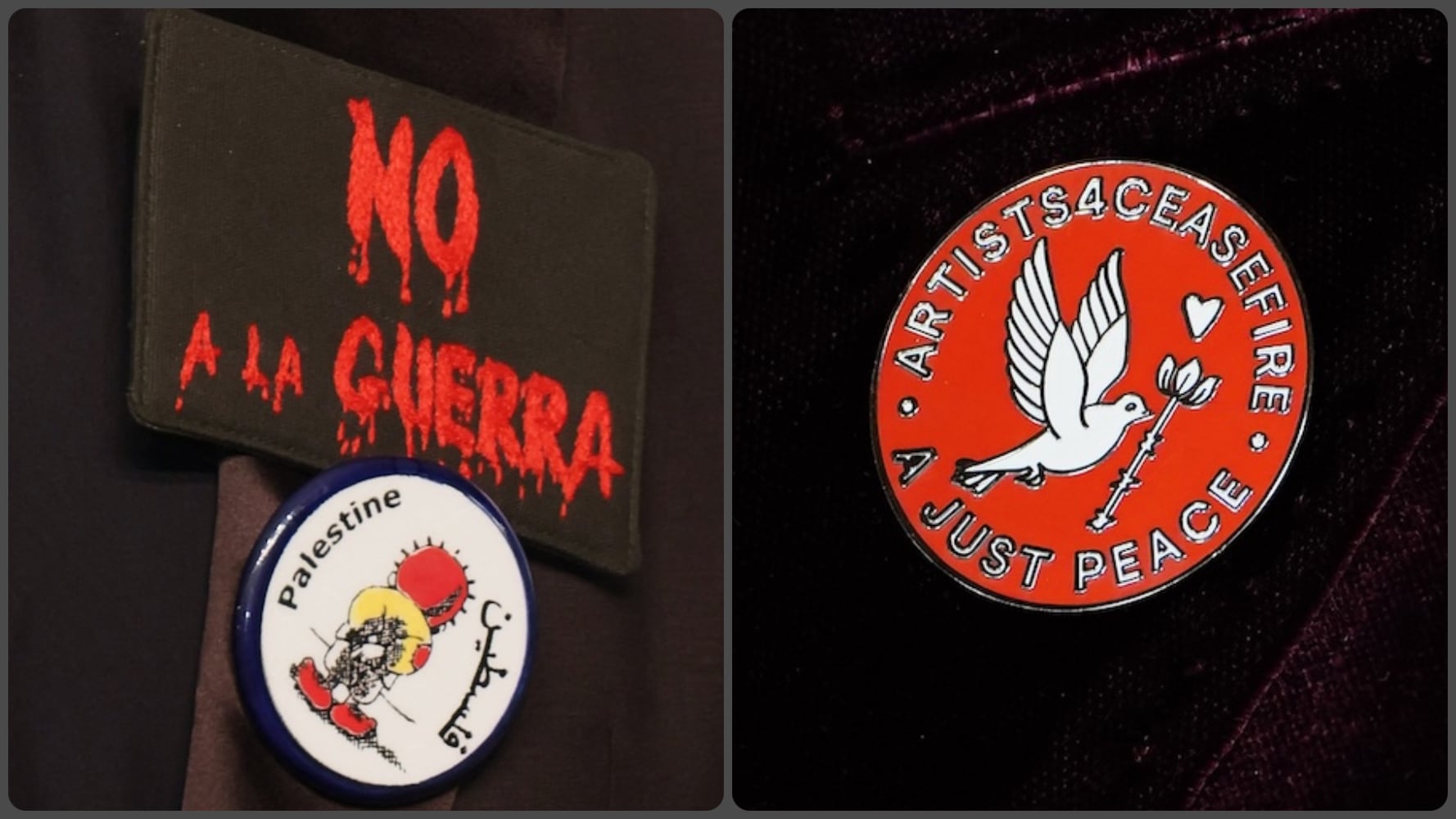
- Personal Brand Equity: High-net-worth performers utilize their visibility as a form of "moral currency." By wearing symbols like the Artists4Ceasefire pin—a red circle with a hand and a heart—individuals convert their physical presence on the red carpet into a broadcasted data point for a specific political stance.
- Institutional Gatekeeping: The Academy of Motion Picture Arts and Sciences (AMPAS) operates as a risk-averse entity. Its primary objective is the preservation of the telecast’s commercial viability. Consequently, the "allowance" of political speech is often a function of its ubiquity; when a critical mass of talent adopts a stance, the cost of suppression exceeds the cost of inclusion.
- Geopolitical Signaling: The specific demand for a ceasefire functions as a "low-friction" entry point into complex discourse. It provides a humanitarian veneer that avoids the denser historical complexities of the conflict, making it a viable stance for celebrities who must maintain broad-based appeal.
The Mechanics of Symbolic Signaling: Red Pins and Rhetorical Silences
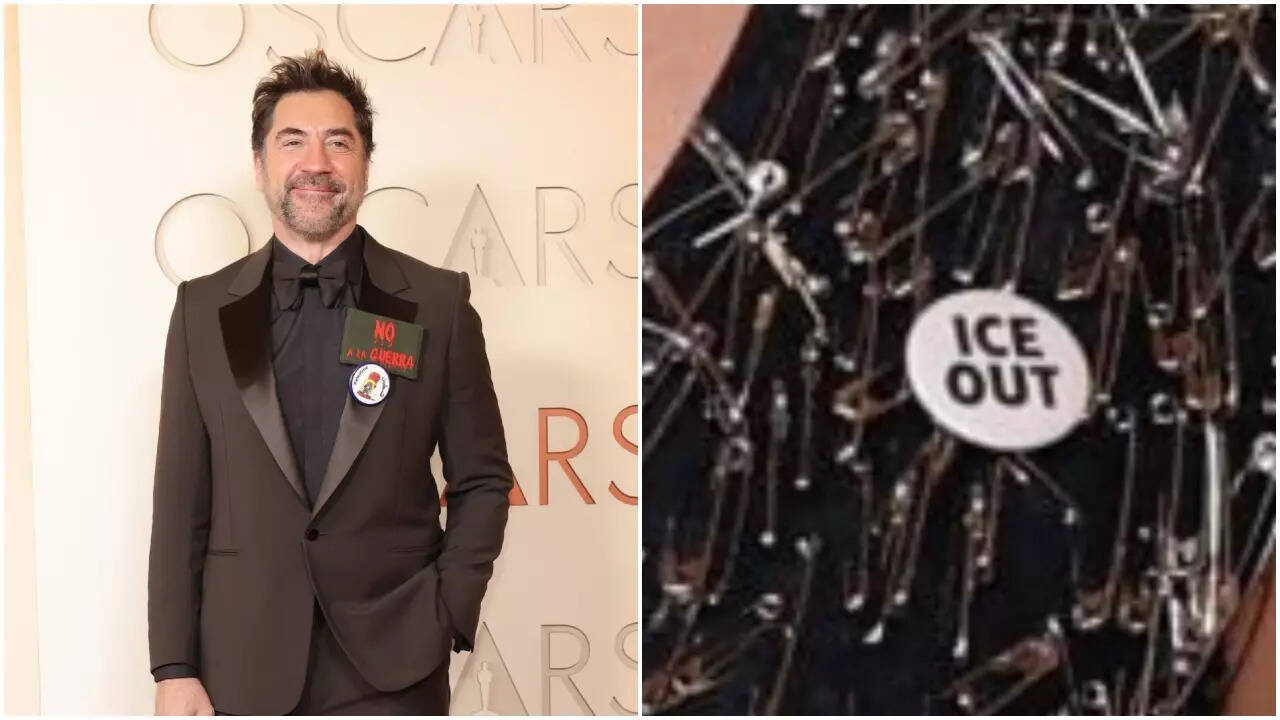
The use of the red Artists4Ceasefire pin by attendees such as Mark Ruffalo, Ramy Youssef, and Billie Eilish served as a non-verbal broadcast mechanism. This choice is analytically significant because it bypasses the "speech bottleneck." During an awards ceremony, microphone time is a scarce resource controlled by producers. Wearable symbols, however, are permanent fixtures throughout the multi-hour broadcast and subsequent digital syndication.
The Efficiency of the Visual Shortcut
The red pin operates on a principle of high-density information transfer. In a split-second camera pan, the viewer receives: For another look on this story, see the latest update from Deadline.
- An affiliation with a specific organized group (Artists4Ceasefire).
- A clear policy demand (immediate, permanent ceasefire).
- A signal of peer-group alignment.
This visual strategy is a response to the "Censorship of the Clock." In a three-hour broadcast where winners are allotted roughly 45 seconds to speak, the opportunity cost of mentioning Gaza is high. Most winners chose to optimize their time for professional gratitude, relying on their attire to handle the political communication.
The Anatomy of the Jonathan Glazer Speech
The most significant rupture in the evening’s curated neutrality was Jonathan Glazer’s acceptance speech for The Zone of Interest. His statement was not a standard celebrity platitude; it was a calibrated critique of "dehumanization" that linked the Holocaust—the subject of his film—to the contemporary conflict.
Logical Mapping of the Argument
Glazer’s rhetoric followed a specific causal chain:
- Premise A: The Holocaust was a result of systemic dehumanization.
- Premise B: Film as a medium should examine the present, not just the past.
- Conclusion: The "hijacking" of Jewish identity and the Holocaust to justify the current occupation leads to the dehumanization of both the victims of October 7th and the victims of the ongoing attack on Gaza.
The subsequent industry backlash, including an open letter signed by hundreds of Hollywood professionals, demonstrates the high "Reputational Tax" associated with moving from humanitarian generalities to specific political critiques. The friction generated by Glazer’s speech highlights the boundary of Hollywood’s "Allowable Discourse Zone."
The Logistics of Protest: External vs. Internal Pressure
The Oscars do not exist in a vacuum. On the night of the ceremony, physical protests blocked Sunset Boulevard, delaying the arrival of several A-list stars and forcing some to walk to the Dolby Theatre. This creates a dual-pressure system:
- External Pressure: Protesters utilized the logistical fragility of the event (the reliance on a single arrival artery) to create a "bottleneck of awareness." By delaying the show, they forced the industry to acknowledge the conflict as a physical reality, not just a digital talking point.
- Internal Pressure: Inside the theater, the presence of the pins and the content of the speeches served as an internal validation of the external protest.
The delay of the broadcast, even by a few minutes, represents a tangible loss in advertising efficiency and a disruption of the highly synchronized "Showflow." This is the point where political activism intersects with operational costs.
Risk Mitigation and the Silence of the "Middle Class"
A notable data point in the Oscars analysis is the identity of the dissenters. Advocacy was largely concentrated among two groups:
- The "Untouchables": High-profile stars with immense established equity (e.g., Mark Ruffalo, Billie Eilish) who are insulated from industry blacklisting.
- The "Niche Experts": Individuals whose brands are already built on activism or specific cultural identities (e.g., Ramy Youssef).
The "Industry Middle Class"—working actors and below-the-line talent—largely abstained from visual or verbal signaling. This indicates a perceived high-risk environment where the "Cost of Dissent" could result in the loss of future employment opportunities. In a gig economy like Hollywood, the threat of being "difficult to cast" acts as a powerful deterrent against spontaneous political expression.
The Feedback Loop of Cultural Influence
The impact of Hollywood’s Gaza discourse is best measured through its effect on the "Overton Window"—the range of policies acceptable to the mainstream population.
- Normalization Phase: When Academy Award winners use their platform to call for a ceasefire, the term moves from "radical activist demand" to "mainstream humanitarian concern."
- Amplification Phase: Social media algorithms prioritize Oscar-related content. A single mention of Gaza in an acceptance speech generates a 10x to 50x multiplier in search volume for the conflict relative to standard news cycles.
- Policy Pressure: While a red pin does not change foreign policy directly, it contributes to a climate of "Public Disapproval." For elected officials, the sight of the cultural elite—often their primary donor base—breaking ranks on a geopolitical issue signals a shift in the electoral landscape.
Structural Limitations of Celebrity Advocacy
Despite the visibility, several factors limit the efficacy of these interventions:
- Satiation Point: The public’s capacity for celebrity-led political messaging is finite. "Outrage Fatigue" sets in when the spectacle of the awards (the dresses, the parties) creates too large a cognitive dissonance with the gravity of the subject matter.
- The Nuance Gap: Complex geopolitical realities are often reduced to slogans. This simplification, while necessary for the medium, can lead to "False Binary" thinking among the audience.
- Lack of Policy Follow-through: Advocacy at the Oscars is often a "Point-in-Time" event. Without a sustained mechanism for converting that visibility into legislative or humanitarian action, the impact remains purely symbolic.
The Strategic Pivot for Cultural Entities
For stakeholders within the entertainment ecosystem—studios, talent agencies, and the Academy itself—the Gaza conflict has necessitated a new "Crisis Management Playbook." The previous strategy of "Total Neutrality" is no longer viable in an era of hyper-transparency.
The current landscape requires a transition toward Active Pluralism. This involves:
- Establishing clear guidelines for political expression that protect talent from retaliatory blacklisting while maintaining the "decorum" of the event.
- Recognizing that "No Stance" is increasingly interpreted as a "Pro-Status Quo" stance by younger demographics.
- Developing internal frameworks to evaluate the "Moral Risk" of film subjects in relation to current events (e.g., the decision to market or award films about historical atrocities during active conflicts).
The events of the 96th Academy Awards suggest that the "Wall of Separation" between the entertainment industry and global geopolitics has permanently collapsed. The industry is now forced to operate as a secondary theater of political engagement, where the primary currency is not the vote, but the "Impression."
The final strategic play for any individual or organization in this space is the rejection of "Performative Neutrality." The data suggests that audiences are increasingly adept at spotting hollow gestures. Real influence is reserved for those who can integrate their political advocacy with their professional output, using the medium of film not just as a vehicle for the message, but as the message itself. The industry must prepare for a future where every awards cycle is a referendum on the global zeitgeist, and "silence" is the most expensive brand strategy an artist can choose.