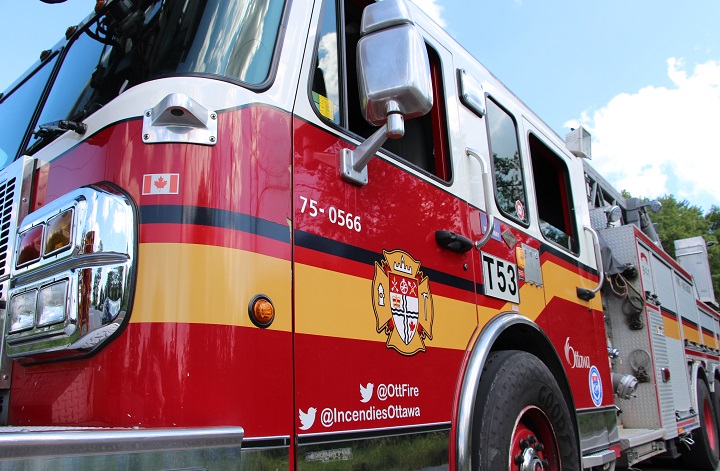
Two people are dead after a devastating fire tore through an Ottawa high-rise apartment building. This isn't just another headline about a local tragedy. It's a wake-up call for anyone living ten stories up. Emergency crews scrambled to the scene on Riverside Drive, pulling four people from the flames, but the outcome remained grim for two of the victims. When you live in a concrete tower, you feel safe. You shouldn't.
Firefighters arrived to find heavy smoke billowing from the upper floors. It was a chaotic scene. They worked fast. They did their jobs. But the reality is that high-rise fires present a unique set of lethal challenges that ground-level homes just don't face.
The Ottawa Paramedic Service confirmed the fatalities shortly after the rescue attempt. Two other individuals were rushed to the hospital in critical condition. This happens more often than we'd like to admit in urban centers, and the reasons why usually come down to a mix of architectural flaws and human panic.
The Brutal Reality of High Rise Fires
High-rise buildings are supposed to be "fireproof." That's a myth. While the structure might not collapse, the contents of your apartment—your sofa, your curtains, your electronics—are highly flammable. When a fire starts on the 12th or 15th floor, the "chimney effect" can pull smoke through elevator shafts and stairwells faster than you can run.
In the Riverside Drive incident, the speed of the spread was a major factor. Ottawa Fire Services noted that the fire was contained to a single unit, yet the smoke was enough to kill. Smoke inhalation is the silent thief in these scenarios. You don't usually burn to death in an apartment fire. You choke.
The physics of a tall building works against you. Heat rises. Smoke travels upward. If you're above the fire, you're in the danger zone. If you're below it, you might not even know there’s a problem until the hallways are impassable. This is why "shelter in place" is often the official advice, though it feels counterintuitive when your instincts tell you to run.
Why Some Residents Didn't Make It Out
Initial reports suggest that the victims were trapped within the suite where the fire originated. This brings up the terrifying reality of apartment layouts. Many older high-rises in Ottawa and other major Canadian cities have single-exit points for individual units. If the fire starts near your front door, you’re stuck.
Fire crews used aerial ladders, but those only reach so high. Once you're past the 7th or 8th floor, you're relying entirely on the building's internal systems—sprinklers, standpipes, and fire doors. If any of those fail, or if the fire is too intense, the window for survival shrinks to seconds.
There's also the issue of the "Stay or Go" dilemma. In Ottawa, as in many cities, fire codes dictate that residents should stay in their units unless the fire is in their specific room. But when people see smoke, they panic. They open their doors, letting oxygen in and smoke out, which turns a localized fire into a building-wide catastrophe.
The Problems with Current Fire Codes
We need to talk about the gap between "to code" and "safe." A building can meet every provincial regulation and still be a death trap under the right conditions. Many older high-rises weren't required to have full sprinkler systems retrofitted.
- Sprinkler gaps: Older buildings often only have sprinklers in common areas.
- Fire door maintenance: Residents often prop these open for ventilation, which is a fatal mistake.
- Alarm fatigue: People hear the bells and think it's a drill or a burnt piece of toast. They wait five minutes before moving. Those five minutes are the difference between life and death.
The Ottawa Fire Services will be investigating the cause of this fire for weeks. They'll look at electrical systems, kitchen appliances, and smoking materials. But the cause is almost secondary to the failure of egress. If people can't get out, the cause doesn't matter.
What You Can Actually Do to Survive
Don't wait for the landlord to fix the building. You have to take ownership of your own survival. If you live in a high-rise, you need a plan that isn't just "run for the stairs."
First, check your door. A fire-rated door can hold back flames for 20 to 60 minutes. But it only works if the seals are intact. If you see light around the edges of your apartment door, smoke will get in. Buy a smoke seal kit. It's cheap and it saves lives.
Second, know your stairwells. Don't just know where they are. Walk them. Find out where they let out. Some "exit" stairs in old buildings lead to basement mechanical rooms instead of the street. You don't want to find that out when the lights are off and the air is thick with black soot.
Practical Steps for Apartment Dwellers
- Buy a portable smoke hood. These masks give you 15-20 minutes of filtered air. That's enough to get down 20 flights of stairs without collapsing.
- Keep a "go-bag" by the door. It should have your keys, shoes, and a heavy towel. If you have to leave, soak the towel and hold it over your face.
- Test your own detectors. Don't trust the building's central alarm to be the only warning. Battery-operated smoke and CO detectors in your bedroom are mandatory.
The tragedy in Ottawa isn't an isolated event. It's a symptom of dense urban living where we trust systems we don't control. Two people lost their lives because a high-rise unit turned into an oven. It’s a grim reminder that when you live in the sky, the ground is a long way away.
Stop assuming the fire alarm is a false one. The next time it goes off, treat it like the building is actually burning. Check your door for heat with the back of your hand. If it's cool, get out. If it's hot, stay in, seal the cracks with wet towels, and signal from the window. Don't use the elevator. Ever. It's a steel coffin in a fire.
Stay vigilant because the "fireproof" walls of your apartment are only as good as your exit strategy.