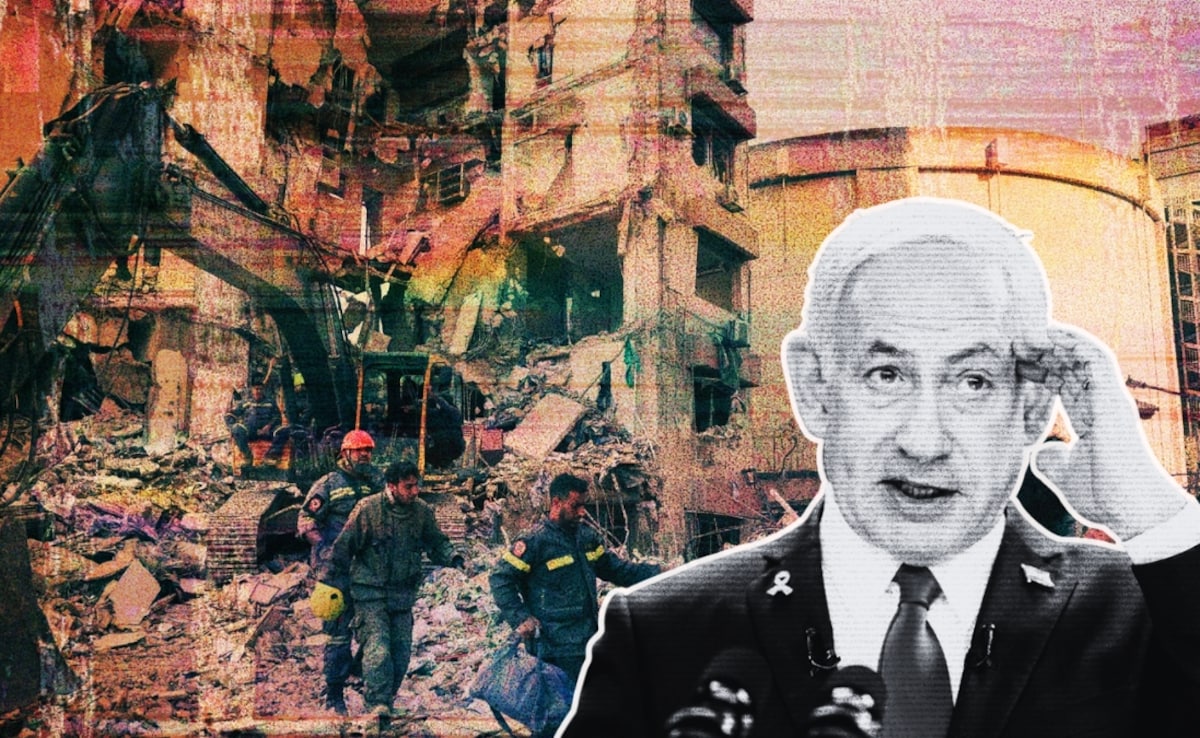
Benjamin Netanyahu is signaling a pivot toward direct diplomatic engagement with Lebanon, a move that attempts to bypass the traditional, often sluggish mediation of international third parties. The Israeli Prime Minister’s stated willingness to talk "as soon as possible" represents a calculated gamble intended to secure Israel’s northern border through a formal, bilateral agreement rather than the fragile, indirect understandings that have defined the region for decades. This shift is not merely about optics; it is a strategic attempt to force the Lebanese state to take accountability for the paramilitary activities within its borders, effectively putting Beirut in a position where it must choose between sovereign responsibility and continued internal destabilization.
The core of this strategy lies in the realization that indirect channels have reached a point of diminishing returns. For years, the United States and France have acted as the primary conduits for messages between Jerusalem and Beirut, a process that allows for plausible deniability on both sides but rarely produces a binding, enforceable peace. By calling for direct talks, Netanyahu is stripping away the layers of diplomatic insulation. He wants a signature on a page that carries the weight of a state-to-state treaty.
The Calculus of Direct Engagement
Why now? The timing suggests a window of opportunity created by shifting regional pressures. Israel has intensified its military posture, but the government knows that bullets and shells cannot draft a border policy. There is a specific, pressing need to return displaced Israeli citizens to their homes in the north. This cannot happen while the threat of cross-border incursions remains a daily reality.
Direct talks serve a dual purpose. First, they test the internal mechanics of the Lebanese government. If Beirut refuses to sit at the table, it reinforces Israel’s narrative that the Lebanese state is either unwilling or unable to govern its own territory. If they do sit down, it provides a platform to discuss the enforcement of UN Resolution 1701 without the filter of international diplomats who often prioritize regional "stability" over specific Israeli security requirements.
Breaking the Indirect Cycle
The historical reliance on third-party mediators has often resulted in "gray zone" agreements. These are deals where neither side is fully committed, and the terms are vague enough to be broken without immediate consequence. Netanyahu’s push for directness is an attempt to kill the gray zone.
Consider the maritime border agreement reached in 2022. While hailed as a success, it was a complex web of indirect letters and separate filings with the United Nations. It worked for gas exploration because the incentives were purely financial and the physical infrastructure was static. Security on the ground is different. It requires a level of coordination and communication that an intermediary cannot facilitate with the necessary speed or clarity.
The Sovereignty Trap for Beirut
For the Lebanese government, the invitation to direct talks is a political minefield. The country is currently mired in an economic collapse and a prolonged presidential vacancy. Its political structure is a delicate balance of sectarian interests, many of whom view any direct contact with Israel as an act of treason.
By demanding direct talks, Netanyahu is effectively asking: Who runs Lebanon? If the official government in Beirut cannot or will not negotiate on behalf of its people, Israel gains a stronger justification for unilateral action. It is a classic "sovereignty trap." Israel is offering the hand of diplomacy, knowing that the internal contradictions of the Lebanese state may make it impossible for them to grasp it.
The Enforcement Gap
The biggest hurdle in any deal, direct or otherwise, is enforcement. Israel is no longer satisfied with the presence of UNIFIL (United Nations Interim Force in Lebanon). From the Israeli perspective, the UN force has been a spectator to the build-up of hostile infrastructure.
A direct agreement would likely include specific mechanisms for monitoring and verification that go beyond the current UN mandate. Israel wants "freedom of action" if the terms are violated. It is a hard-line demand that few sovereign nations would accept, yet it remains the centerpiece of the Israeli negotiating position.
Regional Implications and the Iranian Shadow
One cannot discuss Lebanon without acknowledging the influence of Tehran. Any move toward direct diplomacy is a direct challenge to the Iranian influence in the Levant. Iran thrives in the shadows of indirect conflict and proxy warfare. A formal, transparent diplomatic process between Israel and Lebanon would be a significant blow to the "axis of resistance" narrative.
Netanyahu is betting that the exhaustion of the Lebanese populace might eventually outweigh the ideological dictates of regional actors. There is a growing sentiment in parts of Beirut that the country can no longer afford to be a battlefield for external powers. By offering a path to "as soon as possible" talks, Israel is attempting to tap into that exhaustion.
The Role of the United States
While Netanyahu is pushing for directness, the U.S. remains the silent partner in the room. The Biden administration has been working feverishly to prevent a full-scale regional war, and they view any talk of diplomacy—direct or otherwise—as a positive step. However, there is a tension between the U.S. desire for a quick de-escalation and Netanyahu’s demand for a total restructuring of the northern security arrangement.
Washington prefers the safety of the indirect route. It is predictable. It avoids the political firestorms that erupt when Israeli and Lebanese officials are photographed in the same room. But Netanyahu seems to believe that the predictable route has failed. He is looking for a "reset" that only direct confrontation at the negotiating table can provide.
The Risks of a Failed Overture
There is a significant danger that this call for talks is merely a prelude to expanded military operations. In the world of high-stakes diplomacy, "we tried to talk" is often the last sentence written before the tanks roll. If the overture is rejected—as many expect it will be—Netanyahu has his casus belli ready for the international community. He can claim he exhausted every diplomatic avenue before resorting to force.
This is the tired confidence of a leader who has played this game for decades. He knows the rhythms of the UN Security Council. He knows the limitations of his rivals in Beirut. And he knows that the Israeli public is losing patience with a war of attrition that has no clear end date.
The Physicality of the Border
The actual border, the "Blue Line," is a series of markers and fences that mean very little without a political agreement to back them up. Israel is currently looking at a "buffer zone" strategy. If diplomacy fails to move hostile forces away from the fence, the military will do it manually.
A direct talk would focus on the "Litani River" line. This has been the thorn in the side of every security arrangement since 2006. Israel wants a guarantee that no armed groups other than the Lebanese Armed Forces are south of that river. The Lebanese Armed Forces, however, lack the equipment, the mandate, and the political will to enforce such a requirement.
The Internal Israeli Pressure
Domestically, Netanyahu is under fire from both the left and the right. The families of the displaced are demanding a return to normalcy. The hawks in his cabinet are demanding a more aggressive stance. By proposing direct talks, he buys himself time. It is a move that looks statesmanlike to the international community while satisfying the domestic requirement that he is "doing something" to resolve the crisis.
But the Israeli public is skeptical. They have seen "security arrangements" come and go. They have seen the UN pass resolutions that are promptly ignored. For the average citizen in Kiryat Shmona, a direct talk is only as good as the silence it produces on the hillside across the border.
The Hard Reality of Diplomacy
Diplomacy is not a gift; it is a trade. What is Israel willing to give in exchange for a secure north? In previous rounds of indirect talks, the currency was maritime territory. In land talks, the currency is often disputed "points" along the Blue Line, such as the Shebaa Farms or the village of Ghajar.
These are tiny slivers of land, but they carry massive symbolic weight. For Lebanon, regaining any territory is a national victory. For Israel, giving up any land is a domestic political nightmare. This is why direct talks are so difficult—and why they are so necessary. There is no way to split these hairs through a third party.
Moving Toward a Definitive Stand
The offer for direct talks is a challenge to the status quo. It is a rejection of the "managed conflict" model that has governed the Israel-Lebanon relationship for nearly twenty years. That model is broken. It resulted in the largest displacement of civilians in the region's history and a level of military escalation that threatens to ignite a much larger conflagration.
Netanyahu’s insistence on "as soon as possible" suggests a sense of urgency that hasn't been present in previous years. The era of the "long fuse" is over. We are now in a period where the distance between a diplomatic offer and a military escalation is measured in weeks, not years.
Beirut's response to this overture will determine the trajectory of the Levant for the next decade. If they hide behind the old excuses of "no direct contact," they effectively cede their sovereignty to the militants and the external powers that fund them. If they step to the table, they acknowledge that the only way to save Lebanon is to deal directly with the neighbor they have spent decades trying to ignore.
The leverage has been applied. The move is now on the board. The time for mediation has passed, and the hard, cold reality of statecraft is all that remains. Israel has stated its terms. Lebanon must now decide if it is a state or a staging ground.


