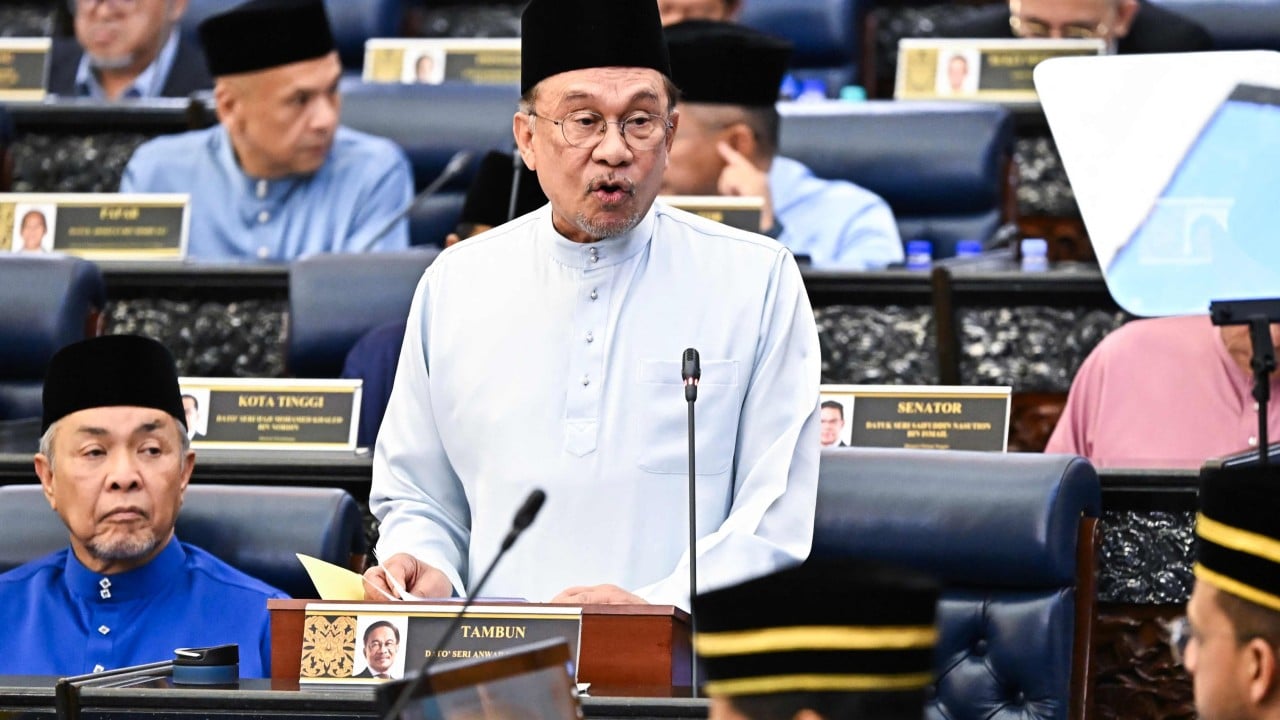
You'd think a leader who spent years behind bars as a political prisoner would be the first to tear down the walls of censorship. When Anwar Ibrahim took office as Malaysia’s Prime Minister, the vibe was electric. It felt like the "Reformasi" era had finally arrived. But fast forward to 2026, and the reality on the ground tells a much darker story. Instead of the promised era of transparency, we're seeing a government that's perfected the art of using colonial-era laws to put a lid on anyone who talks back.
If you're living in Malaysia or just watching from the sidelines, you've probably noticed the shift. It’s not a sudden blackout. It’s a slow, methodical tightening of the screws. The very laws Anwar once called "draconian" are now his administration's favorite tools.
Why the Madani Government is Doubling Down on Control
The government argues they’re just trying to stop the "3Rs"—Race, Religion, and Royalty—from tearing the country’s social fabric. On paper, that sounds responsible. Malaysia is a diverse place, and nobody wants a riot. But in practice, the definition of "offensive" has become so wide you could drive a truck through it.
I've seen this play out before. A blogger posts a critique about a policy. A filmmaker tries to explore religious themes. A student tweets about a protest. Suddenly, they’re staring at a police investigation. The irony is thick enough to choke on. The administration branded as "Madani" (civilized) is increasingly relying on the Sedition Act of 1948—a law the British used to keep Malayans quiet nearly 80 years ago.
The Digital Noose of Section 233
If the Sedition Act is the heavy hammer, Section 233 of the Communications and Multimedia Act (CMA) is the scalpel. It’s the law used to police the internet. It criminalizes any content that is "obscene, indecent, false, menacing or offensive in character with intent to annoy."
"Intent to annoy." Think about that.
Basically, if a politician gets their feelings hurt by a meme, the police have a legal reason to knock on your door. While the Court of Appeal tried to strike down the words "offensive" and "annoy" as unconstitutional back in 2025, the Federal Court recently reversed that progress in February 2026. This legal flip-flop has left everyone—from journalists to casual TikTok users—in a state of constant self-censorship.
The Social Media Licensing Trap
Late last year, the government dropped a bombshell: social media platforms with more than eight million users must apply for a Class A license. The official reason? Stopping scams and cyberbullying. The unofficial result? It gives the government a "kill switch."
If X (formerly Twitter) or Meta doesn't take down a post the government doesn't like, they risk losing their license. It puts the burden of censorship on the tech giants, who'd rather hit "delete" than lose access to a lucrative market.
We’ve seen the numbers. In the first half of 2025 alone, over 150,000 pieces of content were scrubbed from the Malaysian internet at the government’s request. While some of that was definitely gambling and scams, a massive chunk involved "fake news"—a term that often just means "news the government hasn't approved yet."
Breaking Down the Most Misused Laws
It's easy to get lost in the alphabet soup of Malaysian legislation. Here’s the reality of what these laws actually do when they’re weaponized against critics:
- Sedition Act 1948: Originally for rebels, now used for TikTokers. It's the go-to for anything involving the Monarchy or "exciting disaffection" against the government.
- Printing Presses and Publications Act (PPPA): This is how they ban books. Just last year, two books were banned for being "detrimental to public morals."
- Communications and Multimedia Act (CMA) Section 233: The "Internet Police" law. It's the most common tool for silencing online dissent.
- Peaceful Assembly Act (PAA): You can protest, but only if you jump through so many hoops that the protest becomes irrelevant.
The Cost of Silence
When you talk to activists in Kuala Lumpur, there's a palpable exhaustion. They didn't expect a utopia, but they didn't expect to be fighting the same battles they fought ten years ago.
The real danger isn't just the high-profile arrests. It's the "chilling effect." When you see a friend get questioned for a Facebook post, you think twice before hitting "share" on that news article. You start to police your own thoughts. That’s how democracy dies—not with a bang, but with a bunch of people too scared to type.
Honestly, the government’s defense that these laws are "necessary for harmony" is starting to wear thin. You don't build harmony by threatening people with five years in jail for a "menacing" tweet. You build it through debate, even the messy, annoying kind.
What You Can Do Right Now
If you're concerned about where Malaysia is heading, staying silent is the worst move. Here’s how to navigate this mess without losing your voice:
- Know the Red Lines: Understand that the "3Rs" are the government's primary triggers. If you're going to critique, focus on policy, data, and specific actions rather than identity-based rhetoric.
- Use Secure Platforms: If you're sharing sensitive information or whistleblowing, don't use standard SMS or unencrypted apps. Switch to Signal or use a reputable VPN to protect your metadata.
- Support Local Watchdogs: Groups like the Centre for Independent Journalism (CIJ) and SUARAM are on the front lines. They track these cases and provide legal support. Follow them to stay updated on which laws are currently being tested in court.
- Demand Law Reform: Keep the pressure on your MPs. The "Reformasi" promises haven't been met. Remind them that the repeal of the Sedition Act wasn't a suggestion; it was a campaign pledge.
The trajectory for 2026 looks grim if we don't start calling this what it is: a coordinated effort to control the narrative. Malaysia has all the ingredients for a thriving democracy, but you can't have a free country if the people are too "annoyed" to speak up.