The proliferation of Iranian-designed Shahed-series loitering munitions across the Middle East and Eastern Europe has created a permanent shift in the global cost-exchange ratio of aerial warfare. While traditional air defense systems rely on interceptors costing seven figures to down drones costing five, the Ukrainian theater has served as a high-intensity laboratory for reversing this economic asymmetry. The demand for Ukrainian anti-drone technology in regions facing Iranian proxies is not a matter of geopolitical solidarity; it is a cold calculation of "attrition parity."
The strategic problem is defined by the Three Pillars of Loitering Munition Efficacy:
- Low Radar Cross-Section (RCS): The use of carbon fiber and wood composites renders traditional pulse-doppler radars less effective at long ranges.
- Navigation Redundancy: The integration of GLONASS, GPS, and Inertial Navigation Systems (INS) allows these platforms to survive intense electronic warfare (EW) environments.
- Saturation Volumetrics: Deploying munitions in "swarms" or waves forces a defender to choose between depleting high-end kinetic interceptors or suffering infrastructure damage.
The Mechanics of Cost-Asymmetric Interception
The fundamental flaw in Western air defense doctrine, when applied to Iranian-style attacks, is the reliance on the Surface-to-Air Missile (SAM) Cost-Gap. A single Patriot PAC-3 interceptor costs roughly $4 million. A Shahed-136 costs between $20,000 and $50,000. This 80:1 cost ratio ensures that the defender loses the war of attrition even if they intercept 100% of incoming targets.
Ukraine’s response, now being exported or replicated in the Middle East, focuses on the Low-Altitude Kinetic Network (LAKN). This network operates on three distinct layers of physics-based mitigation:
1. Acoustic and Visual Mesh Networks
Traditional radar struggles with low-altitude, slow-moving objects (the "clutter" problem). Ukraine decentralized detection through thousands of networked microphones and smartphone sensors. This acoustic array triangulates the specific frequency of the Shahed’s MD-550 piston engine. By the time a drone enters a target zone, the LAKN has already predicted its flight path with a margin of error under 50 meters.
2. Directed Kinetic Hard-Kill (DKHK)
The primary "anti-drone" tech in demand is not high-frequency lasers—which suffer from atmospheric thermal blooming—but rather modernized Anti-Aircraft Guns (AAGs) like the Gepard or locally modified ZU-23-2 systems. These systems utilize programmable airburst ammunition.
The logic here is a Probability of Kill (Pk) Function:
Instead of a single missile seeking a single point, a burst of 35mm AHEAD rounds creates a cloud of tungsten sub-projectiles. This increases the intercept probability while reducing the cost per kill to approximately $500 to $1,500. For countries in the Middle East facing sustained drone harassment from non-state actors, this 3:1 or 10:1 cost-advantage is the only sustainable defensive posture.
3. Electronic Warfare and Spoofing Thresholds
The third layer involves "localized GNSS denial." Iranian drones often use CRPA (Controlled Reception Pattern Antennas) to resist jamming. Ukrainian technology specializes in "spoofing"—sending a stronger, false signal that convinces the drone it is 10 kilometers away from its actual position. This forces the drone to correct its course into a non-combat zone or into the ground.
The Strategic Value of "Battle-Hardened" Data
Why is Ukrainian technology specifically in demand compared to theoretically superior Israeli or American systems? The answer lies in the Real-Time Iteration Cycle.
In a standard procurement cycle, a defense contractor updates software every 12 to 18 months. In the Ukraine-Iran technological conflict, the "Electronic Order of Battle" (EOB) changes weekly. Iranian engineers update the frequency-hopping patterns of their guidance systems; Ukrainian engineers counter-code the update within 72 hours.
This creates a Tactical Data Moat. The algorithms governing Ukrainian signal intelligence (SIGINT) are trained on the specific wave signatures of Iranian components. For a country like Jordan, Saudi Arabia, or the UAE, buying Ukrainian tech is not just buying hardware; it is buying a library of current, adversarial electronic signatures that have been verified against active threats.
Structural Vulnerabilities in Anti-Drone Exports
Despite the high demand, several bottlenecks restrict the immediate dominance of Ukrainian systems in the global market.
- Supply Chain Fragility: Many of the most effective Ukrainian systems are "garage-built" or assembled from commercial off-the-shelf (COTS) components. While this makes them cheap, it makes them difficult to certify for international military standards (MIL-SPEC).
- Human-in-the-Loop Dependency: The most effective Ukrainian mobile fire groups rely on highly trained operators who have developed an intuitive "feel" for drone behavior. Automating this skill set into an exportable AI package is the current primary engineering hurdle.
- The Component Paradox: Both sides are often using the same global supply chains for microchips and sensors. A disruption in the availability of specific ARM processors or high-end FPGAs can paralyze the production of both the threat and the solution.
The Logic of the "Buffer Zone" Strategy
States facing Iranian-backed threats are shifting toward a "Depth Defense" model inspired by the Ukrainian experience. This involves three concentric rings:
- The Detection Ring (50km-100km): Long-range acoustic and passive SIGINT sensors.
- The Disruption Ring (20km-50km): High-power electronic jamming and GNSS spoofing towers.
- The Interception Ring (0km-20km): Point-defense kinetic systems (AAGs and FPV interceptors).
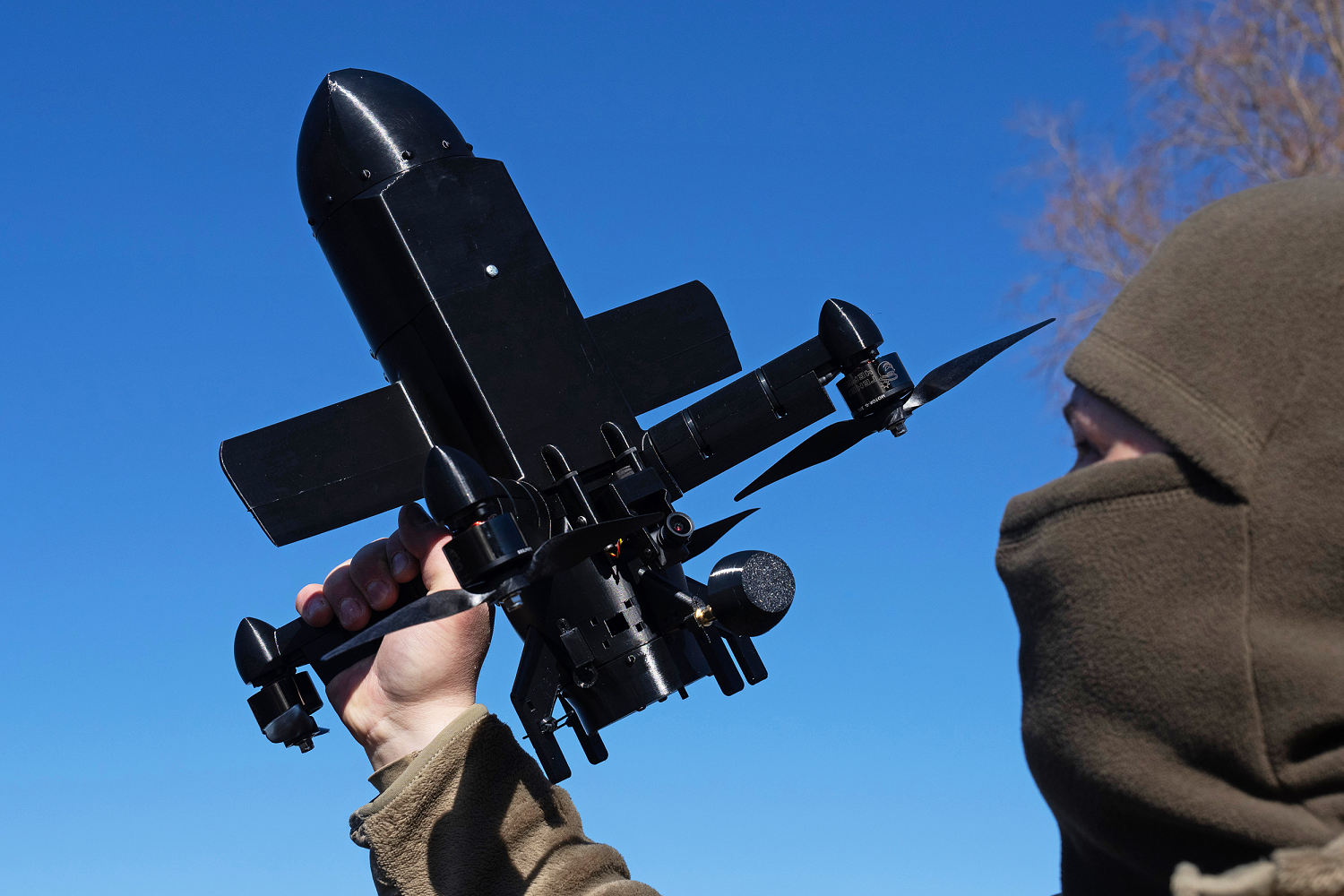
The FPV (First-Person View) interceptor is perhaps the most significant Ukrainian innovation. By using a $500 racing drone equipped with a small explosive charge to ram a $30,000 Shahed, the cost-exchange ratio is finally flipped in favor of the defender.
The Operational Pivot
Defense ministries must move away from "Exquisite Air Defense" (missiles) toward "Industrialized Air Defense" (distributed sensors and low-cost kinetics). The procurement priority is no longer the highest possible altitude or the longest range, but the lowest possible cost-per-successful-interception.
The strategic move for regional powers is to establish joint-venture production facilities for these low-cost interceptors. Establishing a domestic "Drone Defense Foundry" that mirrors the Ukrainian decentralized manufacturing model is the only way to counter a threat that is produced at an industrial scale. Reliance on a centralized, slow-moving defense contractor is a fatal vulnerability when the adversary can iterate their hardware in a matter of days. Priority must be given to software-defined radio (SDR) platforms that can be updated via "over-the-air" patches as new Iranian electronic signatures are identified.