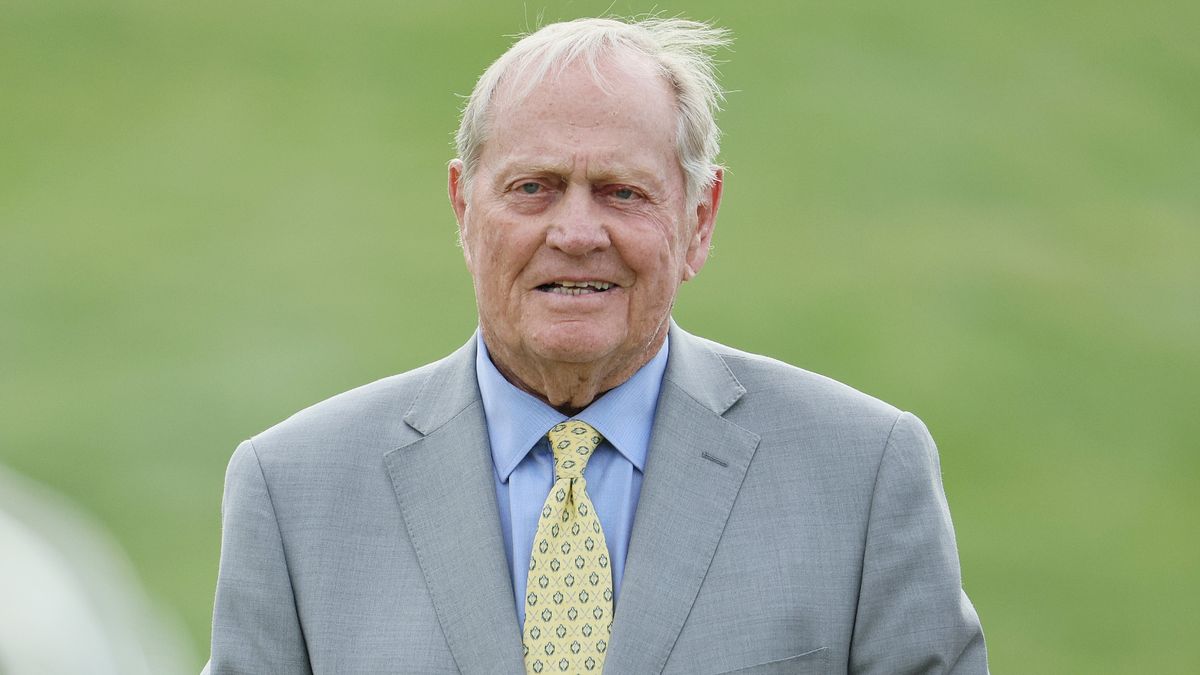
The tradition of the honorary starter at the Masters has long been viewed through a lens of soft-focus nostalgia, a green-jacketed warm-up act designed to bridge the gap between the legends of the past and the titans of the present. But at the opening of the 89th Masters, the ritual took a turn toward the visceral. Jack Nicklaus, the greatest to ever play the game, stood on the first tee of Augusta National and admitted a chilling reality that the galleries and the television cameras usually ignore. The eighty-four-year-old Golden Bear looked at the crowd, then at his driver, and confessed that he had nearly struck a spectator with his ceremonial shot. "I haven't killed anybody yet," he quipped, but the dark humor masked a growing logistical crisis for the sport’s most prestigious event.
The honorary starter ceremony is supposed to be a safe, celebratory moment. It has become, instead, a high-stakes liability. As the legends age and the crowds press closer to the ropes, the margin for error on that first tee has vanished. Nicklaus’s admission wasn’t just a grandfatherly joke; it was a blunt assessment of the physical decline of an icon and the claustrophobic nature of modern golf fandom. When a man who once possessed the most controlled power in the history of the sport admits he is losing command over where his ball lands, it is time to look past the sentimentality of the Green Jacket.
The Shrinking Perimeter of Augusta National
The first tee at Augusta is a natural amphitheater, but it was never designed for the sheer volume of humanity that now occupies it on Thursday mornings. During the era of Byron Nelson or Gene Sarazen, the crowd was a respectful distance away. Today, the patrons are packed dozens deep, leaning over the ropes to catch a glimpse of the three remaining titans: Nicklaus, Gary Player, and Tom Watson.
The physics of an eighty-year-old swing are unpredictable. Nicklaus himself has been open about his diminishing strength and the various ailments that have stripped away his once-legendary consistency. When the clubhead speed drops and the flexibility fades, the ability to "hold" a shot or correct a swing path in mid-motion disappears. The result is a ball that can go anywhere. At a standard tournament, this might result in a harmless thud into a grassy bank. At Augusta, where the crowd is used as a human wall, it becomes a projectile headed toward a defenseless patron.
The Masters prides itself on tradition, but tradition cannot override the laws of ballistics. The club is faced with a choice that it has spent decades avoiding. They can either push the patrons back, destroying the intimate atmosphere that makes the morning so special, or they can continue to let elderly men swing high-velocity equipment at a target surrounded by thousands of people. Nicklaus’s comment was a warning shot, literally and figuratively.
The Psychological Burden of the Legend
There is a specific kind of vanity involved in the honorary starter role, and it isn't necessarily the golfers’ own. The public demands this performance. We want to see Nicklaus, Player, and Watson as they were, not as they are. This creates a psychological pressure that is rarely discussed in sports journalism. These men are competitive by nature; they do not want to "duff" it.
The Performance Trap
When Jack Nicklaus steps onto that tee, he isn't just Jack Nicklaus the retiree. He is the man who won six Masters. He feels the weight of that history. He wants to hit a "real" shot. He isn't interested in a twenty-yard bunt. To hit a ball 200 yards at his age requires a level of physical exertion that borders on the edge of his current capabilities.
When you swing at 100 percent of your available power, you lose control. That is the fundamental trade-off of the golf swing. By attempting to give the fans the show they expect—a high, drawing tee shot—Nicklaus is forced to flirt with the limits of his physical stability. The "near miss" he referenced wasn't an anomaly; it was the inevitable outcome of an aging athlete trying to meet an impossible standard of performance for a cheering crowd.
The Spectator Blind Spot
Golf fans have a strange sense of invincibility. Because they are watching a "gentleman’s game," they often forget that a golf ball is a hard, dimpled core of resin traveling at speeds that can cause permanent brain damage or death. The patrons at the first tee are often so focused on getting a photo or a video on their phones—despite Augusta’s strict cell phone policy—that they aren't actually watching the flight of the ball. They are looking through a lens, disconnected from the physical reality of a 1.6-ounce sphere flying toward them at 120 miles per hour.
The Gary Player Contrast and the Future of the Ceremony
While Nicklaus leaned into the humor of the danger, Gary Player remains the counter-argument. At eighty-eight, Player maintains a fitness regimen that is the stuff of legend, often performing his trademark "kick" after his tee shot. But even Player is not immune to the passage of time. The ceremony has reached a point where the gap between the participants' ages is widening, and the pool of potential replacements is shrinking.
The Masters committee has been slow to add new names to the roster. Tom Watson was the most recent addition, and while he is significantly younger than his counterparts, he too will eventually face the same physical decline. The question of who comes next is fraught with political and personal tension. Tiger Woods is the obvious candidate, but his own physical struggles make his participation in a "ceremonial" capacity seem like a distant, perhaps even insulting, prospect while he still believes he can compete.
The Liability Gap
Augusta National is one of the most private and legally protected entities in the world. They handle their own security, their own ticketing, and their own narrative. However, the legal landscape of sports is changing. In an era where fan safety is becoming a primary concern in stadiums and arenas across the globe, the wide-open nature of a golf course is a glaring vulnerability.
If a shot from an honorary starter were to cause a serious injury, the fallout would be catastrophic for the tournament’s image. It would transform a moment of reverence into a moment of negligence. The club’s insistence on maintaining the "old way" of doing things—no grandstands on the first tee, no significant barriers—is a calculated risk that is becoming less calculated and more reckless with every passing year.
Reimagining the Opening Drive
If the goal is to honor the legends without putting the public at risk, the ceremony needs a radical overhaul. This doesn't mean ending it, but it does mean acknowledging that eighty-year-olds should not be asked to perform a feat of strength in a crowded corridor.
One solution is the "Par 3" approach. The Par 3 Contest on Wednesday is already a safe, controlled environment where families and fans can interact with players. Moving the honorary starters to a different location, or creating a larger "buffer zone" on the first fairway, would solve the immediate physical danger. But Augusta loathes change. They view the first tee on Thursday morning as hallowed ground, and moving the ceremony would be seen as a concession to the modern world that they spent a century resisting.
The Burden of Being a Bronze Statue
There is a cruelty in asking these men to perform. We are essentially asking them to be living statues that can still move. We want the memory, not the reality. Nicklaus’s "killed anybody" comment was a rare moment of a legend breaking character and revealing the absurdity of the situation. He knows his body better than anyone. He knows that his hands don't always do what his brain tells them to do.
When he says he "came close" to hitting someone, he is telling the truth about the fragility of his current game. It is a truth that the Masters broadcast will never lean into, preferring instead to show the shot from an angle that hides the proximity of the fans. They want the myth. Nicklaus, in his old age, seems more interested in the reality.
The Golden Bear has earned the right to say whatever he wants, and what he is saying is that the current setup is a disaster waiting to happen. The silence from the green jackets in response to his comment is telling. They are banking on luck, and as any golfer knows, luck eventually runs out. The first tee of Augusta National is a place of dreams, but for a split second on Thursday morning, it was nearly the site of a tragedy.
The ceremony will continue, of course. The applause will be just as loud next year. But the next time Jack Nicklaus or Gary Player addresses that ball, the people in the front row might want to look a little more closely at the flight path and a little less at their memories. The legends are still here, but their control over the game—and the safety of those watching it—is a ghost of what it once was.
Augusta National must decide if the preservation of a visual tradition is worth the escalating risk of a physical catastrophe. Until they move the ropes or change the format, every honorary start is a gamble that one of the game's greatest icons won't accidentally become its most tragic figure. The warning has been issued by the man best positioned to give it. We should probably listen.