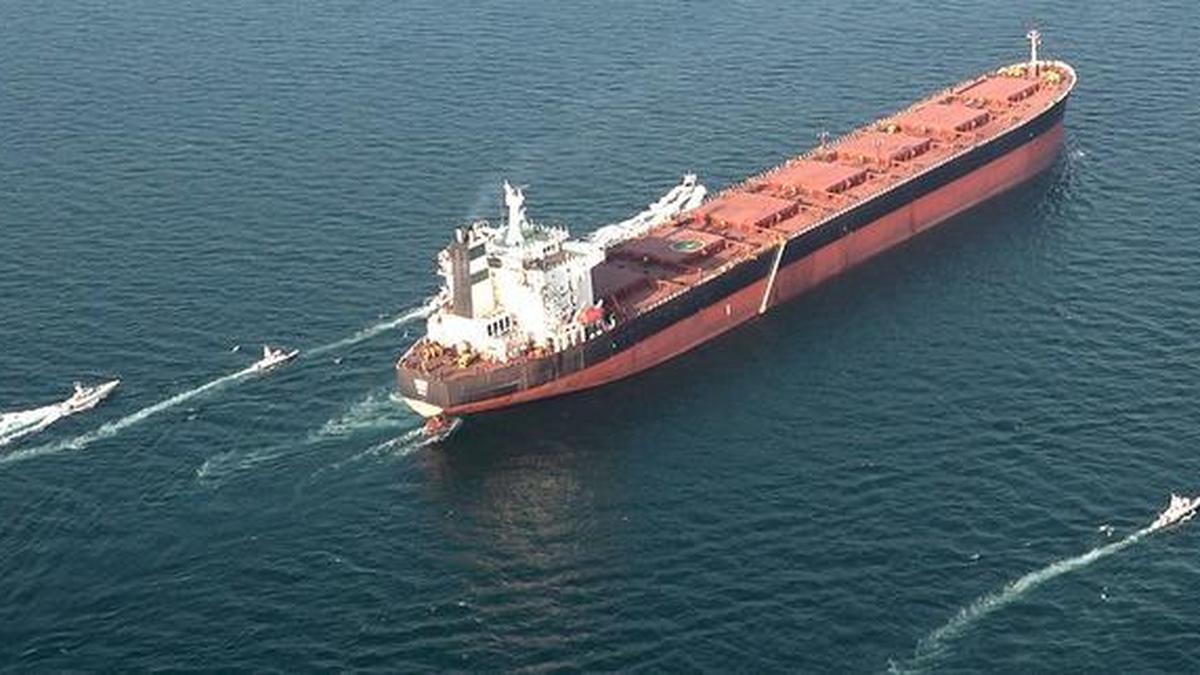
The Strait of Hormuz is effectively a graveyard for global commerce, yet the ghost ships are still screaming through. While the world's largest shipping conglomerates have anchored their fleets in the Gulf of Oman, refusing to risk $100 million hulls in a live combat zone, a shadow economy is thriving in the crossfire.
Since the outbreak of hostilities on February 28, 2026, the primary artery of the global energy trade has seen a 70% collapse in traditional traffic. Most commercial operators and insurers have fled, petrified by drone strikes and skyrocketing premiums. However, maritime data reveals a jarring anomaly: approximately 90 vessels have successfully braved the passage. More importantly, Iran has managed to export over 16 million barrels of crude since the start of March. This is not a miracle of navigation; it is a calculated, selective blockade where Tehran is both the warden and the only prisoner with a key.
The Selective Chokepoint
The current crisis has flipped the script on traditional maritime security. Typically, a blockade is an act of denial enforced by a superior navy. Today, the Strait of Hormuz is a "selective" chokepoint. Iran is utilizing its proximity and missile batteries to paralyze competitors while ensuring its own "dark" tankers continue to reach the high seas.
Data from Lloyd’s List Intelligence confirms that at least 89 ships crossed between March 1 and March 15. While this is a fraction of the 100+ daily transits seen in peacetime, the composition of this traffic tells the real story. Over a fifth of these vessels are Iranian-affiliated. While Saudi, Emirati, and Kuwaiti exports are largely trapped behind the line, Iranian oil continues to flow toward its primary benefactor: China.
How the Shadow Fleet Outruns the War
To understand how Iran is moving millions of barrels while its neighbors are paralyzed, one must look at the mechanics of the "Shadow Fleet." This is not a new phenomenon, but it has become Iran's most potent weapon of economic resilience.
- AIS Spoofing and Dark Transits: Many of the tankers crossing the strait have disabled their Automatic Identification System (AIS) transponders. In one instance, the container ship Run Chen 2 went dark near the western mouth of the strait only to reappear hours later in the Gulf of Oman.
- Flag Hopping: These vessels frequently use flags of convenience—Barbados, Panama, or San Marino—to obscure their origin.
- The Insurance Gap: Traditional Western insurers won't touch a vessel entering the strait right now. Iran avoids this by using its own state-backed insurance or "sovereign guarantees" that mainstream markets ignore.
By operating outside the Western financial and maritime ecosystem, these ships are immune to the pressures that have forced Shell, BP, and Maersk to abandon the route.
The Geopolitical Blind Spot
The most baffling aspect of this conflict is the relative safety of the Iranian tankers. Despite the presence of U.S. and allied naval assets, there has been a conspicuous lack of kinetic intervention against Iranian oil exports.
The rationale is likely a mix of high-stakes diplomacy and market fear. With Brent crude already surging past $120 a barrel, a total removal of Iranian oil from the market could trigger a global inflationary spiral reminiscent of 1973. Furthermore, the Trump administration appears wary of antagonizing Beijing. Approximately 90% of Iran’s exports end up in Chinese refineries. Sinking a tanker bound for Ningbo or Qingdao isn't just a military act; it’s a direct strike on the Chinese economy at a time when Washington is desperate to keep the conflict from expanding into a global conflagration.
India and the Price of Neutrality
It isn't just the shadow fleet getting through. Recently, the India-flagged LPG carriers Shivalik and Nanda Devi crossed the strait unscathed. These weren't lucky breaks. They were the result of direct, high-level negotiations between New Delhi and Tehran.
India, which relies on the Gulf for roughly half of its crude imports, has found itself in the unenviable position of negotiating "safe passage" with a nation currently at war with U.S. allies. This creates a dangerous precedent: a world where maritime safety is no longer guaranteed by international law or naval hegemony, but by individual "toll" agreements and diplomatic kowtowing to the power that controls the trigger.
The Economic Toll of a One-Way Gate
The asymmetry of the current closure is devastating for America's Gulf allies. Saudi Arabia and the UAE are attempting to bypass the strait via pipelines to Yanbu and Fujairah, but these routes can only handle about 25% of the lost volume. Meanwhile, Iraq and Kuwait have no such alternatives.
While the "90 ships" figure might suggest the strait is still functioning, it is actually a diagnostic of a broken system. The waterway is open for those who play by Tehran’s rules or operate in the shadows, and closed for everyone else. Iran has successfully decoupled its export capacity from the safety of the region, turning a global chokepoint into a private driveway.
This selective permeability ensures that even as Iran’s cities face the brunt of military strikes, its war chest continues to be replenished by the very commodity the rest of the world is now starving for. The shadow fleet isn't just evading sanctions anymore; it is the only fleet left standing in the world's most dangerous water.