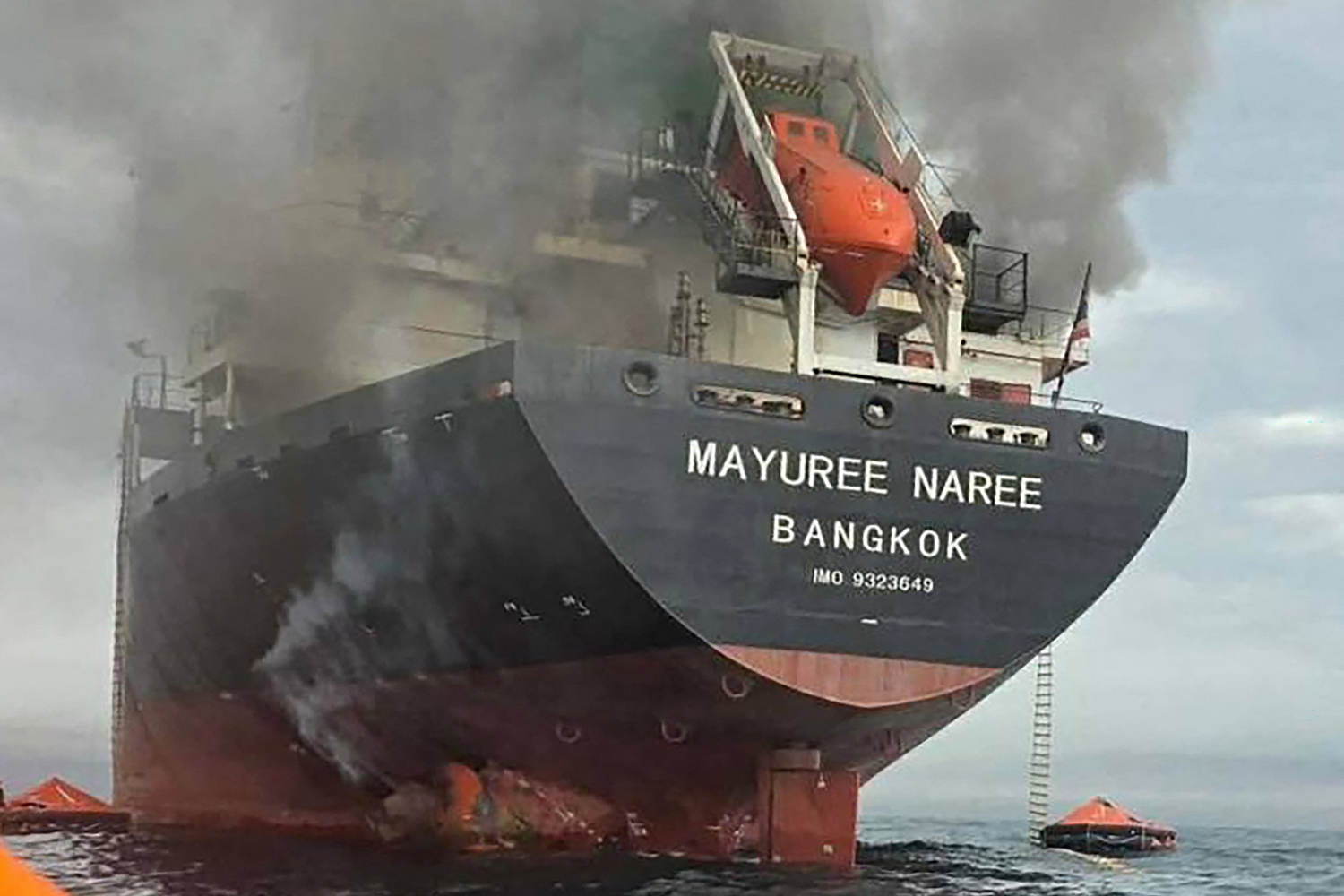
The boarding of the Sea Owl I off the southern coast of Trelleborg was not a random safety check. When the Swedish Police National Task Force and Coast Guard descended from helicopters onto the deck of the 228-meter tanker last Thursday, they were executing a calculated strike against a ghost. On Sunday, a district court in Ystad ordered the formal detention of the ship’s Russian captain, marking a significant escalation in the North Atlantic’s struggle to police a fleet that technically does not exist.
The Sea Owl I claimed to fly the flag of the Comoros, a small island nation off the coast of East Africa. However, investigators discovered the vessel was missing from the Comorian registry entirely. This effectively rendered the ship "stateless," stripping it of the "innocent passage" protections usually afforded by international maritime law. It is the second such seizure in Swedish waters in a single week, following the detention of the cargo ship Caffa on suspicion of transporting stolen Ukrainian grain.
These are not merely technical paperwork errors. They are the frontline of a high-stakes shell game. Russia’s shadow fleet is a sprawling network of aging, underinsured, and often nameless vessels used to bypass Western sanctions and move millions of barrels of oil. By operating under false flags and forged documents, these ships disappear from the legal grid, making them the ultimate tool for a sanctioned wartime economy.
The Mechanics of the Ghost Registry
To understand how a massive oil tanker can simply pretend to be registered in the Comoros, one must look at the decay of maritime oversight. In the industry, this is known as "flag hopping." A vessel on an EU or US sanctions list will register and re-register in quick succession, often settling on "open registries" in nations with limited capacity to verify their own fleet.
In the case of the Sea Owl I, the deception went a step further. It wasn't just a "flag of convenience"; it was a "false flag." When Swedish authorities boarded, they found certificates that were allegedly outright forgeries. This is the "how" of the shadow fleet's survival. They rely on the assumption that coastal states will be too hesitant to risk a diplomatic incident by boarding a sovereign-flagged vessel. By proving the flag is fake, Sweden has found a legal loophole to move from passive observation to active seizure.
The ship was traveling in ballast—meaning it was empty—from Brazil to the Russian port of Primorsk. Primorsk is a critical node for Russian energy exports, and the Sea Owl I has a documented history of shuttling oil products between South America and Russia. The detention of the captain on charges of using false documents is a direct hit to the operational brain of the vessel. Without a commander and a legal flag, the ship is effectively a 74,000-ton paperweight.
The Environmental Time Bomb in the Baltic
There is a visceral reason why the Swedish government is suddenly willing to risk the Kremlin’s ire. The Baltic Sea is one of the most ecologically sensitive bodies of water on Earth. It is shallow, brackish, and has an incredibly slow water exchange with the North Sea.
Most shadow fleet vessels are over 15 years old. The Sea Owl I was built in 2007. Many of these ships have had their "class" withdrawn—the maritime equivalent of an expired safety inspection. Because they are often "stateless" or underinsured, an oil spill in the Baltic would be a financial and ecological catastrophe with no clear party to hold liable for the cleanup costs.
Swedish Civil Defense Minister Carl-Oskar Bohlin has characterized these ships as a "hybrid threat." This isn't just about oil revenue; it’s about the risk of a deliberate or accidental environmental disaster that could paralyze European ports. When a ship like the Sea Owl I sails without a verified flag state, there is no one to vouch for the competence of the crew or the integrity of the hull.
Breaking the Sovereign Shield
The Kremlin has responded to increased pressure by attempting to re-flag these vessels back to the Russian registry. This is a tactical retreat. While a Russian flag offers "sovereign protection" and makes a boarding much more legally complex for NATO members, it also makes the ship an easy, permanent target for sanctions.
The strategy used by Sweden—codenamed "Operation Black Coffee" for the earlier seizure of the Caffa—signals a shift in European tactics. Instead of waiting for new sanctions to be debated in Brussels, coastal states are using the existing Maritime Act to target unseaworthiness and document fraud.
It is a weary, grinding form of warfare. For every Sea Owl I that is stopped, dozens more are transiting the Danish Straits or the English Channel. In January alone, over 40 sanctioned tankers moved through the Channel. The volume of traffic is immense, and the investigative capacity of maritime police is stretched thin.
Why This Detention Matters
The detention of a captain is a rare move. Usually, the ship is fined or diverted. By holding the commander in custody, Sweden is sending a message to the mercenary crews who man these vessels: the paycheck isn't worth a prison cell in Ystad.
The Sea Owl I and the Caffa are currently anchored side by side off Trelleborg, guarded by the Coast Guard. They serve as physical evidence of a crumbling system. For years, the shadow fleet operated with impunity because the legal risks were lower than the financial rewards. Sweden just changed that math.
The investigation is now focused on the "opaque ownership" behind the ship. The Sea Owl I is officially owned by a corporation in the Marshall Islands, a classic shell structure designed to hide the ultimate beneficial owner. Finding the person who signed the checks for the forged Comorian papers is the next logical step, though in the world of shadow finance, those trails often go cold at the first border crossing.
The Baltic is no longer a free pass for the ghost fleet. As the Swedish court prepares for a full trial of the Russian captain, the question is no longer whether these ships are breaking the law, but how many more of them the European coastlines can catch before one of them breaks apart.
Ask me if you would like a breakdown of the specific legal statutes Sweden is using to bypass sovereign immunity for these "stateless" vessels.