The $25 billion price tag is the only thing the mainstream media got right. Everything else—the narrative of a "trapped" India, the supposed obsolescence of Russian hardware, and the "inevitable" pivot to Washington—is a fairy tale whispered by defense lobbyists in D.C. and London.
If you think New Delhi is buying Russian weapons out of habit or some lingering Cold War nostalgia, you aren't paying attention. This isn't a debt of gratitude. It’s a cold-blooded calculation of sovereignty. India isn't backing Russian weapons because it has no choice. It’s backing them because they are the only tools that allow India to remain India. Also making headlines in related news: The Jurisdictional Boundary of Corporate Speech ExxonMobil v Environmentalists and the Mechanics of SLAPP Defense.
The Myth of the Technical Deficit
The "lazy consensus" argues that the Ukraine conflict proved Russian tech is junk. Analysts point to charred T-90 hulls and argue that India is buying yesterday's scrap metal. This is a fundamental misunderstanding of how a continental power prepares for a two-front war against China and Pakistan.
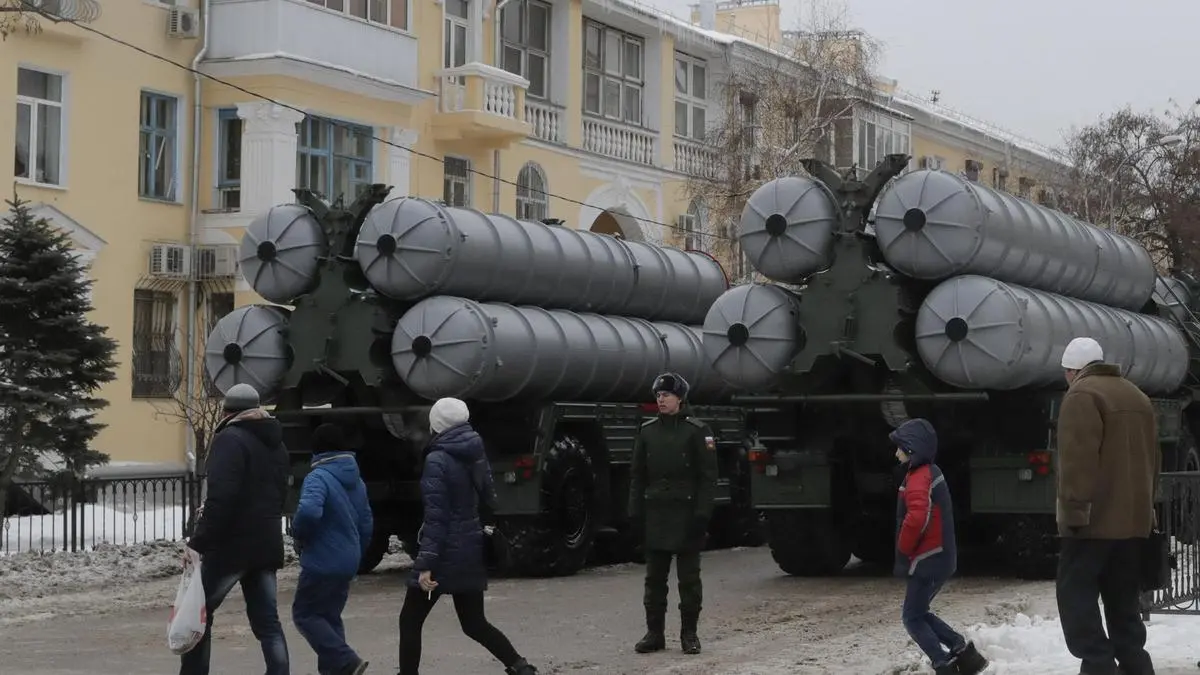
Western weapons are high-maintenance divas. They require "pristine" environments, a global supply chain that the U.S. can turn off with a single sanctions vote, and proprietary software that treats the buyer like a renter. Russia, for all its manufacturing struggles, sells the keys to the kingdom. When India buys the S-400 Triumf or negotiates the local production of Su-30MKI fighters, they aren't just buying hardware. They are buying the right to tinker, modify, and integrate their own indigenous tech without asking for permission from a desk clerk at the State Department. More information on this are detailed by Bloomberg.
Sovereignty is Not a Software Subscription
Imagine a scenario where India needs to deploy a long-range missile system during a border skirmish that the U.S. deems "de-escalation mandatory." With an American system, New Delhi risks a "kill switch" or a sudden freeze on spare parts and satellite data.
Russian gear comes with no moral lectures. It’s the Linux of the defense world—clunky, perhaps, but open-source enough for the Indian Defense Research and Development Organisation (DRDO) to gutted and rebuilt. The $25 billion isn't an "expenditure." It is an insurance premium against Western "End-Use Monitoring" (EUM) agreements that effectively turn sovereign nations into regional deputies of the Pentagon.
The China Factor No One Admits
The West loves to frame India’s Russian pivot as a weakness in the "Quad" alliance. The reality is the opposite. India knows that the moment it goes 100% Western, it loses its leverage over Moscow.
By remaining the largest customer for Russian defense exports, India ensures that Moscow cannot go "all-in" with Beijing. If India stops buying, Russia becomes a complete vassal state of China. By keeping the $25 billion flowing, New Delhi buys a seat at the table in the Kremlin, ensuring that Russian military technology transfers to China remain limited or delayed. It is a strategic bribe that keeps the Eurasian balance of power from collapsing entirely.
The "Make in India" Smoke Screen
Critics moan that Russia doesn't deliver on technology transfers. I’ve seen bureaucrats in Delhi and Moscow scream at each other over the BrahMos project for a decade. It’s messy. It’s slow. But compare it to the alternatives.
The U.S. offers "co-production" of jet engines—under strict intellectual property locks. France offers Rafales, which are magnificent, but they cost so much that a full fleet would bankrupt the Indian Air Force. Russia allows India to build thousands of T-90 tanks on Indian soil. They allow the local assembly of Kalashnikovs. This isn't about getting the most "advanced" rifle; it’s about ensuring that when the shooting starts, the factory in Amethi doesn't need a signature from a foreign capital to keep the lights on.
The False Choice of Interoperability
The most common question from the "People Also Ask" crowd is: How can India manage a mix of Russian and Western tech?
The premise of the question is flawed. It assumes "interoperability" with the U.S. Navy is the goal. For India, the goal is "Internal Operability." They have spent forty years building a unique "Frankenstein" architecture where Israeli sensors, French electronics, and Indian software sit inside a Russian airframe.
This isn't a bug; it’s a feature. It makes the Indian military a nightmare for an adversary to electronic-warfare (EW) their way through. If you use a standardized NATO stack, a sophisticated enemy like China only has to crack one code. If you use India’s hybrid mess, you have to solve five different puzzles simultaneously.
The Economics of the $25 Billion Deal
Let’s talk about the math that the "Defense News" crowd ignores.
- The Rupee-Ruble Trap: India and Russia have spent years refining a payment system that bypasses the SWIFT network. In a world of increasing financial weaponization, having a $25 billion trade channel that doesn't touch a U.S. bank is a strategic asset.
- Lifecycle Costs: A Russian fighter might have a shorter engine life than a Lockheed Martin F-35, but the cost to keep it in the air in a high-intensity conflict is a fraction of the price.
- The Sunk Cost Logic: You don't throw away a trillion dollars of existing infrastructure, training, and logistics just because a new shiny toy appeared in South Carolina.
Why the West Must Cope
Washington’s "CAATSA" (Countering America's Adversaries Through Sanctions Act) is a blunt instrument that failed. They threatened India with sanctions over the S-400 and then blinked. Why? Because the U.S. needs India more than India needs the F-16.
New Delhi knows this. They are calling the bluff. Every dollar of that $25 billion is a reminder to the West that India is a pole in a multi-polar world, not a junior partner in a crusade.
The move isn't a retreat into the past. It’s a violent assertion of the present.
India is buying Russian weapons to ensure it never has to obey a foreign command. If you find that "concerning," you're likely the person the weapons were designed to deter.
Stop looking for a pivot that isn't coming and start realizing that India has already won the negotiation.