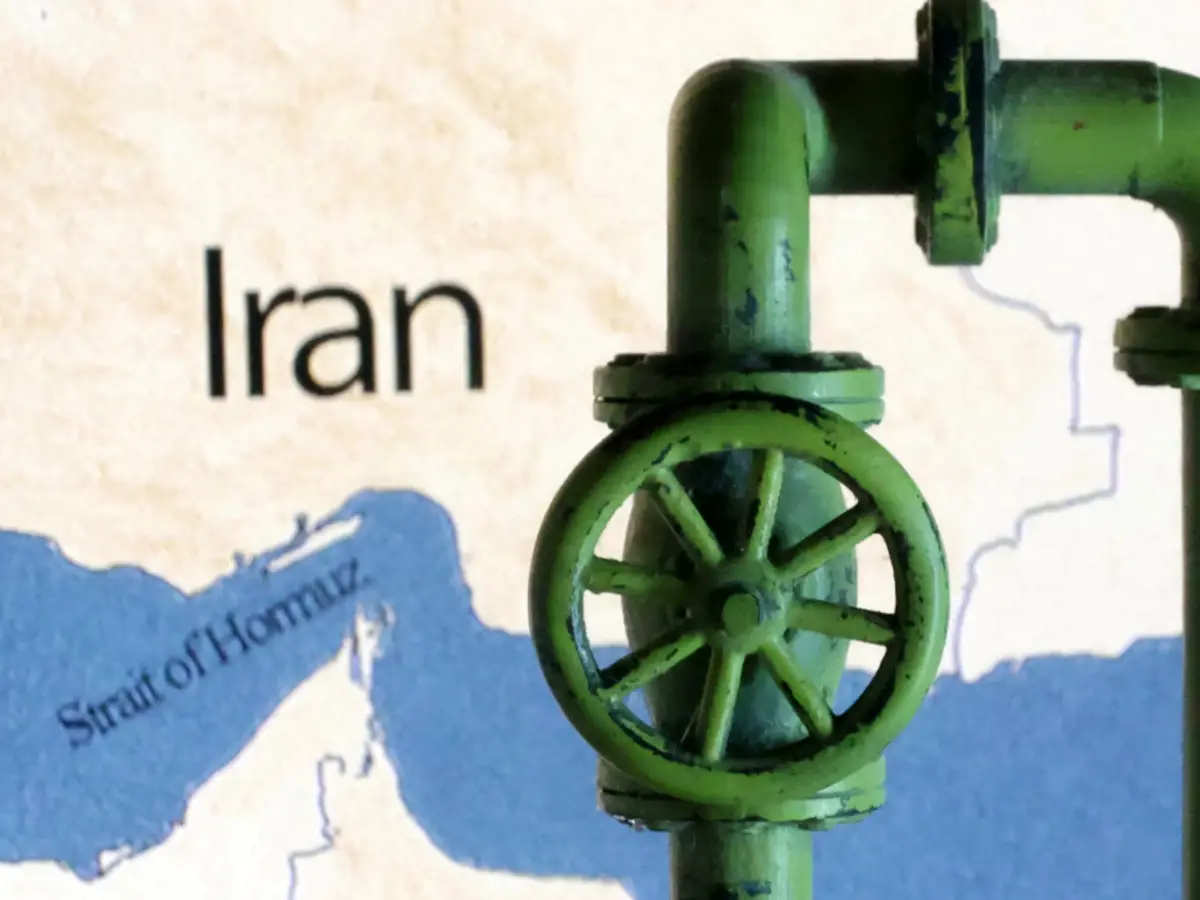
The hand-wringing over India’s "tilt" toward the U.S. and Israel is the product of a foreign policy establishment stuck in 1974. Pundits love a good tragedy. They paint a picture of Indian tankers rusting in the Strait of Hormuz while Tehran seethes and New Delhi shivers in the dark. It is a narrative built on the "lazy consensus" that India is a desperate supplicant at the altar of Iranian goodwill.
It is wrong.
The idea that India is "testing ties" with Iran by aligning with the U.S. and Israel assumes that Iran has better options. It doesn't. It assumes the Strait of Hormuz is a faucet Iran can turn off without drowning itself. It can’t.
Stop looking at the map through the lens of Cold War non-alignment. The reality is that India isn't drifting away from Iran; it is outgrowing the need for a "special relationship" that has yielded little more than delayed projects and empty promises.
The Chokehold Fallacy
The most repeated ghost story in energy circles is the Iranian blockade of the Strait of Hormuz. We are told that one wrong move in the Red Sea or one joint exercise with the IDF will lead to a shuttered strait and a collapsed Indian economy.
Let’s look at the math. Roughly 20% of global petroleum liquids pass through that narrow strip of water. If Iran blocks it, they don't just starve India; they incinerate their own remaining credit with China—their only significant patron. Beijing imports nearly 1.5 million barrels per day of Iranian crude, often rebranded through Malaysian intermediaries.
If Iran chokes the strait, they choke the dragon. They won't do it.
I’ve spent years watching trade flows in the Indo-Pacific. The "energy crunch" narrative ignores the massive diversification of the Indian energy basket. In 2021, Iraq and Saudi Arabia were the undisputed kings. Today, Russia occupies a massive chunk of the pie, often at prices that make Iranian "friendship" discounts look like highway robbery.
India’s shift toward a U.S.-Israel-India-UAE (I2U2) framework isn't a betrayal of Tehran. It’s a pivot toward capital and technology—two things Iran hasn't been able to provide since the Shah fell.
The Chabahar Sunk Cost Trap
For a decade, the media has treated the Chabahar Port as India's "strategic masterstroke" to bypass Pakistan and reach Central Asia. They frame every delay as a result of "U.S. pressure."
The truth is more cynical: Chabahar is a logistical nightmare that India should have walked away from years ago.
I have seen billions of dollars in infrastructure "strategic investments" vanish into the ether of Iranian bureaucracy and Sanctions-lite environments. While India played nice with Tehran to keep the port project alive, China built Gwadar and integrated it into a trillion-dollar Belt and Road Initiative.
The "tilt" toward Israel is a recognition that India needs a Mediterranean gateway (via the IMEC corridor) far more than it needs a dead-end road through the Iranian desert. Israel offers desalination tech, semiconductor partnerships, and defense hardware that actually works on a modern battlefield. Iran offers a port that is perpetually "almost ready."
The Myth of the "Balanced" Foreign Policy
There is a segment of the Delhi elite that views "Strategic Autonomy" as a synonym for "never making a choice." They argue that India must stay neutral in the Middle East to protect its 8 million-strong diaspora and its energy security.
This is the logic of a middle power, not a rising titan.
Modern geopolitics is not a game of balancing; it is a game of leverage. By aligning with the U.S. on regional security and with Israel on technology, India creates a value proposition that makes it indispensable.
Compare the two sides:
- The U.S.-Israel Axis: Provides MQ-9B Predator drones, iCET initiatives for AI development, and a seat at the table of the global financial architecture.
- The Iran Axis: Provides expensive oil, proxy instability that threatens the very shipping lanes India uses, and a constant threat of secondary sanctions.
Choosing the former isn't a "risk" to ties with Iran; it's an upgrade in reality. Tehran needs India as a buyer of last resort. They will grumble, they may seize a ship for a week to save face, but they will not sever the lifeline.
Dismantling the Diaspora Scare
"But what about the 8 million Indians in the Gulf?" the skeptics cry. They fear that a pro-Israel stance will alienate the Arab street and put Indian workers at risk.
This ignores the Abraham Accords. The UAE and Saudi Arabia—the primary destinations for Indian labor—are themselves pivoting toward a pragmatic, post-ideological relationship with Israel. They are more worried about Iranian hegemony than they are about Indian-Israeli defense cooperation.
In fact, the Gulf monarchies want India to be a security provider. They want an Indian Navy that can patrol the Arabian Sea and ensure that Iranian-backed Houthi rebels don't sink the tankers that pay for their futuristic cities.
The Energy Crunch That Isn't
Let’s address the "energy crunch at home" headline.
India is currently the world’s third-largest energy consumer. Its demand is projected to grow faster than any other country over the next two decades. If you believe the competitor's piece, this growth is a vulnerability.
I argue it is India’s greatest weapon.
When you are the world’s largest incremental buyer of oil, you don't fear a supply crunch; the sellers fear losing your market. India has effectively "weaponized" its demand. It forced Russia to accept non-dollar payments. It forced Middle Eastern producers to rethink their "Asian Premium" pricing.
The idea that India is "tested" by its ties with Iran assumes that India is the one being audited. In reality, India is the auditor. New Delhi is telling Tehran: "Fix your stability issues, or we will find our BTUs elsewhere."
Imagine the Scenario: The Hormuz Shutdown
Let’s run a thought experiment. Imagine Iran actually follows through on the threats the media loves to highlight. They mine the strait. Shipping rates for VLCCs (Very Large Crude Carriers) triple overnight.
What happens to India?
- Strategic Reserves: India has enough underground storage to bridge a short-term gap.
- The Russian Pivot: More oil flows via the Arctic route or Vladivostok, bypassing the Middle East entirely.
- The U.S. Strategic Reserve: Washington, now a net exporter of energy, has a vested interest in keeping the Indian economy afloat to counter China.
The "crunch" is a 48-hour news cycle problem, not a multi-year economic collapse.
The Real Risk: Indecision
The true danger to India isn't choosing a side; it’s pretending it hasn't.
When you try to please everyone, you end up with "strategic ambiguity" that looks a lot like weakness. The competitor article worries about "testing ties." I say, let the ties be tested. If a relationship with Iran can’t survive India pursuing its own national interests in the Mediterranean and the Pacific, then that relationship was a liability from the start.
India’s U.S.-Israel tilt is not a mistake. It is an admission that the old "North-South" and "Non-Aligned" frameworks are dead.
Stop asking if India can afford to alienate Iran. Ask if Iran can afford to lose the only major democracy that still takes its calls.
The power dynamic has shifted. The tankers aren't "stranded" because of a policy shift; they are moving toward a more profitable, high-tech, and secure future that Tehran simply cannot offer.
The era of being a "balancing power" is over. India is now a "deciding power."
Get used to it.