The dust motes dance in the light of a London morning, oblivious to the history soaking into the floorboards of Kensington Palace. It is Mother’s Day 2026. Outside, the UK is waking up to breakfast in bed and handmade cards with lopsided hearts. Inside the royal residence, a man who will one day wear a crown is looking at a piece of glossy paper that holds a ghost.
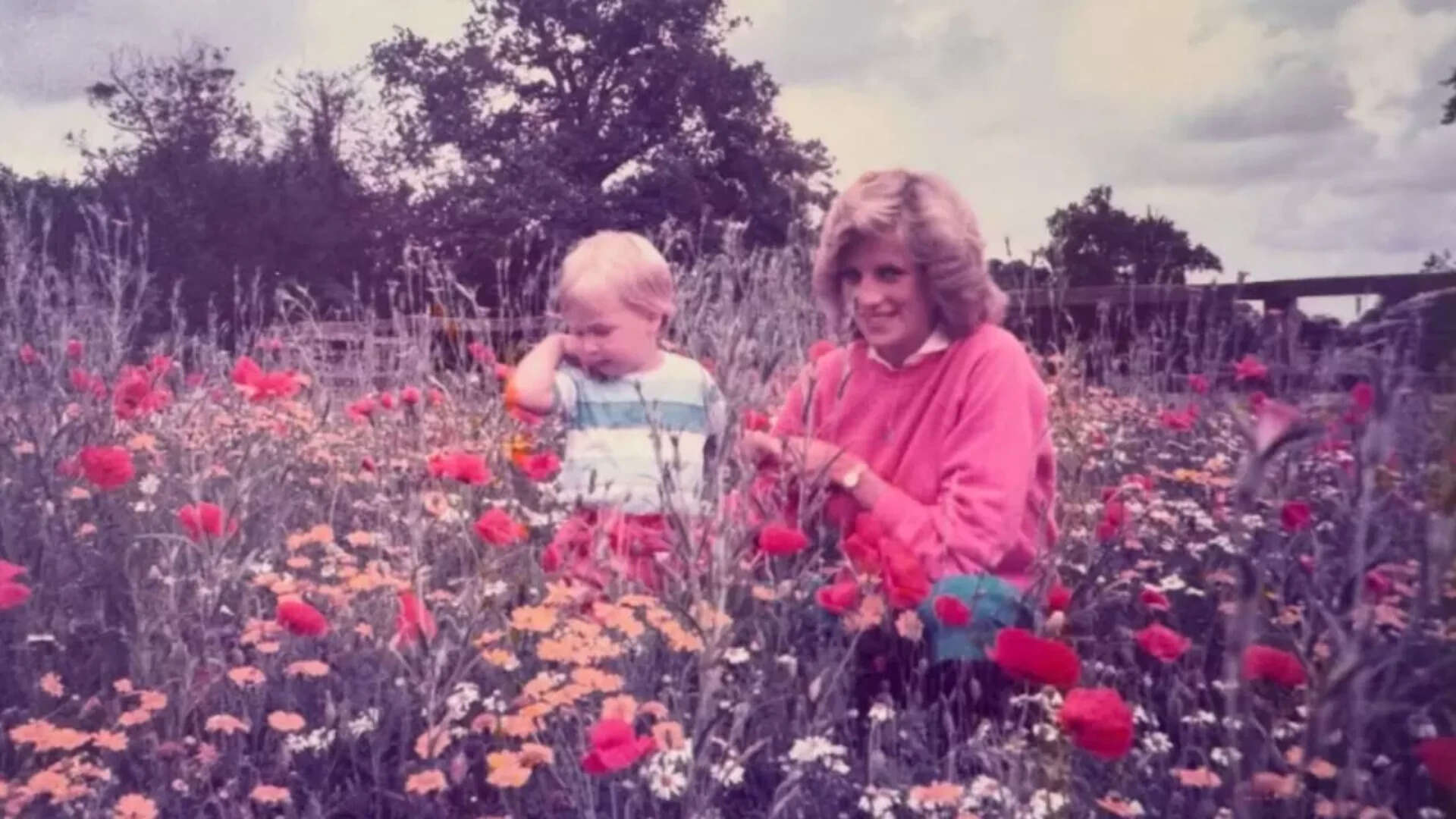
Prince William has always understood the weight of a silhouette. For decades, he has moved through a world that treats his mother’s memory like public property, a recurring character in a national drama that never truly reaches its final act. But today, the Prince of Wales did something different. He didn't reach for the polished, professional archives or the iconic shots of the "People's Princess" in a gown. He shared an unseen childhood photo.
It is a small, quiet act of rebellion against the pedestal.
In the image, the colors are slightly faded, possessing that specific 1980s warmth that feels like a sun-drenched afternoon. Diana is young. William is smaller than the world has ever known him to be. They aren't symbols here. They are a mother and a son, caught in a moment of unremarkable, spectacular normalcy.
We often forget that for William and Harry, the global icon was simply the person who smelled like perfume and soap. She was the one who hid sweets in their socks and took them to amusement parks to ensure they knew the world wasn't just red carpets and bowing heads. When the Prince hits "upload" on a photo like this, he isn't just participating in a holiday tradition. He is reclaiming a piece of his own skin.
The Heavy Crown of Memory
To understand why a single photograph can stop a nation’s scrolling thumb, you have to look at the invisible stakes of being a royal in the digital age. Most of us have boxes of old photos in the attic—embarrassing haircuts, blurry birthdays, the mundane debris of a life lived. We own those memories. We can choose who sees them.
William does not have that luxury. His childhood was a televised event. His grief was a performance he never auditioned for.
By releasing this specific, previously hidden image on Mother’s Day 2026, he is navigating a delicate tightrope. He is fulfilling the public’s endless hunger for a connection to Diana while simultaneously drawing a circle around his private heart. It is a gesture of profound generosity, but also one of calculated protection. He is saying, "I will show you this, so you can see she was real, but the rest stays with me."
Consider the psychological toll of seeing your mother’s face on every commemorative plate and magazine cover for thirty years. It risks turning a human being into a logo. This photo breaks the logo. It shows the messy hair, the genuine laugh, and the unposed lean of a woman who didn't know the camera was there. It reminds us that behind the jewelry and the charity galas, there was a nursery. There were bedtime stories. There was a woman who was intensely, vibrantly alive before she became a legend.
A Nation Reflecting in the Glass
The timing matters. 2026 has been a year of transition for the British monarchy. With the King’s health and the shifting roles within the family, the public looks to William for stability. He is the bridge between the old guard and the future. By invoking Diana today, he isn't just looking backward; he is grounding his current authority in the empathy she championed.
The UK Mothering Sunday tradition is built on "mothering"—the act of returning to one’s roots, one’s home church, one’s origin. William’s choice reflects this perfectly. He is returning to the root of who he is.
Think of a mother in a small flat in Manchester, or a grandmother in a cottage in the Cotswolds, looking at that same photo on her phone. They don't see a Prince. They see a boy who lost his mum too soon. In that instant, the distance between the palace and the pavement vanishes. This is the true power of the narrative William is weaving. He is humanizing the institution at a moment when the institution feels increasingly abstract.
The Language of the Unseen
What is it about the "unseen" that captivates us? In an era where every second of a celebrity's life is documented on social media, the things we haven't seen become the only things that feel true. A leaked photo feels like an intrusion, but a shared photo feels like a confidence.
The Prince is inviting the public into his confidence.
It is a masterclass in modern communication. No press release could ever convey the depth of feeling that a candid snapshot captures. The grain of the film, the way Diana’s hand rests on his shoulder—these are the details that tell the story of a bond that survived the paparazzi, the divorce, and the tunnel in Paris.
But there is a melancholy to it, too. Every time William shares a piece of her, he has to brace for the wave of nostalgia that follows. He has to watch as the world analyzes her expression, her clothes, her "vibe." He has to share his mother with millions of people who think they knew her better than he did.
Beyond the Palace Gates
The resonance of this Mother’s Day post isn't just about the royals. It strikes at a universal human chord: the desire to freeze time. We all have that one photo. The one where we were happy before we knew what "responsibility" or "loss" meant.
For William, that photo just happens to be of a global icon.
He is navigating a grief that is both ancient and brand new every single morning. While the tabloids focus on the fashion or the "unseen" nature of the image, the real story is in the silence between the pixels. It’s the story of a man who is now a father himself, looking back at his own childhood and realizing just how much she gave him in such a short window of time.
He sees her in Charlotte’s smile. He sees her in George’s sense of duty. He sees her in Louis’s mischief.
When he posts that photo, he isn't just honoring a dead princess. He is honoring the living influence she has on the future King of England. He is reminding the world that his leadership is informed by the warmth of those early years. He is telling us that he remembers.
The image will be shared millions of times. It will be analyzed by "body language experts" and royal commentators. But for a few seconds this morning, before the world rushed in, it was just a man looking at his mother.
The light in the palace shifted, the screen went dark, and the Prince went to join his own children for breakfast. The ghost in the photo stayed behind, smiling in the sunlight of 1980-something, forever young, forever hers, and for a brief, flickering moment, ours.
There is no way to bridge the gap between a public icon and a private parent, but in the soft glow of a childhood memory, William comes closer than anyone ever has.
He puts the phone down. He walks toward the sounds of his children’s laughter. The cycle continues, but the frame remains, holding a truth that no crown can ever overshadow.