The Iranian threat to obstruct the Strait of Hormuz is rarely an end-state objective but rather a signaling mechanism designed to calibrate regional escalation without triggering full-scale kinetic reprisal. By defining the waterway as closed only to "enemies" while denying ceasefire negotiations, Tehran utilizes a doctrine of "controlled instability." This strategy leverages the global economy's sensitivity to maritime chokepoints to create a disproportionate bargaining position. To understand the actual risk of a blockade, one must move beyond the rhetoric of "shutting down the gulf" and analyze the specific technical, economic, and tactical variables that govern this 21-mile-wide artery of global energy.
The Calculus of Maritime Asymmetry
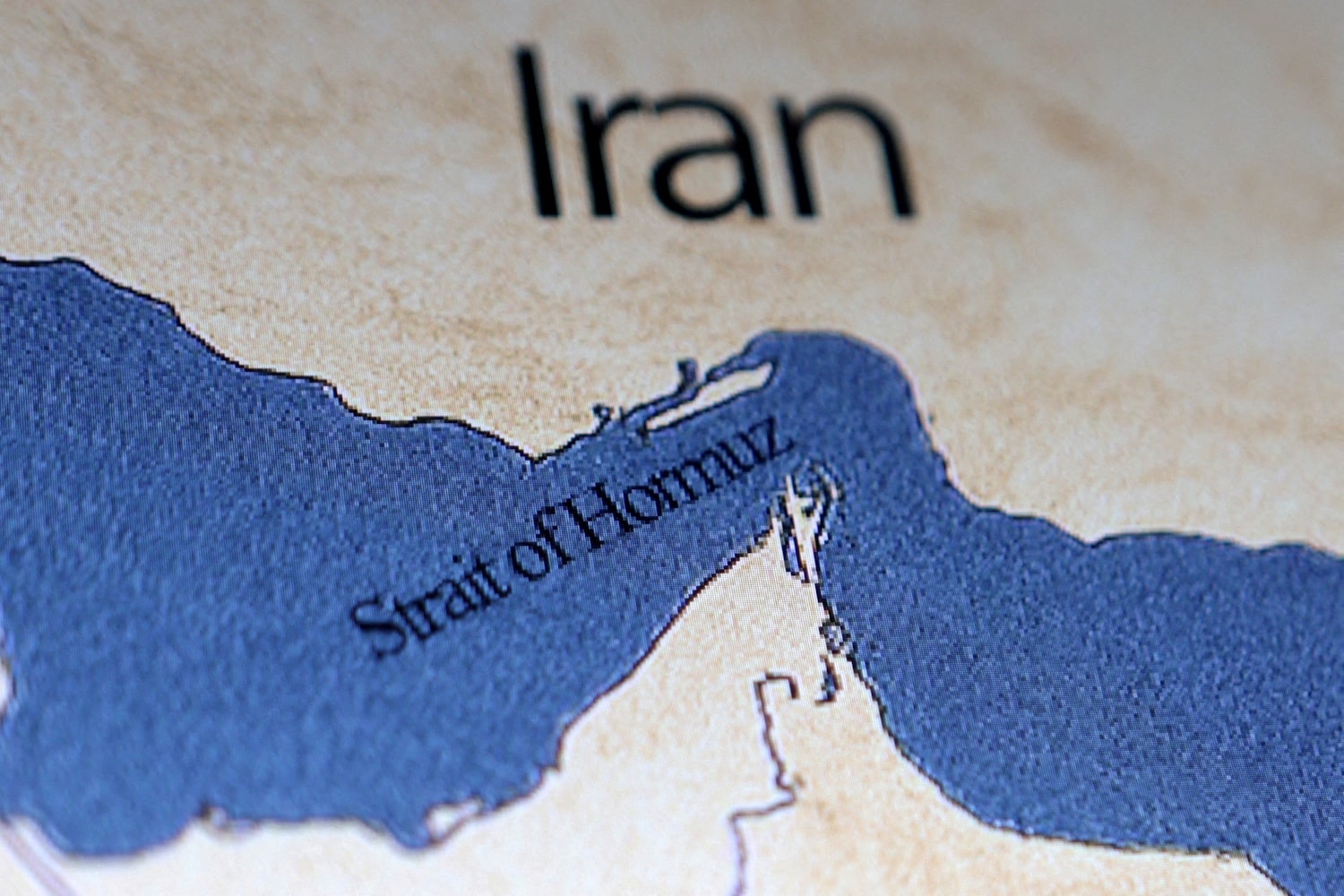
Iran’s maritime strategy operates on the principle of asymmetric attrition. Unlike a traditional blue-water navy designed for power projection, the Islamic Revolutionary Guard Corps Navy (IRGCN) is optimized for area denial within the Persian Gulf's unique geography. The Strait of Hormuz is not a singular gate; it is a complex navigation environment where the actual shipping lanes—the Traffic Separation Scheme (TSS)—consist of two two-mile-wide channels separated by a two-mile buffer zone.
The technical feasibility of a total blockade is often overestimated by generalist media and underestimated by military optimists. A functional "shutdown" relies on three specific operational pillars:
- Saturation via Swarming: Utilizing hundreds of fast inshore attack craft (FIAC) armed with short-range missiles and torpedoes to overwhelm the Aegis Combat Systems of escorting destroyers.
- The Mine Menace: Deploying bottom-dwelling, acoustic, and magnetic influence mines. These are difficult to detect in the silt-heavy, shallow waters of the Strait and require slow, vulnerable minesweeping operations to clear.
- Shore-to-Ship Integration: Leveraging the rugged terrain of the Musandam Peninsula and the Iranian coastline to hide mobile Anti-Ship Cruise Missile (ASCM) batteries, such as the Noor or Qader systems, which can strike targets across the entire width of the Strait.
The Economic Cost Function of Closure
The Strait of Hormuz facilitates the passage of approximately 20% of the world's total oil consumption and nearly 25% of global liquefied natural gas (LNG). However, the "cost" of a shutdown is not a flat rate. It is a dynamic function of global spare capacity and the availability of bypass infrastructure.
The primary bypass mechanisms include:
- The East-West Pipeline (Saudi Arabia): Can transport roughly 5 million barrels per day (bpd) to the Red Sea, though its operational capacity is often lower than its nameplate capacity.
- The Abu Dhabi Crude Oil Pipeline (UAE): Capable of moving 1.5 million bpd to the port of Fujairah, bypassing the Strait entirely.
Even with these diversions, a full interdiction would remove roughly 12 to 15 million bpd from the global market. The immediate effect is not just a shortage of physical molecules but a catastrophic spike in "war risk" insurance premiums. When tankers cannot secure insurance, the flow of oil stops even if the missiles aren't flying. This "paper blockade" is often more effective and less legally fraught for Iran than a physical one.
The Enemy Filter Logic
Tehran’s statement that the Strait is closed only to "enemies" represents a shift from total interdiction to "targeted maritime discrimination." This is a sophisticated legal and tactical maneuver. By claiming the right to inspect or block vessels based on their flag state or destination, Iran attempts to bypass the 1982 UN Convention on the Law of the Sea (UNCLOS), specifically the right of "transit passage."
Iran argues that since it has signed but not ratified UNCLOS, it is only bound by the older 1958 Convention on the Territorial Sea, which allows for "innocent passage" that a coastal state can suspend if deemed prejudicial to its security. This creates a legal gray zone where Iran can harass US-aligned vessels while allowing Chinese or Russian tankers to pass, thereby fracturing the international coalition necessary to enforce freedom of navigation.
Escalation Ladders and the Ceasefire Denial
The denial of seeking a ceasefire is a standard component of "Resistance Axis" signaling. In the context of game theory, a party that signals it is not seeking peace increases the perceived "cost of conflict" for its opponent. If the West believes Iran is willing to endure total economic isolation or kinetic strikes without backing down, the threshold for Western intervention rises.
The escalation ladder in the Strait typically follows a predictable sequence:
- Phase I: Rhetorical threats and naval exercises.
- Phase II: Covert sabotage or "limpet mine" attacks on stationary tankers (as seen in 2019).
- Phase III: Seizure of commercial vessels under the guise of "regulatory violations" or "environmental concerns."
- Phase IV: Direct kinetic engagement with military escorts or the deployment of large-scale minefields.
Iran is currently hovering between Phase II and III. Moving to Phase IV represents a "suicide strategy" because it would trigger the destruction of Iran's energy infrastructure—the very thing the blockade is meant to protect. Iran's oil exports rely on the Kharg Island terminal, which is highly vulnerable to retaliatory strikes.
The Logistics of Mine Warfare
Mine warfare is the most cost-effective tool in the Iranian arsenal. A single "dumb" mine costing a few thousand dollars can disable a billion-dollar tanker or damage a multi-billion dollar destroyer.
The difficulty for the US Fifth Fleet lies in the "clearance rate." Modern Mine Countermeasures (MCM) are painstaking. Every square mile must be scanned. If Iran sows a field of 1,000 mines, even with 99% clearance, the remaining 10 mines keep the insurance rates at prohibitive levels. This reality forces the US into a "proactive" rather than "reactive" stance—meaning the US must likely strike Iranian mine-laying vessels and storage facilities before the mines enter the water.
Strategic Bottlenecks: The Shallow Water Constraint
The Persian Gulf has an average depth of only 50 meters. This shallow environment negates many of the advantages of nuclear-powered attack submarines (SSNs), which prefer deep water for acoustic masking. Conversely, it empowers Iran’s Ghadir-class midget submarines. These small, diesel-electric boats are exceptionally quiet when operating on batteries and can "sit on the bottom" to wait for targets, making them nearly invisible to active sonar in a noisy littoral environment.
The thermal layers and high salinity of the Gulf further degrade sonar performance. In the summer, the water becomes so warm that acoustic signals refract sharply, creating "shadow zones" where a submarine or a mine can remain undetected. Tactical superiority in the Strait is therefore a matter of sensor fusion—integrating aerial drones, surface unmanned vessels (USVs), and fixed seabed sensors to overcome the environmental limitations.
The Role of Autonomous Systems
The US Navy’s Task Force 59 has fundamentally changed the monitoring of the Strait. By deploying a "mesh network" of persistent, solar-powered autonomous surface vessels (like the Saildrone or MARTAC T-12), the US can maintain a 24/7 "digital eyes-on" the Iranian coast.
This reduces the "ambiguity window" Iran relies on for Phase II and III operations. When every movement of the IRGCN is live-streamed to a command center in Bahrain, the ability to conduct "unattributed" sabotage vanishes. This technological shift forces Iran to either de-escalate or move toward more overt, and thus more dangerous, kinetic actions.
Analyzing the Ceasefire Rhetoric
The refusal to seek a ceasefire should be interpreted through the lens of domestic political consumption and regional proxy management. For the Iranian leadership, appearing to sue for peace under Western pressure is a sign of systemic weakness that could embolden internal dissent. Structurally, the denial serves to:
- Maintain High Oil Prices: Any hint of de-escalation lowers the geopolitical risk premium, reducing the revenue Iran receives from its "ghost fleet" oil exports to China.
- Ensure Proxy Loyalty: Groups like the Houthis or Hezbollah rely on Tehran’s "unyielding" stance to justify their own high-risk operations.
- Bargaining Positioning: In any future back-channel negotiations, starting from a position of "no ceasefire" allows Iran to trade a "return to the status quo" for significant sanctions relief.
Risk Assessment and Market Implications
The probability of a permanent, 100% closure of the Strait of Hormuz remains low (estimated <5%) due to the mutual assured destruction of the regional economies involved. However, the probability of "intermittent disruption"—48-hour closures, localized seizures, or increased "inspection" harassment—is significantly higher (>40%) in the current geopolitical climate.
For global stakeholders, the primary risk is not the physical loss of oil but the "volatility of uncertainty." Market participants must quantify the following variables:
- The "Tanker War" Multiplier: The rate at which insurance premiums rise per confirmed kinetic event.
- The SPR Buffer: The extent to which the US Strategic Petroleum Reserve can mitigate a 10 million bpd shortfall.
- China’s Tolerance: As the primary buyer of Iranian oil, China is the only actor with the economic leverage to "veto" an Iranian blockade. If Iran shuts the Strait, it shuts its own financial lifeline to Beijing.
Strategic Action Plan
The strategic move is to decouple the "rhetorical threat" from the "operational reality." Observers should ignore the high-level political denials of ceasefires and focus instead on IRGCN vessel movements near Bandar Abbas and the deployment patterns of midget submarines.
The critical metric to watch is the "Escort Requirement." If commercial shipping begins moving to a formal naval convoy system, it signals that the "paper blockade" has transitioned into a "functional blockade." At that point, the cost-benefit analysis for a preemptive strike on Iranian ASCM batteries becomes the only logical path for Western powers to maintain the global energy supply chain. Monitor the deployment of US MCM (Mine Countermeasures) assets to the region; their arrival is the most reliable lead indicator of an expected escalation in the Strait.