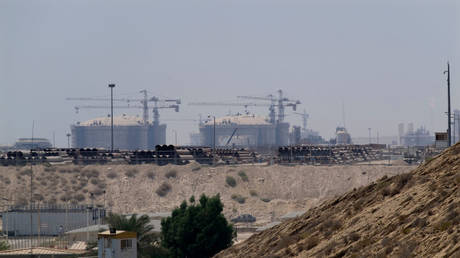
The headlines are screaming about a "tipping point" in the Persian Gulf. Trump is rattling the saber over Iranian gas fields, Moscow is issuing grim warnings of a global energy collapse, and the markets are twitching like a nervous habit. It’s a perfect storm of recycled fear.
Here is the truth: the Arash/Dorra gas field isn’t the fuse for World War III. It is a commercial negotiation masquerading as a military standoff. While the mainstream media obsesses over the "threat" to global supply, they are missing the actual structural shift in how energy dominance is bought and sold in 2026. Discover more on a similar topic: this related article.
The "lazy consensus" suggests that a conflict over this patch of the North Pars field will send Brent crude to $150 and freeze Europe. That narrative is a relic of 1970s thinking. It ignores the reality of modular LNG, the resilience of the Permian Basin, and the fact that Iran’s aging infrastructure couldn't flip the global switch even if they wanted to.
The Arash Field Myth
The dispute between Iran, Kuwait, and Saudi Arabia over the Arash (Dorra) field is decades old. Seeing it as a sudden "escalation" is like being surprised that the tide comes in. The competitor's narrative suggests Trump’s rhetoric is the catalyst for a new era of instability. In reality, rhetoric is the only tool left when the physical leverage of Middle Eastern gas is waning. More reporting by Forbes highlights related views on the subject.
Iran claims 40% of the field. Kuwait and Saudi Arabia claim it in its entirety. Moscow plays the role of the concerned "mediator" while secretly praying for a disruption that would drive up the price of their own sanctioned Urals blend.
If you look at the technical data, the Arash field holds an estimated 20 trillion cubic feet of gas. Sounds massive, right? In the context of the global market, it’s a rounding error compared to the South Pars/North Dome field shared by Iran and Qatar, which holds 1,800 trillion cubic feet.
Staking a "tipping point" on Arash is like claiming a fight over a single gas station will collapse the interstate highway system.
Why Moscow Wants You Scared
Moscow’s "warning" isn't a diplomatic courtesy; it's a marketing campaign. For Russia, the "tipping point" isn't a physical reality—it’s a psychological one. By amplifying the threat of a Middle Eastern flare-up, Russia maintains a risk premium on every barrel and British Thermal Unit (BTU) they ship to China and India.
I have spent years watching analysts track "geopolitical risk" as if it were a weather pattern. It’s not. It’s an engineered product. When Russia warns of a tipping point, they are trying to distract from their own diminishing influence over European pipelines. They need the Persian Gulf to look like a tinderbox because their own backyard is a burnt-out shell.
The Trump Factor: Negotiating with a Sledgehammer
The mainstream analysis treats Trump’s threats as a prelude to kinetic war. This is a fundamental misunderstanding of his "maximum pressure" 2.0 strategy. These aren't war cries; they are opening bids.
By threatening the Iranian gas sector, the administration isn't aiming to blow up the wells. They are aiming to devalue the assets so much that China—Iran's primary customer—demands a steeper "risk discount." This drains Tehran’s coffers without firing a single Tomahawk missile.
It is a financial war of attrition. The goal is to make Iranian gas so "expensive" in terms of political and logistical risk that it stays in the ground.
The Logistics of the Lie
Let’s talk about the actual engineering. Iran’s gas industry is suffering from a massive "technology gap." Due to years of sanctions, they lack the compression technology required to maintain pressure in their offshore fields.
$$P_1V_1 = P_2V_2$$
The physics don't lie. As the pressure ($P$) in these reservoirs drops, the volume ($V$) of recoverable gas plummets unless you can inject massive amounts of capital and high-end Western tech back into the system. Iran doesn't have it. Russia, currently mired in its own supply chain nightmares, can't give it to them.
Even if Iran "wins" the rights to Arash, they can’t efficiently extract it. They are fighting over a treasure chest they don't have the key to open.
The Permian Shield
The reason a Persian Gulf flare-up no longer breaks the world is the American shale patch. In the old world, a threat to the Strait of Hormuz meant lights out in Tokyo and London. Today, the U.S. is the world’s largest LNG exporter.
Every time a politician or a Moscow mouthpiece warns of a supply crunch, they are ignoring the fact that U.S. export terminals are operating at record capacities. The "tipping point" was already reached five years ago, but it tipped in favor of West Texas, not Tehran.
The Failure of "People Also Ask"
If you search for "Will Iran close the Strait of Hormuz?", you get a list of military scenarios that read like Tom Clancy fan fiction. This is the wrong question.
The right question is: "Why would Iran destroy its own only exit for the little oil it manages to sell?"
Closing the Strait is the "suicide vest" of geopolitics. You only do it once, and you die in the process. Iran’s leadership isn't interested in martyrdom; they are interested in survival and state-sponsored survival. They use the threat of closure to gain concessions, but the moment they actually do it, they lose all leverage.
The Actionable Reality for Investors
Stop trading the headlines. When you see a "Moscow warns" or "Trump threatens" alert, look at the spread between Henry Hub (US) and JKM (Asia) gas prices. If that spread isn't widening, the "tipping point" is a ghost.
I’ve seen traders lose fortunes betting on "imminent" Middle East wars that never materialized because they didn't understand that the cost of war for these regimes now far exceeds the value of the gas they are fighting over.
We are living in an era of "Permanent Low-Level Friction." It’s loud, it’s messy, and it’s great for cable news ratings, but it rarely results in a structural break in supply.
The Hidden Cost of the Status Quo
The real danger isn't a sudden explosion. It’s the slow, grinding death of investment in the region. By keeping the Arash field in a state of perpetual "threat," we ensure that no major energy company—Total, Shell, or Exxon—will touch it with a ten-foot pole.
This suits the U.S. just fine. It keeps Iranian assets stranded. It suits the Saudis just fine. It keeps a competitor offline. The only losers are the Iranian people and the analysts who still believe these headlines represent a shift in the global order.
The Arash field isn't a tipping point. It’s a theater stage. The actors are screaming, the fake blood is ready, but the audience should know by now that the play always ends the same way: with the curtains closing and the energy markets moving on to the next manufactured crisis.
Stop looking at the missiles and start looking at the balance sheets. The war for energy dominance isn't being fought with tankers; it's being fought with interest rates, technology sanctions, and export permits.
The Persian Gulf is no longer the center of the energy universe. It’s the retirement home of 20th-century geopolitical tropes.
Would you like me to analyze the specific impact of the latest U.S. LNG export permits on the European gas price forecast for 2027?

![[Write a natural, opinionated title. No colons. No brackets. No AI clichés.]](https://cms.patrika.com/wp-content/uploads/2026/03/immigrant-truck-drivers.webp)