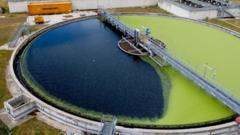
The recent data suggesting a nearly 50% drop in sewage spills across England for 2025 is not the victory for environmental management that water company press releases would have you believe. It is a statistical fluke gifted by the clouds. While the industry is quick to point toward its recent infrastructure investments, the reality remains that the primary driver for this reduction was a significant decrease in annual rainfall compared to the record-breaking deluges of previous years. When it doesn't rain, the Victorian-era combined sewer systems don't overflow as frequently, because they aren't being pushed past their capacity.
This creates a dangerous illusion of progress. For years, the public has been told that the massive scale of sewage discharges—where untreated waste is dumped directly into rivers and coastal waters—is a complex problem requiring decades of investment and patience. Yet, when the numbers drop simply because the weather was drier, it reveals the fragility of the entire narrative. The infrastructure has not fundamentally changed; the environment just stopped testing it for twelve months.
The Geography of Disrepair
The British water network is a relic of an era that never anticipated a population of 67 million people or the intensity of modern weather patterns. Our cities rely on combined sewers that collect both rainwater and domestic sewage in the same pipes. During heavy rain, these pipes fill up. To prevent waste from backing up into people's kitchens and bathrooms, water companies are permitted to use "storm overflows"—safety valves that release the excess into the nearest waterway.
The problem is that these valves have become a primary method of waste management rather than an emergency measure. In 2024, the frequency of these spills reached an all-time high, sparking a national outcry. The 2025 reduction, therefore, is being viewed through a skewed lens. It is a return to a "bad" baseline from a "disastrous" peak.
If we look at the actual volume of investment relative to the dividends paid out to shareholders over the last thirty years, a different story emerges. While the companies argue that they are spending billions on "super-sewers" and storage tanks, the rate of replacement for aging pipes remains below 0.1% per year. At this pace, it would take a millennium to modernize the network. The 2025 data isn't a sign of a turning tide; it’s a temporary reprieve that risks breeding complacency among regulators.
The Climate Gamble
Relying on dry weather as a solution to environmental pollution is a losing bet. Meteorological data shows that while 2025 was comparatively dry, the long-term trend for the UK is toward more frequent and more intense "convective" rainfall events. These are short, sharp bursts of rain that can overwhelm a drainage system in minutes, regardless of whether the preceding weeks were dry.
The industry’s defense often rests on the idea that they cannot control the weather. This is true, but they can control the resilience of the system. By focusing on the 2025 "halving" of spills, the sector is avoiding the harder conversation about why the system is so sensitive to rainfall in the first place. Much of the investment currently being touted is "end-of-pipe" solutions—building bigger tanks to hold more sewage. This is a reactive strategy.
A proactive strategy would involve "un-plumbing" our cities. This means separating rainwater from sewage at the source through sustainable drainage systems, green roofs, and permeable pavements. This prevents the rainwater from ever entering the sewer system in the first place. However, this is expensive and requires coordination with local planning authorities, making it less attractive to companies looking for quick wins to satisfy the Office of Water Services (Ofwat).
The Financial Plumbing
To understand why 2025 is being framed as a success, you have to follow the money. Many of the UK's largest water companies are currently facing a dual crisis of massive debt and public fury. Thames Water, for instance, has spent much of the last year teetering on the edge of a financial abyss. For these entities, the reduction in spills is a much-needed PR shield.
It allows executives to argue that their current "turnaround plans" are working, which in turn helps them lobby for higher consumer bills. Ofwat is currently reviewing requests from water companies to increase bills by an average of 40% over the next five years. They claim this money is essential for environmental improvements. But if the 2025 spill reduction was largely weather-driven, it weakens the argument that current spending is already delivering results.
We are seeing a pattern where the "success" is attributed to management, while the "failure" is attributed to "extreme weather events." This asymmetry is a hallmark of corporate deflection. When the next wet year arrives—and it will—the spill numbers will inevitably surge again, and the industry will once more point to the rain as an act of God that they cannot be expected to manage.
Monitoring or Managing
One of the genuine improvements cited in 2025 is the near-total coverage of Event Duration Monitors (EDMs) across the network. Almost every storm overflow in England is now monitored, providing more data than ever before. This transparency is a double-edged sword for the industry. On one hand, they can claim they are being more honest with the public. On the other, the data is now so granular that it is harder to hide the "dry spills"—overflows that occur even when there hasn't been significant rain.
Dry spills are strictly illegal. They indicate that a sewer is blocked, poorly maintained, or simply too small for the local population, regardless of weather. Preliminary analysis of the 2025 data suggests that while rain-related spills are down, these illegal dry spills have not seen a corresponding decrease. This suggests that the underlying health of the network is still deteriorating. The "halved" statistic is a mask over a face that is still very much in trouble.
The Regulation Gap
The Environment Agency (EA) and Ofwat have been under fire for being too "cozy" with the companies they are meant to police. The EA’s budget for enforcement was slashed during the 2010s, leading to a collapse in the number of site inspections and prosecutions. While there has been a recent push to increase fines and even introduce criminal liability for executives, the enforcement mechanism is still playing catch-up.
A halving of spills in a dry year should not be a cause for celebration at the EA; it should be an opportunity to conduct forensic audits of the overflows that still spilled. If an overflow is triggering during a dry year, it is a smoking gun of infrastructure failure. Instead, the political narrative is drifting toward a "job well done" tone that ignores the structural deficit.
The public's trust in the water industry is at an all-time low. People are no longer just concerned about their bills; they are angry about the state of their local rivers and beaches. They see the "halved" statistic and compare it to their own lived experience—the "do not swim" signs at the coast and the grey fungus in the local brook. The disconnect between the data and the reality on the ground is where the true story lies.
A New Metric for Success
If we want to measure real progress, we need to stop looking at "number of spills" as the primary metric. It is too easily manipulated by the weather. Instead, we should be looking at the total volume of sewage discharged and the impact on the nutrient levels in our rivers. A single spill that lasts for ten hours can be more damaging than ten spills that last for ten minutes, yet the current reporting often treats them with equal weight in the headlines.
Furthermore, we need to measure "resilience capacity." How many millimeters of rain can a specific catchment handle before it overflows? That is a measure of engineering, not a measure of the forecast. If that capacity isn't increasing year-on-year, then no amount of dry weather can be claimed as a management victory.
The 2025 data is a reprieve, not a recovery. The industry has been given a "dry run" to show it can handle its responsibilities, and it has largely used the time to congratulate itself rather than accelerate the hard work of decoupling our waste from our waterways.
The next time you see a headline about sewage spills dropping, look at the sky. If it’s blue, the water companies are just getting lucky. True success will only be visible when the rain is pouring, the wind is howling, and our rivers remain clean. Until then, any reduction in spills is merely a lull in a long-running crisis of our own making.
Demand that your local water company provides the "spill-to-rainfall ratio" for your area. This metric removes the "weather excuse" and reveals whether the infrastructure is actually improving or just benefiting from a sunny day.