The screen glows in the humid darkness of a Dubai apartment. It is a small light, but it carries the weight of a thousand promises. A man, let’s call him Arjun, watches the view counts climb. Each flicker of the digit is a hit of dopamine, a tiny reassurance that he is seen, that he is relevant, and perhaps, that he is finally making it in a city built on the very idea of "making it." He isn't a criminal in his own mind. He is a "content creator." He is an entrepreneur of the attention economy.
But the attention he has harvested is about to turn into a very different kind of scrutiny.
The United Arab Emirates recently moved with surgical precision to dismantle a network that many residents didn't even realize was a threat. They ordered the arrest of 35 individuals—19 of them Indian nationals—for the crime of spreading misleading content online. To the casual scroller, it looked like just another viral wave. To the state, it was a coordinated assault on the public’s right to the truth.
Justice is rarely as loud as the lies that precede it.
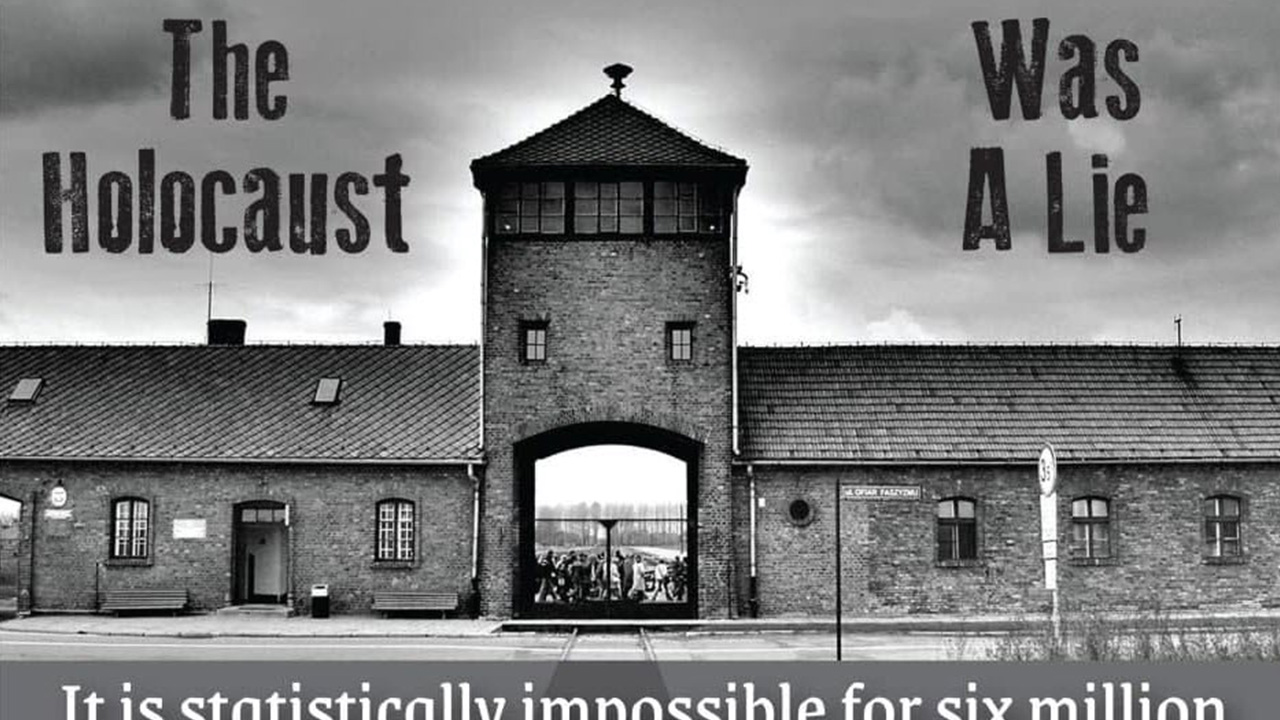
The charges weren't just about "fake news" in the abstract sense we’ve grown numb to in the West. This was about a specific, calculated effort to manipulate the public psyche. The group stands accused of creating an environment of fear and misinformation, using the digital equivalent of smoke and mirrors to distort reality for a profit. They didn't just post a wrong date for a festival; they manufactured narratives designed to destabilize the sense of security that functions as the bedrock of the UAE's social contract.
Imagine a digital marketplace where the currency isn't the Dirham, but the gasp. The shock. The outrage.
In this marketplace, the truth is a heavy, slow-moving commodity. It requires fact-checking, patience, and a nuanced understanding of local laws. It’s expensive to produce and boring to consume. A lie, however, is aerodynamic. It’s built for speed. It skips across the surface of the internet, propelled by the friction of human anxiety. When these 35 individuals hit "publish," they weren't just sharing an opinion. They were engaging in a form of psychological arbitrage, trading on the vulnerability of their audience to build their own digital empires.
The UAE’s Federal Prosecution for Combating Rumors and Cybercrimes didn't act on a whim. The investigation revealed a sophisticated operation. This wasn't a group of teenagers playing pranks from their bedrooms. It was a structured attempt to bypass the safeguards of a society that prides itself on order.
The law here is clear, even if the digital world feels lawless. Under the UAE’s Federal Decree-Law No. 34 of 2021, the penalties for spreading rumors and false information are some of the most stringent in the world. It’s a message written in the ink of modern governance: if you use the infrastructure of the future to sow the chaos of the past, there will be a reckoning.
Consider the ripple effect of a single misleading post.
A hypothetical mother in Sharjah reads a fabricated report about a public health crisis or a change in residency laws. Her heart rate spikes. She calls her husband. He tells his coworkers. Within an hour, a thousand people are living in a reality that doesn't exist. This is the "invisible stake." We often talk about cybercrime in terms of bank accounts and passwords, but the most dangerous hack is the one that targets the human heart. It’s the theft of peace of mind.
The demographic breakdown of the arrests—19 Indians among the 35—highlights a painful irony. The Indian diaspora has been a cornerstone of the UAE’s growth for decades. They are the doctors, the engineers, the builders, and the teachers who have helped turn a desert port into a global metropolis. To see a small subset of that community weaponize social media against the very society they inhabit is a tragedy of missed perspective. It stains the reputation of a community that is defined by its hard work and loyalty.
Why do they do it?
The answer is as old as the printing press but as fast as 5G. Money.
Monetization platforms reward engagement, and nothing engages like a crisis. When you are paid by the view, the incentive to be accurate vanishes. The incentive to be "first" or "most shocking" becomes an addiction. These creators found themselves in a feedback loop where the more they exaggerated, the more they were rewarded by the algorithm. They became slaves to a machine that feeds on the very fabric of social cohesion.
But the algorithm doesn't provide legal counsel.
The UAE's legal system is designed to be a firewall. In a region that has seen how quickly digital misinformation can lead to physical unrest, the government views the integrity of the internet as a matter of national security. They aren't just protecting "the news"; they are protecting the quiet of the streets, the stability of the economy, and the trust that exists between the government and its residents.
Many of those arrested likely thought they were untouchable. They thought that because their words were virtual, their consequences would be too. They were wrong. The transition from a digital "like" to a physical handcuff is a short, cold journey.
The problem isn't the technology. The problem is our relationship with it. We have been conditioned to believe that if something is on our screen, it is worthy of our attention. We have forgotten how to be skeptics. We have traded our critical thinking for the convenience of a scroll.
The 35 individuals now facing the weight of the UAE's judicial system are a warning. They are the human cost of a culture that values "content" over "truth." They are a reminder that in the digital age, a keyboard can be as dangerous as a weapon, and a post can be as damaging as a riot.
But there is a deeper layer to this story. It’s about the responsibility of the audience.
Every time we share a sensationalist headline without verifying it, we are the oxygen that allows the fire of misinformation to burn. We are the silent partners in the crime. The UAE authorities are doing their part to purge the system of bad actors, but the ultimate solution lies in the hands of the person holding the phone. It lies in the pause. The second of hesitation before we hit "share."
That pause is where our humanity lives.
As the legal proceedings begin, the apartments where these posts were crafted will remain quiet. The glow of the screens has been extinguished. The view counts have frozen. In the silence that follows, there is an opportunity for a different kind of narrative to emerge. It’s a story not of clicks and viral fame, but of digital citizenship and the realization that in a connected world, our words are our bond.
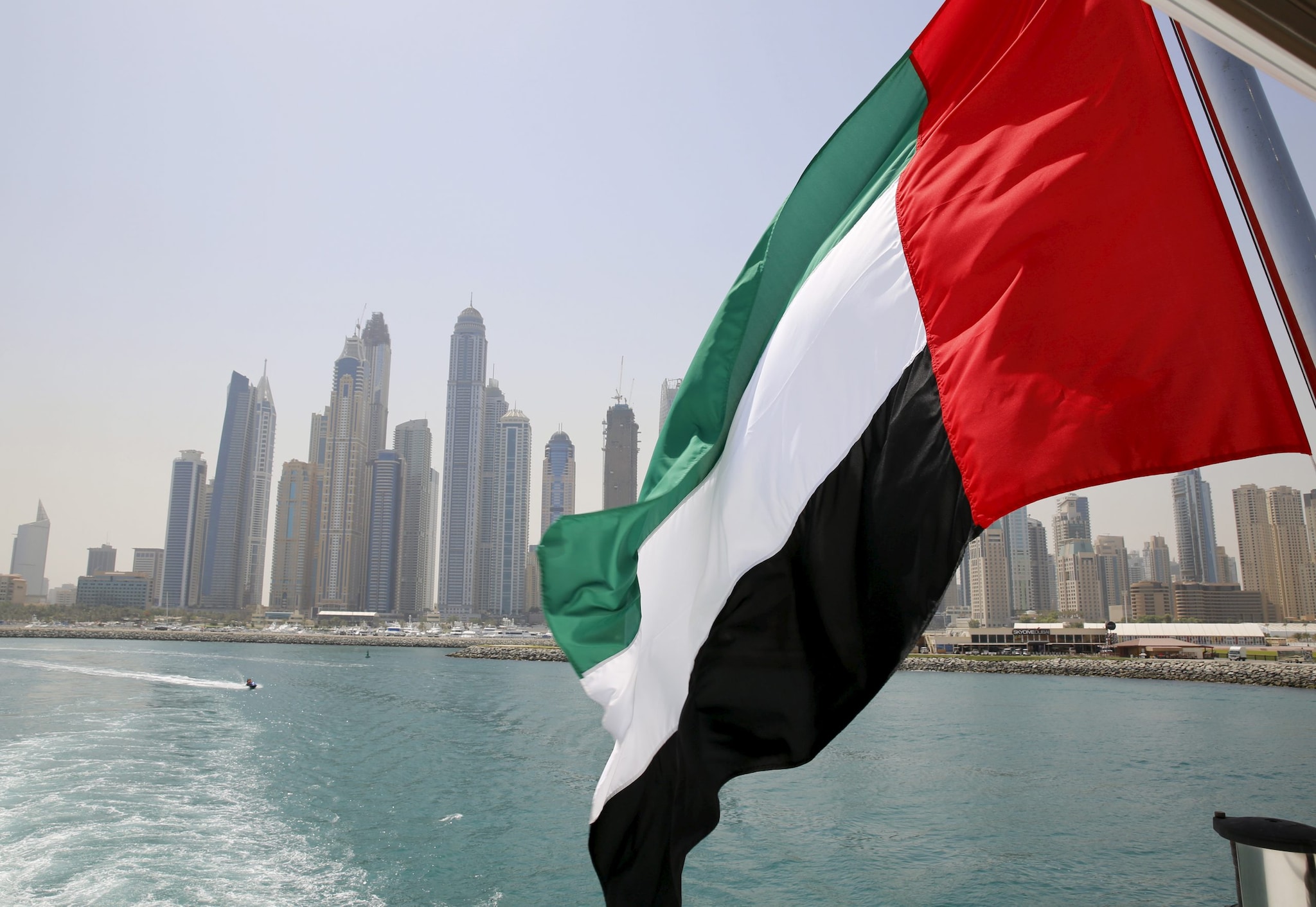
The sun rises over the Burj Khalifa, casting a long, sharp shadow across the city. The desert wind brushes against the glass of the skyscrapers, indifferent to the dramas playing out on the servers below. The city moves forward, faster than ever, built on ambition and the rule of law.
But for 35 people, the world has suddenly become very small, and the price of a single, misleading click has become impossibly high.
A screen is just a mirror. If we don't like what we see, we can't just blame the reflection. We have to look at who is holding the glass.