The United Nations Security Council has transitioned from a peacekeeping body into a high-stakes morgue for international law. UN Secretary-General António Guterres recently broke the unspoken rule of his office by admitting what most world leaders whisper in private: the Council is no longer just ineffective; it is structurally incapable of functioning. The core of this rot is the veto power held by the five permanent members—the United States, Russia, China, France, and the United Kingdom. This mechanism, designed in 1945 to prevent another world war by ensuring great power buy-in, has instead become a tool of strategic paralysis that grants immunity to aggressors and silences the victims of modern conflict.
When a permanent member (P5) uses its veto, the gears of global justice grind to a halt. It does not matter if the rest of the world stands in consensus. It does not matter if a humanitarian catastrophe is unfolding in real-time. The veto allows a single nation to overwrite the collective will of the international community, effectively legalizing inaction. Guterres’ admission highlights a grim reality where the UN is forced to watch from the sidelines while the very rules it was built to uphold are shredded by the hands that signed them.
The Architecture of Impunity
The veto was never meant to be a daily instrument of foreign policy. It was a "break glass in case of emergency" measure intended to keep the nuclear powers at the table. However, the Cold War logic that birthed this system has curdled into something far more dangerous. In the current geopolitical climate, the veto is used as a shield for allies and a sword against enemies, regardless of the human cost.
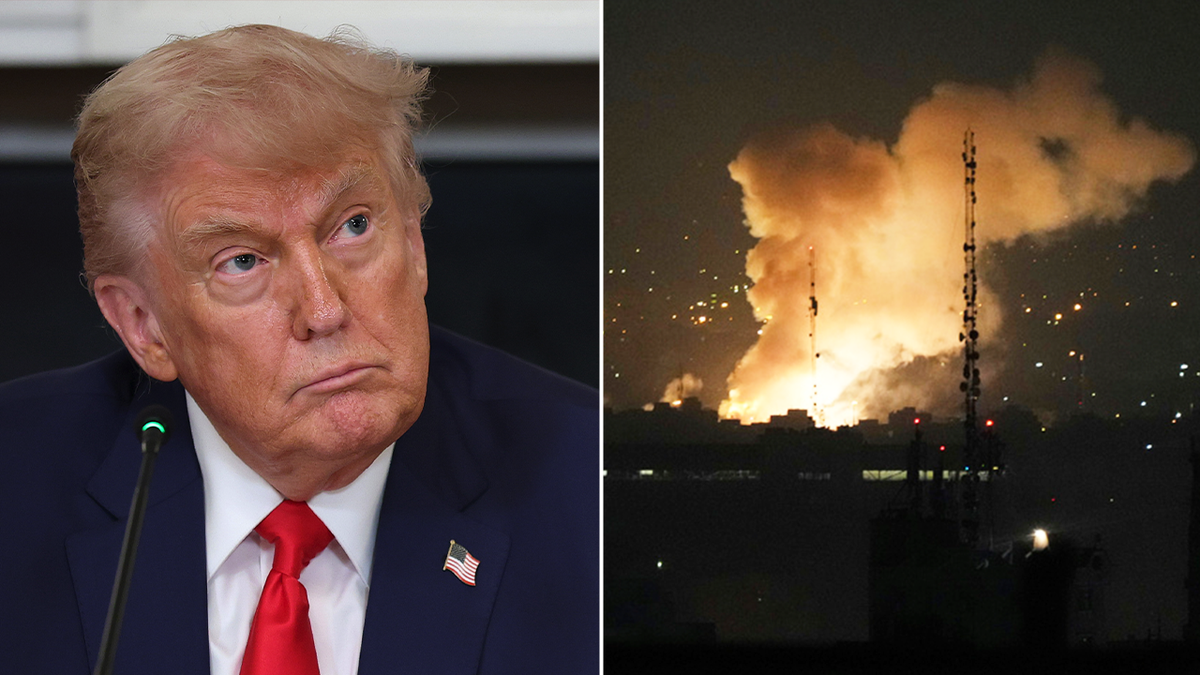
Take the current gridlock over Ukraine and Gaza. These are not just diplomatic disagreements; they are systemic failures. In the case of Ukraine, Russia sits as a permanent member with the power to veto any resolution that condemns its own invasion. It is a literal case of the defendant acting as the judge. In Gaza, the United States has repeatedly used its veto to block or soften resolutions calling for immediate ceasefires, citing the need for private diplomacy over public mandates. In both instances, the Security Council becomes a theater of the absurd where the most powerful nations use procedural technicalities to bypass moral obligations.
This creates a vacuum of authority. When the Council fails to act, power shifts to the General Assembly, which can pass resolutions but lacks the "teeth" to enforce them. A General Assembly vote is a moral barometer; a Security Council resolution is a binding law. By weaponizing the veto, the P5 have ensured that international law is only applicable to the weak, while the strong remain untouchable.
The Myth of Representation
The Security Council is a frozen snapshot of 1945. It reflects a world that no longer exists, dominated by the victors of a war fought eighty years ago. Entire continents are missing from the permanent roster. Africa, with over 1.4 billion people, has no permanent seat. Latin America is absent. India, the world’s most populous nation and a rising economic titan, is relegated to the rotating membership, where it has no veto and limited long-term influence.
This lack of representation is not just an ego blow to emerging powers; it is a crisis of legitimacy. When the "Global South" looks at the Security Council, they do not see a fair arbiter. They see an exclusive club of former colonial masters and nuclear states dictating terms to the rest of the planet. This resentment is fueling a move away from the UN-centered world order. Nations are increasingly looking toward alternative blocs like the BRICS or regional security alliances because the UN has proven it cannot protect them if their interests clash with a P5 member.
Guterres is sounding the alarm because he knows the UN’s brand is dying. If the organization cannot evolve to reflect the current distribution of global power, it will go the way of the League of Nations. It will continue to exist on paper, but it will have no relevance in the streets where wars are actually fought.
The Cost of Silence
The human wreckage left behind by veto-induced paralysis is staggering. In Syria, years of Russian and Chinese vetoes blocked humanitarian corridors and investigations into chemical weapons use. In various African conflicts, the lack of P5 interest has led to "benign neglect," where the Council simply refuses to put the necessary resources or mandates behind peacekeeping missions.
The veto also kills the incentive for negotiation. If a P5 member knows they can simply kill a resolution, they have no reason to compromise. Diplomacy requires leverage, and the veto removes all leverage from the non-permanent members. The ten rotating members often spend months crafting sophisticated, middle-ground solutions only to see them incinerated in seconds by a single "no" vote. This creates a culture of futility within the UN headquarters.
The Liechtenstein Experiment
There have been minor attempts at reform, most notably the "Veto Initiative" led by Liechtenstein in 2022. This rule requires any permanent member who casts a veto to appear before the General Assembly within ten days to justify their decision. While this adds a layer of public shame, it does nothing to reverse the actual veto. It is an attempt to use "soft power" against a "hard power" mechanism. Predictably, it has done little to slow the frequency of vetoes. The P5 members are generally unbothered by having to explain their actions to a room full of diplomats who already know the truth: the veto is about power, not logic.
Why Reform is Structurally Impossible
Here is the bitter irony of the UN Charter: to change the rules of the Security Council, you need the approval of the Security Council. Specifically, you need all five permanent members to agree to any amendment that would strip them of their power. Asking the P5 to give up the veto is like asking a king to voluntarily sign his own abdication papers. It simply does not happen in the realm of realpolitik.
Reform proposals usually fall into three categories:
- Expansion of Permanent Seats: Adding countries like Germany, Japan, India, and Brazil. The problem? Existing P5 members often block their rivals (e.g., China blocking Japan or India).
- Veto Restriction: Limiting the use of the veto in cases of mass atrocities or war crimes. The problem? Defining what constitutes a "mass atrocity" becomes a subject of—you guessed it—further vetoes.
- Abolition: Scrapping the veto entirely. The problem? The U.S., Russia, and China would likely leave the UN altogether, destroying the organization's primary goal of keeping the major powers in the same building.
The Rise of Parallel Diplomacy
Because the UN is paralyzed, we are witnessing the "Balkanization" of global security. Instead of one central body managing peace, we see fragmented efforts. The U.S. builds "coalitions of the willing." Russia utilizes the CSTO. China expands its influence through the Shanghai Cooperation Organisation. While these groups can be effective, they lack the universal mandate that gives the UN its unique weight.
When the world moves toward these siloed alliances, the risk of a miscalculation between great powers increases. The Security Council was meant to be the safety valve where these powers could vent and resolve conflicts before they escalated to total war. Without a functioning Council, that safety valve is stuck shut. The pressure is building, and the Secretary-General’s "blunt admission" is a signal that he can no longer hide the cracks in the foundation.
The UN’s current trajectory is a slow descent into a high-end debating society. It remains unparalleled at delivering food aid, managing refugee camps, and coordinating global health responses through its various agencies. But on the core mission of "saving succeeding generations from the scourge of war," the organization is failing. The veto has turned the UN’s highest body into a monument to the status quo, protecting the interests of five nations at the expense of the other 188.
Beyond the Brink
Guterres is not a radical; he is a pragmatist who has run out of options. His public critique of the Council's structure is a desperate attempt to shame the P5 into self-regulation. But shame is a weak currency in a world dominated by nationalist "might makes right" ideologies. The Security Council was built on the assumption that the five victors of WWII would maintain a baseline of cooperation to prevent a third world war. That assumption has been proven false.
The world is now in a holding pattern. We are stuck with a 20th-century security architecture trying to manage 21st-century chaos. If the veto continues to be used as a weapon of total obstruction, the UN will not die with a bang, but with a whimper, as nations simply stop showing up to a table where the menu is always the same: stalemate, served cold.
Demand an audit of every veto cast in the last decade and ask your representative why your nation's security is being traded for a P5 member's strategic convenience.