The air in the Burj Khalifa’s observation deck doesn’t feel like the air on the ground. It is silent, filtered, and slightly pressurized, creating a thin veil between the viewer and the shimmering heat of the Arabian Peninsula. Below, the city of Dubai looks less like a miracle of engineering and more like a defiant statement written in glass and steel. But in late 2023 and the early months of 2024, as the horizon grew heavy with the smoke of regional conflict, that statement was put to its most grueling test yet.
When news of the Israel-Iran escalation flickered across the glowing screens of the Dubai International Financial Centre (DIFC), the world held its breath. History suggests that when the neighborhood catches fire, the neighbors move their furniture out. Conventional wisdom dictated a flight of capital, a cooling of the red-hot property market, and a quiet retreat of the cranes that define the skyline.
The reality was a ghost story for the pessimists.
Consider a man named Omar. He isn't a statistic, but he represents a very real demographic currently fueling the local economy. Omar is a fund manager who moved his family from Western Europe to a villa in Dubai Hills. As the geopolitical temperature rose, his colleagues in London asked if he was packing his bags. He wasn't. Instead, he was browsing listings for a larger commercial space. To Omar, and thousands like him, the volatility beyond the borders didn't make Dubai a target. It made it a vault.
Money is a nervous creature. It hates noise. It hates unpredictability. Yet, the Dubai real estate market didn't just survive the recent regional tensions; it thrived with a stubborn, almost illogical resilience. Total transaction volumes in the wake of the conflict didn't plummet. They climbed.
The Psychology of the Safe Haven
To understand why a war a few hundred miles away didn't crash the Palm Jumeirah market, you have to look past the spreadsheets. You have to look at the concept of the "Safe Haven." For decades, that title belonged to Swiss banks or Manhattan penthouses. But the world has shifted.
Dubai has spent twenty years building a brand of radical neutrality and operational excellence. When the world feels like it is spinning off its axis, there is a profound, magnetic pull toward a place where the lights stay on, the ports stay open, and the tax laws don't change overnight. The city has become a geopolitical hedge.
Investors aren't just buying square footage. They are buying an insurance policy against global chaos.
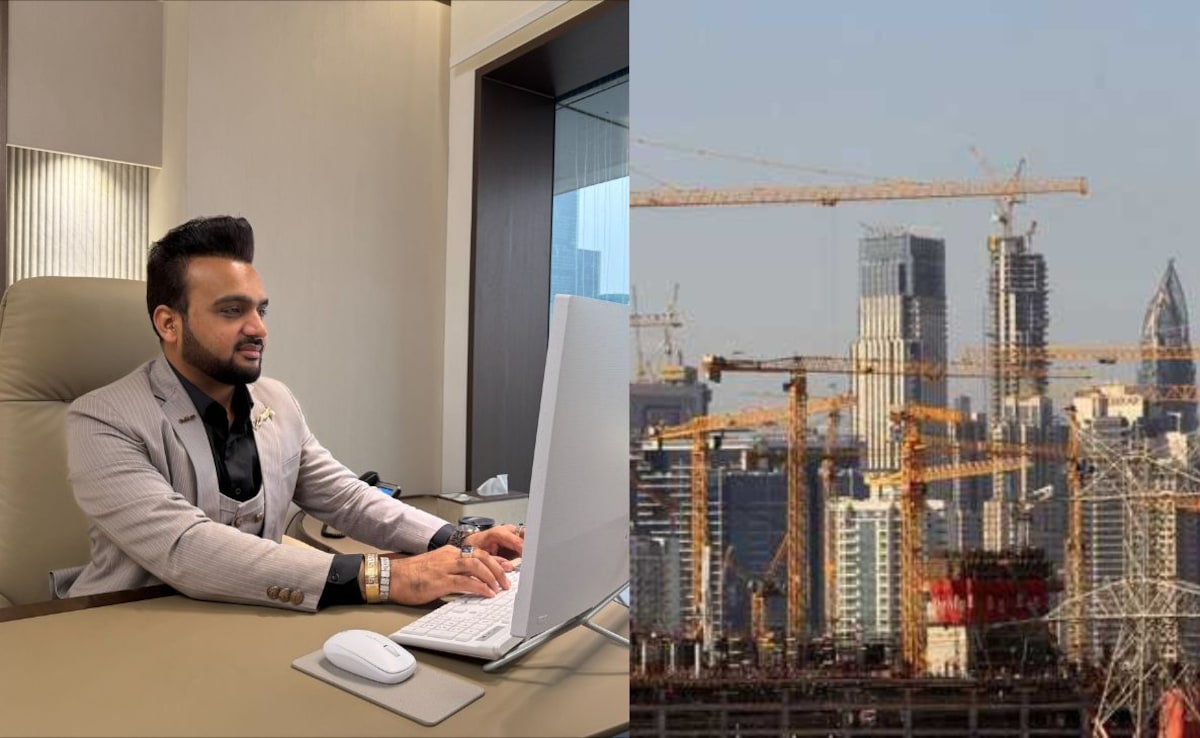
The numbers back the narrative. During the first quarter of 2024, property transactions in Dubai surged by nearly 20% compared to the previous year. This wasn't just "business as usual." It was a massive, collective vote of confidence from the global elite. While headlines screamed of regional instability, the ground reality in the Emirates was one of frantic construction and sold-out launches.
The Invisible Infrastructure of Trust
It is easy to credit the sun and the lack of income tax for this boom. That would be a mistake. The true engine is a shift in the legal and social fabric of the city.
A decade ago, a regional war might have caused a mass exodus because the people living there felt like guests. Temporary residents don't defend a market; they flee it. But the introduction of the Golden Visa—a ten-year residency permit—changed the chemistry of the population. People stopped thinking in terms of two-year contracts and started thinking in terms of decades.
When you own your home, and your residency is tied to your investment rather than a specific employer, your threshold for "panic" changes. You aren't a bystander. You are an owner.
The government’s stance on the Israel-Iran tensions remained a masterclass in diplomatic tightrope walking. By maintaining a focus on trade, de-escalation, and economic continuity, they sent a signal to the world's wealth: Your assets are safe here, regardless of the noise outside.
The Tale of Two Markets
There is a fascinating split happening within the city. The ultra-luxury segment—properties valued at over $10 million—has become almost decoupled from global economic trends. These are the "Trophy Assets."
Imagine a sprawling mansion on the fronds of the Palm. To the billionaire buyer from India, Russia, or the United States, this property is more than a home. It is a liquid asset in a jurisdiction that refuses to pick sides. In the wake of the recent conflict, these high-net-worth individuals didn't pull back. They accelerated. They saw the resilience of the UAE’s diplomatic position as a "stress test" that the country passed with flying colors.
Meanwhile, the mid-market is being driven by a different, more human force. It’s the families.
The "Zoom-boom" and the rise of remote work meant that thousands of professionals could live anywhere. They chose the desert. Why? Because while the headlines talked about missiles, the residents talked about the fact that their children could walk to the park at 9:00 PM in total safety. You cannot undervalue the power of physical safety in a world that feels increasingly dangerous.
The Myth of the Bubble
Skeptics love to use the word "bubble." They’ve been using it since 2008. They argue that the current prices are inflated by fear and that eventually, the gravity of regional politics will pull the market down.
However, the 2024 market is not the 2008 market.
Back then, the growth was fueled by rampant speculation and cheap, unchecked credit. Today, the market is significantly more cash-heavy. People are buying with their own money, not just the bank's. When a market is built on equity rather than debt, it doesn't "pop" the same way. It absorbs shocks. It bends, but it doesn't break.
The Israel-Iran conflict served as an unintended advertisement for the UAE's stability. While other regional hubs saw a dip in tourism and investment interest, Dubai's airports remained some of the busiest on the planet. The logistics didn't falter. The supply chains held.
The View from the Street
Walk through the Dubai Marina on a Tuesday evening. You will hear a dozen different languages. You will see people from nations that are technically at odds sitting at the same cafe tables, discussing school fees and real estate yields.
This is the "Invisible Stake."
The people living here have a shared interest in the city's success that transcends their passports. In a world where borders are becoming more rigid and ideologies more fractured, Dubai has created a neutral zone where the only thing that matters is the future.
The resilience of the property market isn't just about "resilience" in the corporate sense. It's about a collective refusal to let the chaos of the old world dictate the terms of the new one.
As the sun sets over the Persian Gulf, casting a long, golden shadow from the Burj Al Arab across the water, the cranes are still moving. They move with a rhythmic, mechanical certainty. They are building more villas, more penthouses, and more offices.
The desert has a long memory. It knows that storms come and go. But the structures built with a clear vision and a steady hand are the ones that remain when the dust settles. Dubai isn't just surviving the storm. It has learned how to turn the wind into energy.
The glass is cold to the touch. The city below is a grid of light, stretching out into the darkness of the dunes. Somewhere out there, the world is arguing, fighting, and trembling. But here, the concrete is still drying on a new foundation, and the ink is still wet on another contract.
Stability is the ultimate luxury. And in a world short on supply, the price is only going up.