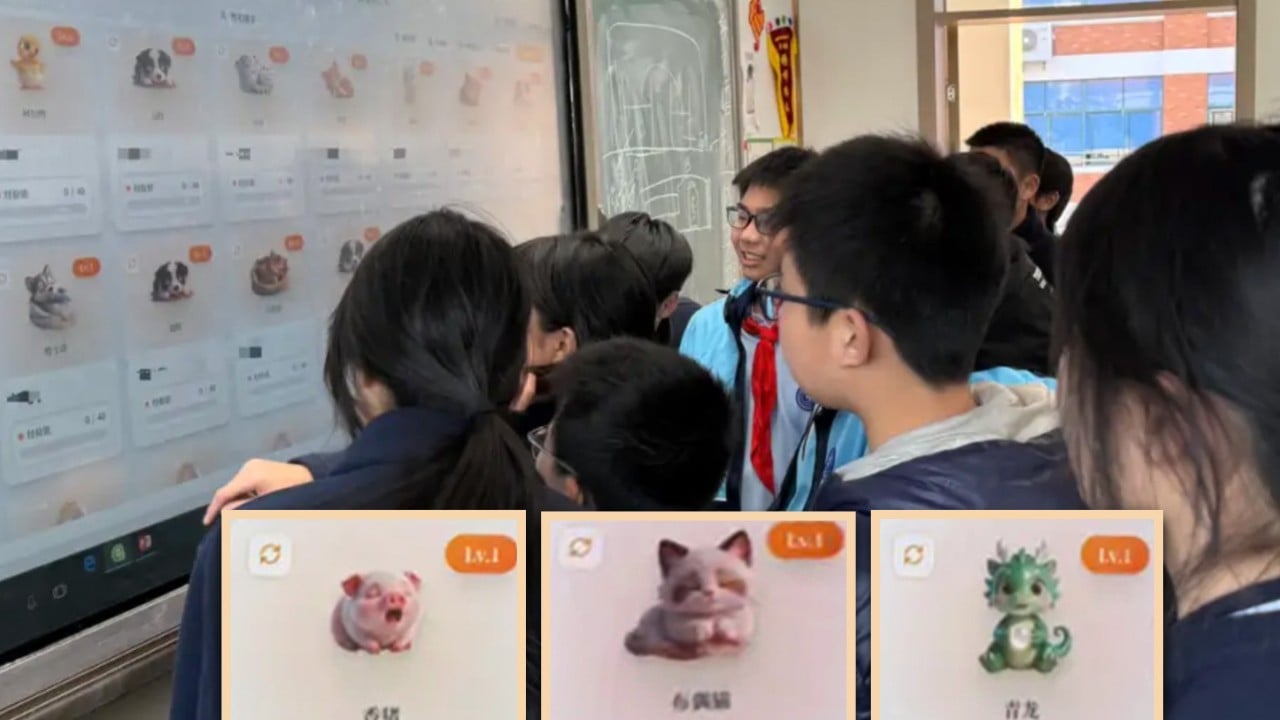
Kids in China aren't just earning gold stars or stickers anymore. They’re grinding for digital pets. Schools in several provinces have started swapping traditional paper certificates for a high-tech incentive system that looks suspiciously like a mix of Pokémon and a social credit score for minors. It's a fascinatng, slightly eerie shift in how we think about classroom management and student motivation.
If you’ve ever felt the dopamine hit of a notification, you’ll understand the logic here. By gamifying good behavior, schools are tapping into the same psychological loops that keep us scrolling on our phones. But this isn't just about making kids sit still. It’s a massive experiment in behavioral engineering that could change the face of education globally. If you liked this piece, you should look at: this related article.
The Mechanics Of The Digital Pet Reward System
The way it works is pretty straightforward. Students earn points for things like helping classmates, finishing homework early, or even just showing up with a positive attitude. These points aren't just numbers on a screen. They’re the currency used to "feed" and "evolve" a digital pet that lives on a school-monitored platform or a wearable device.
It’s basically a Tamagotchi with academic consequences. For another perspective on this event, see the latest update from ZDNet.
If a student slacks off, the pet might get "sick" or stop growing. This creates a tangible, emotional connection to their performance. You aren't just letting down your teacher or your parents; you're letting down a cute pixelated creature that depends on your math scores to survive. It sounds intense because it is. Educators using the system argue that it builds a sense of responsibility. Critics, however, worry it’s just another layer of digital surveillance in an already high-pressure environment.
The system often integrates with the school's smart campus infrastructure. In some Ningbo schools, for example, the data isn't just stored—it's displayed. High-performing students see their pets thrive on classroom screens, creating a public leaderboard of "goodness." This isn't subtle. It’s a loud, constant reminder of where you stand compared to your peers.
Motivation Or Manipulation
We have to ask if this actually helps kids learn or if it just trains them to be better cogs in a machine. Intrinsic motivation—doing something because it’s interesting or meaningful—is the holy grail of education. Extrinsic motivation, like digital pets, is the shortcut.
When you reward a child for being "diligent" with a digital toy, you risk turning every act of kindness into a transaction. If there’s no point to be earned, do they still help their friend? That’s the big question. Research into gamification often shows a "crowding out" effect. Once you stop the rewards, the desired behavior often drops below where it started because the internal drive was never built.
However, proponents argue that for kids who struggle to engage with traditional schooling, these pets are a bridge. They provide immediate feedback. In a world where kids are used to the instant gratification of video games, a report card that comes out every few months feels like an eternity. The digital pet bridges that gap. It gives them a reason to care about the small, boring wins that lead to long-term success.
Privacy Concerns And The Digital Footprint
Let's get real about the data. These systems collect a staggering amount of information on a child's daily habits. Every time a point is awarded, a data point is created. Who gave the point? When? For what specific behavior?
In China, where the integration of technology and social management is already deep, these school systems feel like a training ground for adult life. If you grow up with your behavior constantly monitored and rewarded by an algorithm, you don't question it when you’re older. You just accept it as the way the world works.
Parents are often split on this. Some love it because they get real-time updates on their child’s behavior. They can see exactly why their kid had a "green" day or a "red" day. Others find it invasive. They worry about the psychological toll of being "on" all the time. There’s no room for a bad day when a bad day means your digital companion withers away.
What This Means For The Future Of Global Classrooms
Don't think this is just a "China thing." EdTech companies in the West are watching these developments closely. We already have apps like ClassDojo that use monster avatars to track behavior. The Chinese model is just the logical extreme of that trend.
The shift toward "smart campuses" is accelerating. We’re moving toward a reality where every action in a school building is tracked, analyzed, and gamified. The goal is efficiency. But education isn't always efficient. Sometimes it's messy. Sometimes the most important lessons come from failure, not from perfectly following a rubric to keep a virtual cat happy.
We’re seeing a shift from "teaching" to "managing."
If the goal is to produce compliant, hardworking individuals, this system is a masterpiece. If the goal is to produce creative, independent thinkers, we might be headed in the wrong direction. The data shows that these rewards work in the short term. Students are quieter. Homework completion is up. But the long-term psychological impact of "behavioral datafication" is a total mystery.
How To Navigate The Gamified Education Wave
If your child’s school starts looking into these types of systems, you need to be proactive. It’s not enough to just say "tech is bad." You have to understand the specific implementation.
- Ask about data ownership. Who owns the behavioral data? Is it deleted when the child graduates?
- Check for transparency. Can students see why they lost points? Is there a way to appeal a "bad" mark?
- Balance the digital with the physical. Ensure your child has hobbies and goals that aren't tied to an app or a score.
- Discuss the "why." Talk to your kids about why they're doing what they're doing. Remind them that being a good person matters even if the app doesn't ping.
The digital pet system is a tool, not a solution. It can make a classroom run more smoothly, but it can't replace the human connection between a teacher and a student. As we lean further into these AI-driven reward structures, we have to make sure we aren't losing the soul of the classroom in favor of a higher score. Keep a close eye on your local school board meetings and EdTech pilots in your district. These changes often slip in under the guise of "innovation" before anyone has a chance to ask what we're actually trading away for those digital points.