Luckin Coffee and Cotti Coffee are trapped in a race to the bottom that they cannot win. For three years, the Chinese caffeine market has functioned more like a fintech burn-rate experiment than a food and beverage industry. By slashing prices to 9.9 yuan—roughly $1.40—these domestic giants have successfully unseated Starbucks in terms of sheer store count and volume. But the victory is hollow. The fundamental problem is that while you can buy market share with a subsidy, you cannot buy brand loyalty with a coupon. As the novelty of cheap lattes wears off, these brands face a grim reality: their business models are built on a foundation of temporary math that is starting to crumble.
The current strategy relies on the assumption that once competitors are bled dry, prices can be raised. It is a classic "blitzscaling" move. However, the Chinese consumer has been conditioned to view coffee as a commodity rather than an experience. When a cup of coffee costs less than a bottle of premium water, the product loses its aspirational value. This isn't just about profit margins. It is about the soul of a brand. If the only reason a customer walks into a Luckin is a digital scratch-off discount, that customer will vanish the moment a rival offers a price of 8.8 yuan.
The Margin Mirage
The math of a 9.9 yuan latte is punishing. To understand the gravity of the situation, one has to look at the raw input costs. Between the high-quality Arabica beans, the imported milk, the packaging, and the skyrocketing cost of commercial real estate in Tier 1 cities like Shanghai or Beijing, the break-even point is razor-thin. Most analysts estimate that at 9.9 yuan, these companies are making pennies per cup, and that is before accounting for the massive marketing spends required to keep their apps at the top of the download charts.
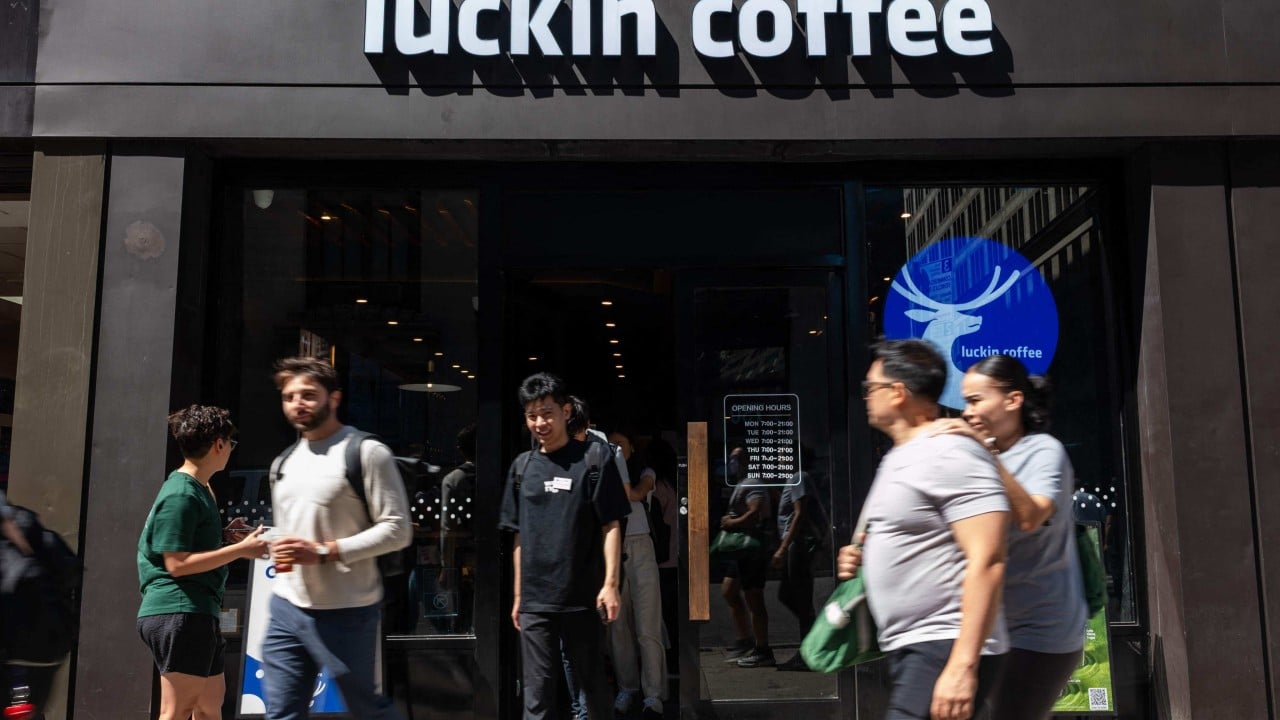
This is a volume play that requires near-perfect execution. Luckin, for instance, has pivoted to a "pickup-only" model to shed the overhead of the "third space" concept popularized by Starbucks. They don't want you to sit down. They want you to grab your plastic bag and leave. This efficiency is impressive, but it creates a mechanical, cold transaction. It turns coffee into a utility. When a product becomes a utility, the provider with the lowest cost always wins. In a country with the manufacturing and logistics might of China, there is always someone willing to go lower, meaning the current leaders are defending a position that is inherently indefensible.
The Cotti Factor
The entry of Cotti Coffee, founded by the same disgraced executives who originally steered Luckin into a multi-hundred-million-dollar accounting scandal, has turned a competition into a bloodbath. Cotti isn't trying to build a lasting institution. They are trying to disrupt Luckin using Luckin’s own playbook. By aggressively franchising and undercutting the leader, they have forced Luckin to extend its discount campaigns far longer than internal projections likely intended.
This creates a "prisoner's dilemma" for the industry. If Luckin raises prices to stabilize its balance sheet, it loses the mass market to Cotti. If it keeps prices low, it continues to erode its brand equity and delay its path to sustainable, high-margin growth. Meanwhile, the franchisees—the small business owners who actually put up the capital for these thousands of new locations—are the ones feeling the squeeze. Many are finding that despite moving hundreds of cups a day, the net profit is barely enough to cover the electricity bill.
Why Starbucks Remains the Target
While the domestic media focuses on the "Starbucks Killers," the American giant is playing a different game entirely. Starbucks has refused to join the 9.9 yuan mud-fight. Instead, they are doubling down on the premium experience. They are betting that as the Chinese middle class matures, a segment of the population will grow tired of the "grab-and-go" chaos and return to the luxury of a well-crafted drink in a comfortable environment.
Starbucks' revenue in China has taken a hit, certainly. Their comparable store sales have dipped as the price-conscious consumer migrates to cheaper alternatives. But their brand remains intact. In the long run, it is easier to lower prices from a position of luxury than it is to raise prices from a position of a bargain-bin provider. Luckin and Cotti are currently stuck in a "low-end trap." Moving upward requires more than just better beans; it requires a complete shift in consumer perception, which is the most expensive and difficult feat in marketing.
The Identity Crisis of Chinese Beans
There is also the overlooked factor of the supply chain. China’s Yunnan province is producing better coffee than ever before. Domestic brands have touted their use of "Yunnan Gold" or specialty regional beans to prove their quality. Yet, when you drown those beans in sugary syrups, coconut milk, and heavy cream to appeal to a palate that prefers "beverage-style" coffee over traditional espresso, the quality of the bean becomes irrelevant.
The domestic brands have mastered the "innovation" of flavors—launching new seasonal drinks every week—but this is a treadmill that never stops. Last year it was the "Moutai Latte," a collaboration with the famous baijiu brand that saw record-breaking sales. It was a brilliant marketing stunt. But stunts are not a strategy. Once the social media buzz dies down, you are left with the same problem: a customer base that is addicted to the "new" rather than the "good."
The Ghost of the Tech Bubble
The current coffee wars look remarkably like the ride-hailing and food delivery wars of 2015. Back then, Didi and Meituan spent billions to subsidize every trip and every meal. The goal was total market dominance. The difference is that coffee is not a platform; it is a physical product. You cannot scale a latte with the same marginal cost curves as software.
Investors are starting to lose patience. The "growth at all costs" mantra is losing its luster as global interest rates remain higher than they were during the initial Luckin boom. The pressure to show actual, un-subsidized profit is mounting. If the subsidies were to vanish tomorrow, it is estimated that over 30% of the current coffee outlets in China would shutter within six months. The market is over-saturated, with three or four coffee shops often occupying the same city block.
The Fragility of the Franchise Model
Much of the rapid expansion we see is fueled by the franchise model. This allows the parent company to report massive "store opening" numbers without taking on the direct debt associated with those locations. It is a brilliant way to offload risk. However, it creates a systemic fragility. If the franchisees stop seeing a return on their investment, the entire network can collapse overnight.
We are seeing early signs of this friction. Franchisee forums are filled with complaints about the "forced" participation in discount programs. When the headquarters dictates a 9.9 yuan price point but the franchisee has to pay the rising cost of labor, the relationship sours. A brand is only as strong as its most desperate partner.
The Cultural Shift That Must Happen
For a Chinese brand to truly compete with the global elite—brands like Blue Bottle, % Arabica, or even a revitalized Starbucks—they must stop talking about price and start talking about craft. This is a difficult pivot. It requires slowing down. It requires training baristas who actually understand the science of extraction rather than just pushing a button on an automated machine.
Currently, the domestic giants are high-tech logistics companies that happen to sell caffeine. They have the best apps, the fastest delivery, and the most efficient supply chains in the world. But they haven't yet mastered the art of the "Third Space." They haven't created a culture where people are proud to hold their cup. In many circles, carrying a Luckin cup is a sign of frugality, while carrying a Starbucks cup is still a sign of status. That psychological gap is worth more than any algorithm.
Operational Exhaustion
The pace of the Chinese market is grueling. Workers in these high-volume shops are often under immense pressure to meet delivery windows. This leads to high turnover and a drop in consistency. If you order a latte at 9:00 AM and it tastes different at 2:00 PM, you have failed as a premium brand. The domestic players are currently prioritizing speed over everything else.
This operational exhaustion extends to the corporate level. The need to "out-innovate" the competitor every single week leads to "gimmick fatigue." Consumers are being bombarded with so many new flavors, collaborations, and limited-time offers that they are becoming numb. When everything is a "must-try event," nothing is.
A Reckoning on the Horizon
The 9.9 yuan era is a fever dream. It is a period of artificial market dynamics that cannot be sustained indefinitely. The winners won't be the ones who opened the most stores in 2024 or 2025; the winners will be the ones who managed to build enough brand equity to survive the inevitable price hike.
The industry is waiting for someone to blink. Luckin is waiting for Cotti to run out of cash. Cotti is waiting for Luckin’s stock price to force a change in strategy. While they wait, the very thing they are fighting for—the Chinese coffee consumer—is becoming more cynical and less profitable.
The path forward isn't through another discount code. It is through the brutal realization that the "cheap coffee" phase of China's economic development is nearing its expiration date. Brands that fail to transition from a "quantity" mindset to a "quality" mindset will find themselves as footnotes in a business school case study about the dangers of subsidizing your own destruction. Stop looking at the store count. Look at the customer who is willing to pay full price for a cup of coffee they actually enjoy. That is where the real war is being fought, and right now, the domestic giants are barely on the battlefield.