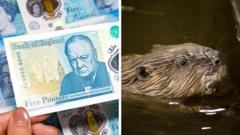
The British public has a peculiar way of losing its mind over the smallest things. Usually, it involves a change to a coin, a stamp, or what animal gets to live in a river. Right now, we’re seeing a collision of national identity and environmental radicalism that has turned the humble beaver and the new King Charles III banknotes into unexpected battlegrounds. It sounds like a comedy sketch. It’s actually a deep look into how the UK struggles with its past while trying to figure out its future.
You’ve probably seen the headlines. There’s a segment of the population that views the reintroduction of beavers as an ecological miracle. There’s another side that sees it as a threat to the very fabric of the British countryside. Toss in the transition from Queen Elizabeth II’s iconic image on the currency to the new King’s portrait, and you have a recipe for a very specific brand of British anxiety.
The Banknote Transition is More Than Just a Face Swap
Money isn't just for buying milk. In Britain, it’s a psychological anchor. For over seventy years, the Queen was the only face most people ever saw on their cash. Replacing her with King Charles III isn't just a logistical headache for the Bank of England. It’s a physical reminder that an era has ended.
The new notes began entering circulation in mid-2024, but the rollout is intentionally slow. The Bank of England decided to only replace worn-out notes or meet increases in demand. They say it’s to minimize the environmental impact. Critics call it a slow-motion erasure of tradition. If you’re holding a tenner today, it’s likely still got the Queen on it. When you finally get a "Charlie," it feels different. It’s thinner, it’s plastic (polymer), and it carries a different weight of history.
People hate change. We saw it when the fiver went plastic and people realized they couldn't fold it properly anymore. We saw it with the "meat in the money" scandal where trace amounts of tallow were found in the polymer. The backlash to the new banknotes follows this pattern. It’s not really about the design. It’s about the feeling that the country is being renovated while we’re still living in it.
Beavers are the New Outlaws of the British Countryside
While the Bank of England worries about portraits, the Department for Environment, Food & Rural Affairs (DEFRA) is dealing with a toothier problem. Beavers were hunted to extinction in the UK about 400 years ago. Now, they’re back. And they’re causing a ruckus.
The logic for bringing them back is solid on paper. Beavers are "ecosystem engineers." They build dams, create wetlands, and help prevent flooding downstream by slowing the flow of water. In an era of climate instability and record-breaking rainfall, this sounds like a win.
Farmers don't agree.
I've talked to landowners who see these animals as nothing more than glorified oversized rats with chainsaws for teeth. A beaver doesn't care if your prize-winning field of wheat is now a swamp. It doesn't care if its dam blocks a drainage pipe that cost five grand to install. The "British backlash" here is a classic clash between urban environmentalists who love the idea of "wilding" and rural workers who have to deal with the actual consequences.
The Myth of the Untouched Countryside
The reason this fight gets so heated is because of a fundamental misunderstanding of what the British landscape is. Most people think the rolling hills of the Cotswolds or the peaks of the Lake District are "natural." They aren't. They’re industrial landscapes shaped by centuries of sheep farming, logging, and drainage.
When you drop a beaver into that environment, you aren't "restoring" nature. You’re introducing a chaotic element into a highly managed system. That’s why the backlash is so fierce. It’s a battle over who gets to decide what the land looks like. Is it a museum of 1950s farming? Or is it a laboratory for 21st-century rewilding?
There’s a similar vibe with the banknotes. The currency represents a managed, stable image of the state. Changing it feels like breaking a contract. When you change the money and you change the wildlife at the same time, people start to feel like the ground is shifting under their feet. Literally.
Why the Backlash is Actually Healthy
It’s easy to mock people for getting upset about a rodent or a piece of plastic. But these reactions are a vital part of the democratic process. They show that people still care about the symbols of their country.
The friction between the "Beaver Believers" and the "Dam Doubters" forced the government to create a management framework. Now, if a beaver causes chaos, there’s a legal pathway to move it or manage the dam. Without the backlash, we’d have a top-down policy that ignored the people living on the land.
The same goes for the cash. The slow rollout of the King Charles notes is a direct response to public concern about waste and the legacy of the Queen. It’s a compromise. Britain runs on compromise.
Tracking the Change in Your Own Pocket
If you want to see how this transition is playing out, you don't need to read a government white paper. Just look at your wallet. The mix of old and new notes tells the story of a country in flux.
Check your local riverbanks too. In places like Devon and Scotland, the evidence of beaver activity is becoming a tourist attraction. It’s a weird, messy, very British evolution. We complain, we write letters to the editor, we argue in the pub, and eventually, we adapt.
The best thing you can do is stay informed about the local rewilding projects in your area. Many of them offer "beaver tours" or volunteer days. Seeing the impact firsthand—both the beautiful new ponds and the flooded tractor paths—gives you a perspective that a Twitter argument never will. As for the money, keep an eye on the serial numbers. The very first King Charles notes (with the prefix CA 01) are already becoming collector's items.
The next time you hear someone grumbling about a beaver or a banknote, don't dismiss them. They're just participating in the long, loud tradition of British people trying to hold onto the things they recognize. It’s messy. It’s annoying. It’s exactly how progress happens in this part of the world.